




 Affiliate Disclaimer
 To perform a free scammer phone number lookup, one should use search engines to find any online mentions and consider using reverse phone lookup services. Some even have databases of reported scam numbers.
Have you ever received a call that your relative is in jail, and they need bailout money, only to realize it was a scammer on the end of the line? Have you ever been prompted to verify your account details over the phone due to a “take urgent action” message? No more need to worry. There are phone number lookups to find out scammers.
Scams and frauds cause billions of dollars in yearly losses. People have fallen victim to scammers owing to phrases like “unique offer,” “gift card,” and “account information,” among others. According to the Federal Trade Commission, Americans lost $5.8 billion to fraud in 2021 alone.
Sadly, scammers have become increasingly sophisticated and constantly find new ways to trick people, especially older adults. According to the 2020 Internet Crime Report, victims over 60 were the most targeted demographic for Internet crimes, including phone scams. In addition, people have reported receiving calls claiming to be from their bank, government agency, credit card companies, or even tech support services.
That’s why it’s imperative to be aware of these scams and know how to do a free scammer phone number lookup. Doing so can verify whether the call is legitimate or a scam, and protect yourself and your loved ones from being scammed out of your hard-earned money.
Top Pick Based on Our Research
If this post is too long to read, and you need to check the unknown number right now, here are our top three tools:
If you’re receiving suspicious calls, TruthFinder may help you find out who’s calling through its reverse lookup phone number option. It can search social media and public records for current and accurate data.
🥈 Intelius
For less than a dollar, the service gives you a 6-days trial and information about the phone number up to the connected social media and related individuals.
The service also offers cheap trial and can search through criminal records. It updates scam database and has apps for iOS and Android.
Table of Free Scammer Phone Number Lookup Tools
Services Reviewed – 20+
Services Selected – 12
| Service | What Information You Can Get | Updating Scam Database | App for Android/iOS | Price | Rating |
|---|---|---|---|---|---|
| TrueCaller | Spam report | Yes | Yes | Free with paid options | 4.9 |
| YouMail | Spam report | Yes | Yes | Free with paid options | 4.8 |
| Searqle | Owner’s full name City Address ZIP code | Yes | No | 3-day trial for $1 $28-44/mo | 4.7 |
| Spy Dialer | Spam report | No | Yes (Windows) | Free | 4.7 |
| CallerName | Number validity Spam report | Yes | Yes | Free | 4.7 |
| White Pages | Owner’s name Spam score Address details | Yes | Yes | Free | 4.8 |
| That’sThem | Full contact information Previous addresses | Yes | No | Free | 4.7 |
| US Phonebook | Scam status Full contact and address details | Yes | Yes | Free | 4.7 |
| TruthFinder | Full Name Address Photos Social media profiles Location history Relatives Associated persons | Yes | Yes | $4.99 | 4.8 |
| Intelius | Owner’s name Photos Address Social media profiles Location history Related persons | Yes | Yes | $0.95 6-day trial $34.95/mo | 4.8 |
| Spokeo | Owner’s name Family members Current address Location history Businesses Monthly income | Yes | Yes (Android) | $19.95 | 4.8 |
| Instant Checkmate | Owner’s name Personal details Criminal history Traffic logs Employment history | Yes | Yes | $1 trial for 5 days $34.95/mo | 4.7 |
We took some resources from the top reviews of the best, and almost all of them were awful. So trust only verified sources of information or blogs of specialized services related to telecommunications. For example, like our HeyLocate blog.
What Is A Scam?
A scam is any means a person uses to cheat someone of their possessions, mainly money. In the case of a phone scam, a person calls a stranger and pretends to be an individual or entity they trust. In some cases, the caller pretends to be friendly and helpful; in others, they can threaten and scare the person into giving up their personal information for identity theft or fraud.
Check The Phone Number Right Now
- Phone Lookup
- Number Tracking
Popular Scam Methods
Scammers use increasingly sophisticated methods to trick people into handing over their personal information, money, or both. Here are some of the most popular phone scam methods.
IRS Scams
Scammers posing as IRS agents will call and demand immediate payment of back taxes or threaten to have you arrested. They may ask for personal information such as social security numbers or bank account information.
Tech Support Scams
A scammer may pose as a tech support representative and will call and tell you that your computer has a virus or problem that requires immediate attention.
They will then ask you to give them remote access to your computer, allowing the scammer to steal personal information or install malware. You will most likely be asked to pay to remove the malware.
Lottery Scams
A lottery scam is when a stranger calls and informs you that you have won a large sum of money in a lottery. However, to claim your prize, you must first pay taxes or a processing fee. You may then be asked to provide personal information or wire money to the scammer.
Social Security Scams
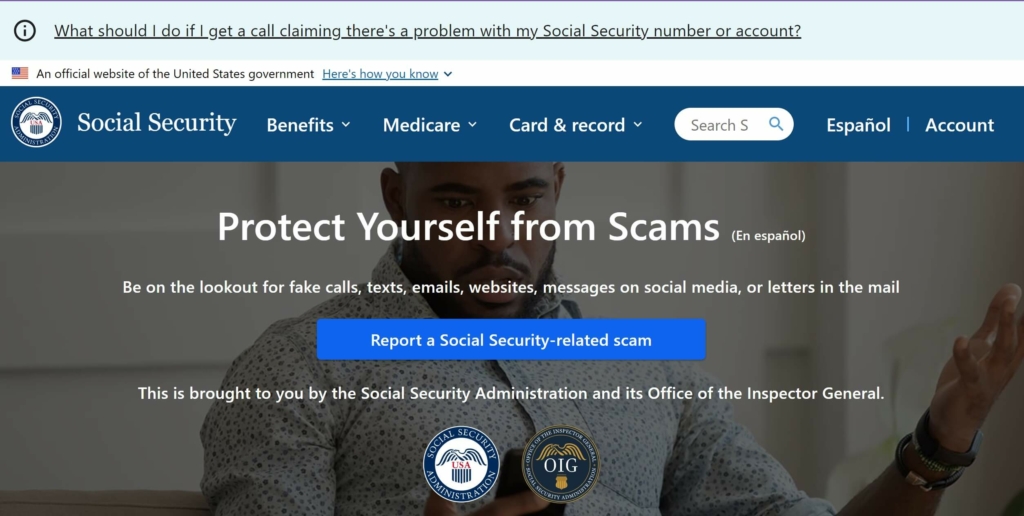
Scammers posing as Social Security representatives will call and tell you that your Social Security number has been suspended due to suspicious activity. They will then ask you to provide personal information or wire money to resolve the issue.
Grandparent Scams
So-called “grandparent scam” is when a scammer will call and pose as a grandchild in distress, claiming to have been in an accident or arrested and in need of immediate financial assistance. They will ask you to wire money to a specified account.
Fake Donations Scams
Scammers will pose as legitimate charity or non-profit organization representatives and contact individuals asking for donations.
They may ask for bank account or credit card information, or ask individuals to wire money to a specific account. They may also use fake websites or social media accounts to solicit donations.
Amazon Phone Scams
Scammers will call and claim to be from Amazon customer support, stating that there is a problem with your account or recent order. They will ask you to give them remote access to your computer, allowing them to steal personal information or install malware.
They may also ask for credit card information, bank details, or ask you to purchase gift cards to pay for a supposed problem.
Website Credentials Fraud
A scammer will create a fake website that appears to be legitimate, such as a banking or shopping website. They will then ask you to enter your login or personal information. The scammer may use phishing emails or fake social media accounts to direct you to the fake website.
Healthcare and Medicare Scams
Scammers will call and claim to be representatives from Medicare or a healthcare provider, stating that there is a problem with your account or benefits. They may ask for personal information, such as social security or Medicare numbers, or payment for supposed services.
Luckily, you can spot a scam using various tell-tale signs.
Check Phone Number in Google and Social Media
One of the free scammer phone number lookup methods is to do a search on Google or social media. Enter the number you want to search for in quotes in the Google search box and hit enter. I searched “+18446224446” and discovered it was listed as a scammer’s phone number on Reddit.
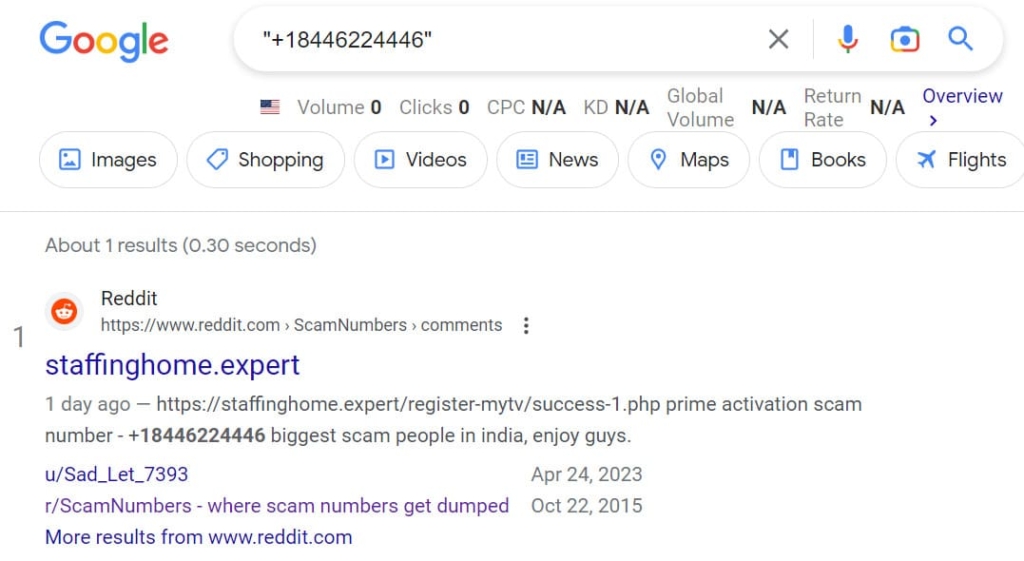
You could also use social media sites to see if the number belongs to any social media accounts. You will likely get hits indicating whether the phone number is flagged for scamming.
How to Find Out Scam Phone Numbers for Free
There are free tools for checking phone numbers. They may not tell you who the owner of the phone number is, but they will show you if there are any associated reports of fraud.
TrueCaller
TrueCaller is a caller ID and spam blocker app on Google Play and Apple Store. It also offers a free reverse phone number lookup service to identify who calls.
User Experience:
I installed TrueCaller on my cell phone for free. The service only needed access to my contacts, and I could identify incoming calls and texts. It is a reliable phone lookup service since it color codes incoming calls and texts to identify regular, business, and spam callers.
I liked that it could also identify the kind of spammer calling. For example, if a number is an insurance scam, according to the community, the app shows the incoming call as an “insurance scam.” The best part is that I did not need to interact with the app since it operates in the background.
If you don’t want to install the app, use its reverse phone lookup service online. However, you will only look up to ten numbers for free.
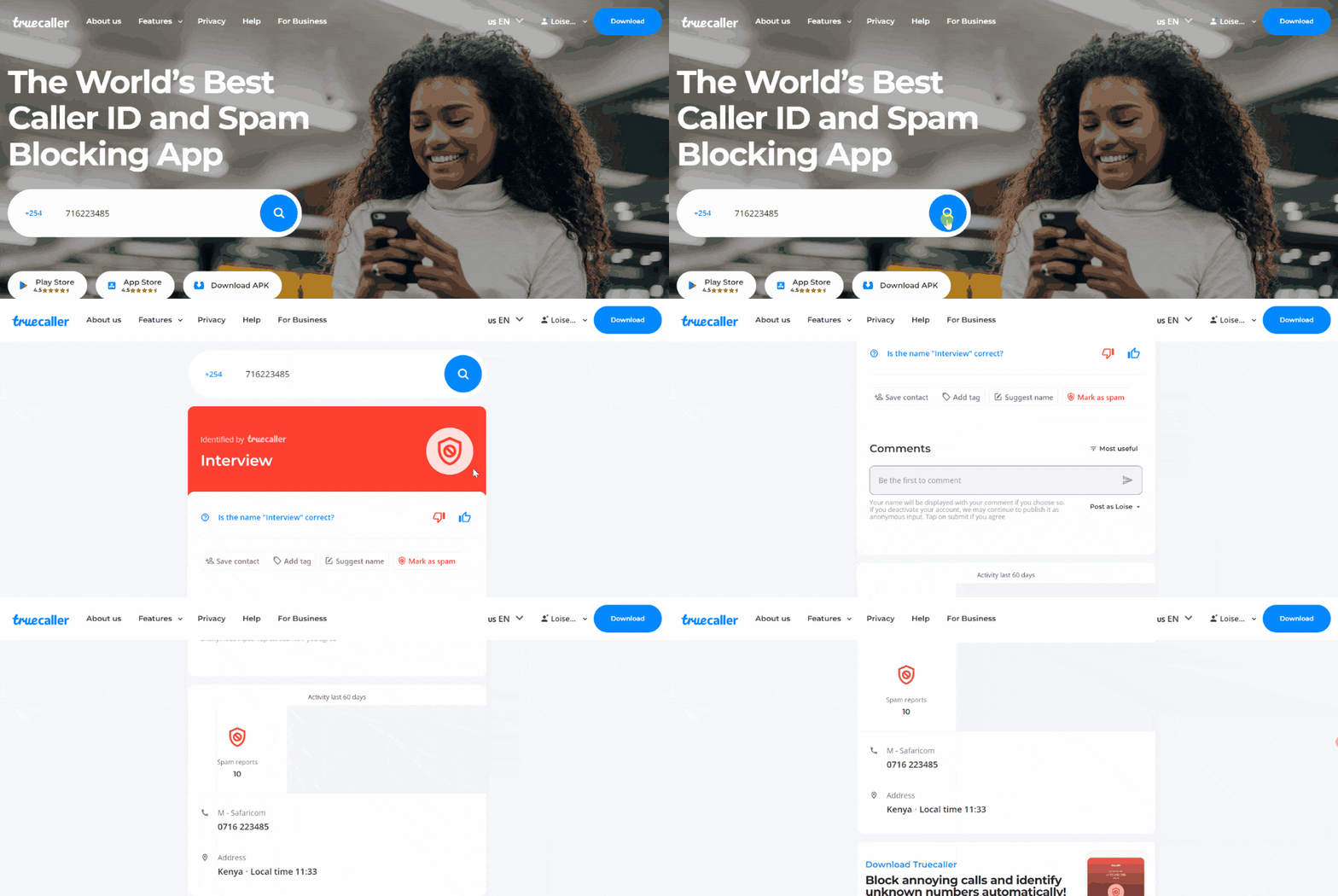
The Truecaller app is available on the Google Play Store and Apple Store. Over 1 Billion people have downloaded the app, and a staggering 18.8M people have given it 4.5 stars. According to my research, TrueCaller’s latest update in March 2023 introduced Message ID to identify who’s messaging from unknown numbers.
| Quickness | Simplicity | Effectiveness | Safety |
|---|---|---|---|
| 4.8 | 5 | 4.9 | 5 |
Pros:
- does not make one’s contacts searchable;
- relies on the community to identify scammers;
- asks for only the necessary permissions;
- color codes caller IDs.
Cons:
- allows only ten free searches from the website;
- if the number is not marked as spam by a user, it will not show as spam.
YouMail
YouMail provides visual voicemail services. It stops spam calls and blocks robocalls to keep one’s voicemail clean. YouMail also does reverse phone number lookups to identify spam phone numbers.

User Experience:
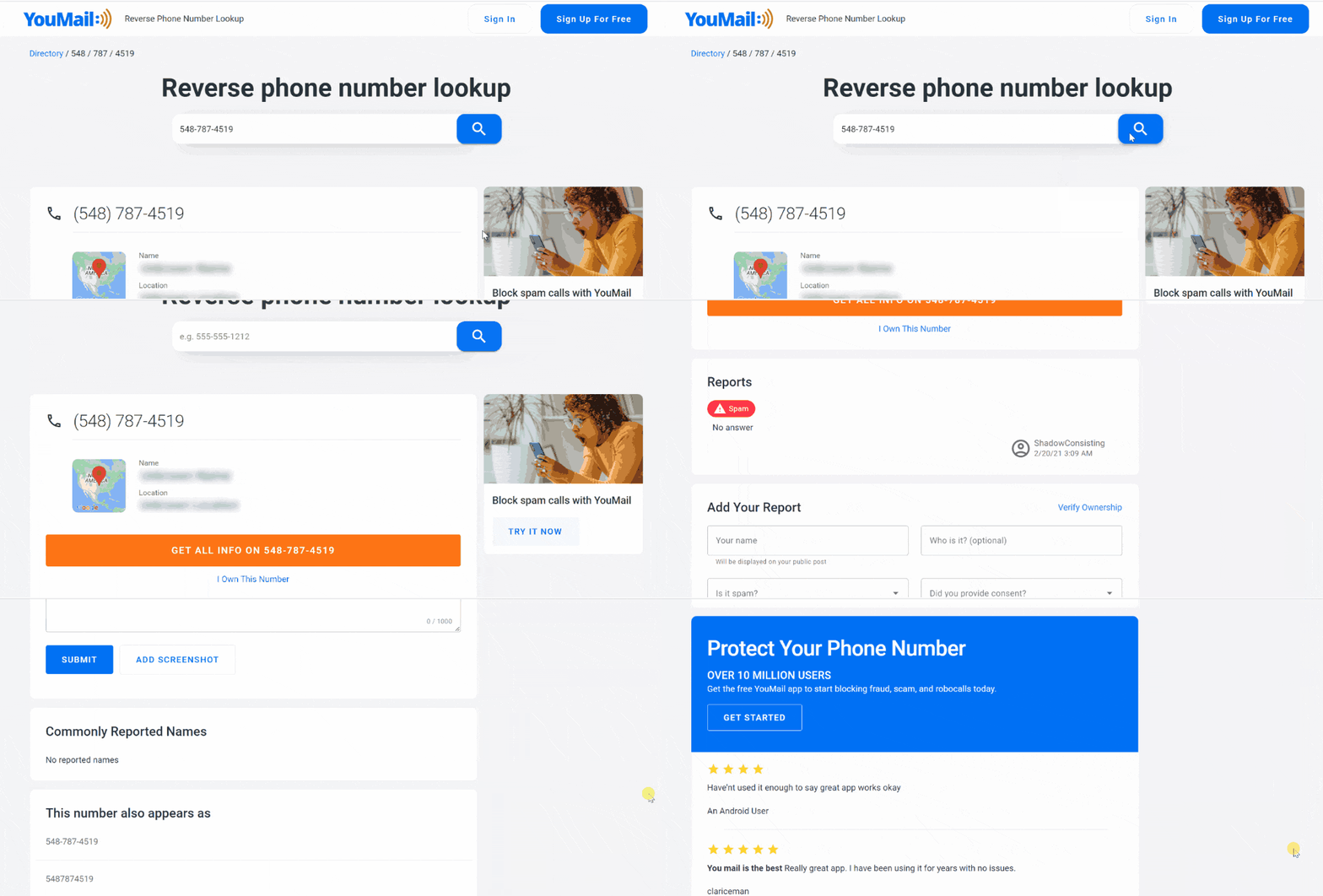
There is YouMail app for reverse phone number lookups – you can download it from Apple Store or Google Play. I used YouMail to identify a spam phone number, which immediately revealed results showing the number was reported as spam.
Nonetheless, I could not verify the correctness of the results. I also needed a premium account to know the unknown caller’s name and location.
The YouMail app has 1M+ downloads on Google Play with 4.4 stars rating. Apple users have given the app 4.7 stars. Its last update in August 2022 introduced blacklisting and new navigation features.
| Quickness | Simplicity | Effectiveness | Safety |
|---|---|---|---|
| 4.8 | 4.8 | 4.8 | 5 |
Pros:
- can identify if a number is a scam;
- the app filters spam voicemail messages;
- tells the cell phone owner why a call is blocked;
- can leave an out-of-service message to identified spammers.
Cons:
- lacks a web app to handle calls from PC;
- has a capacity of only 50 messages per month for free.
Searqle
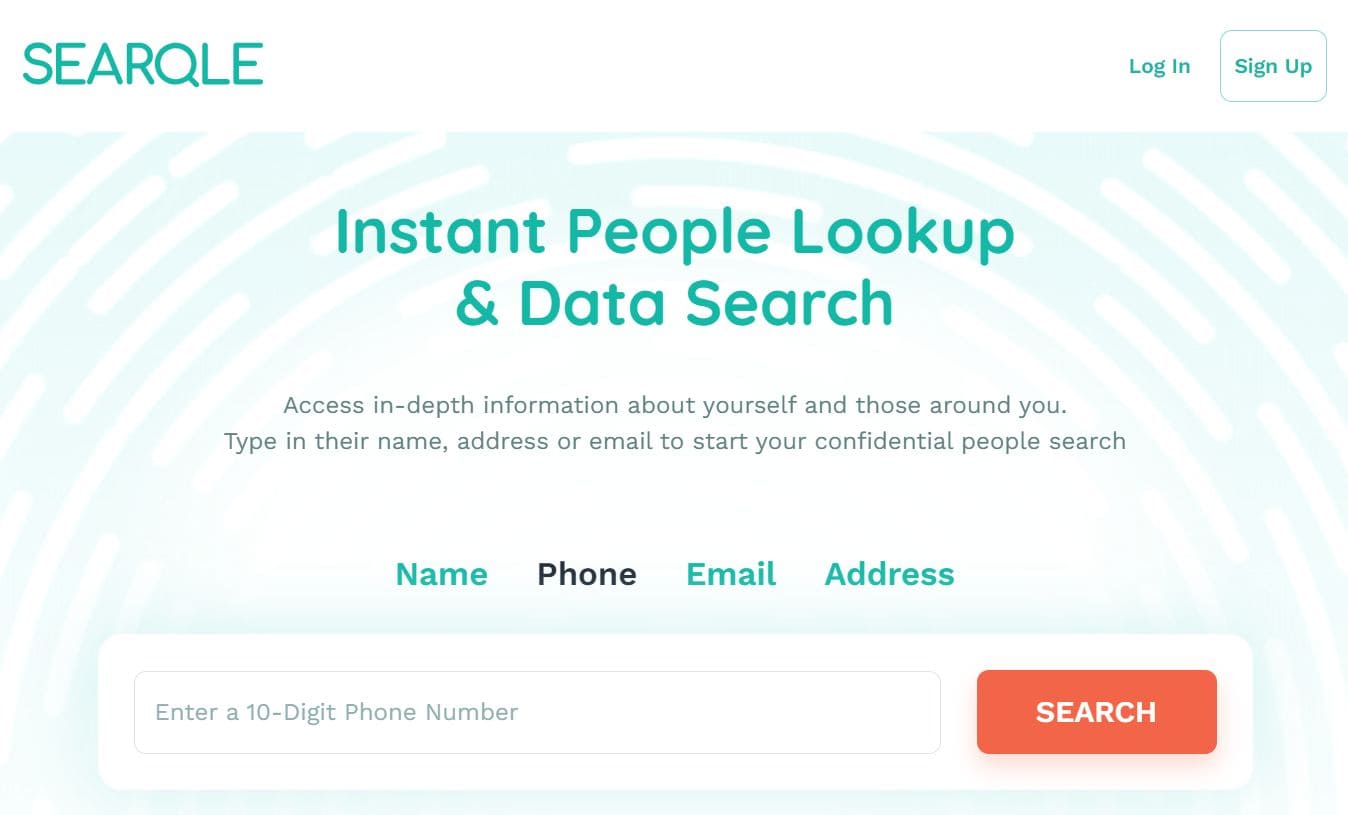
Searqle has 164 million phone number records. It searches public records and can verify the identity of a caller.
Price:
- 3-day trial for $1;
- $44.99/mo;
- costs $28.33/mo paid quarterly.
User Experience:
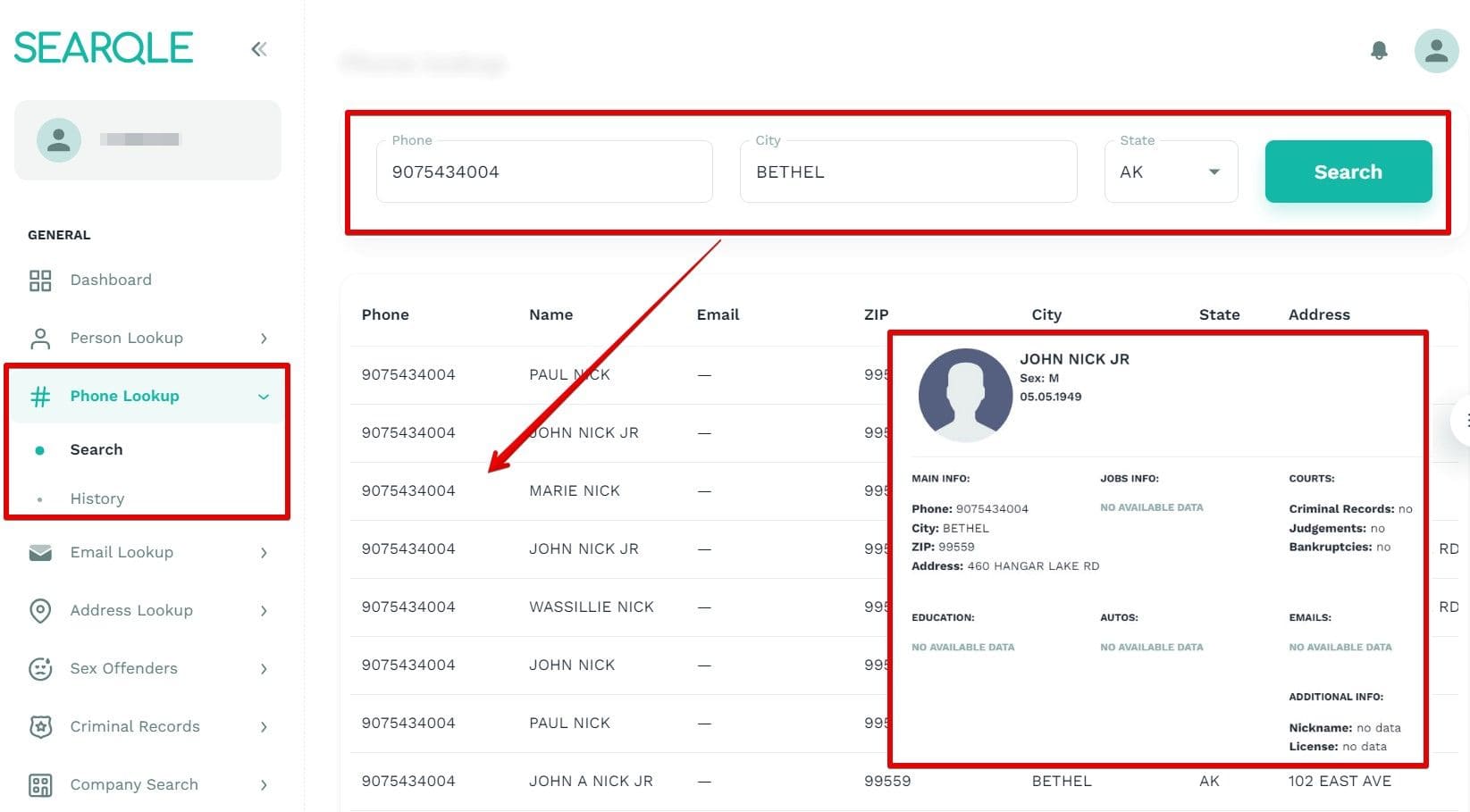
A reverse phone number lookup on Searqle gave me results with the owner’s full name, city, address, and ZIP code. I could verify a caller’s identity by matching who they said they were with the information on the website.
Searqle did not have free information, but it allowed me to try the service for three days for $1. It currently does not have an app or third-party online reviews since it’s a new service.
| Quickness | Simplicity | Effectiveness | Safety |
|---|---|---|---|
| 4.7 | 4.7 | 4.6 | 4.9 |
Pros:
- offers a cheap trial;
- shows accurate search results;
- frequently updates data;
- offers a fast method of verifying a caller’s identity.
Cons:
- requires a monthly subscription;
- lacks options for searching specific details like criminal records.
Spy Dialer
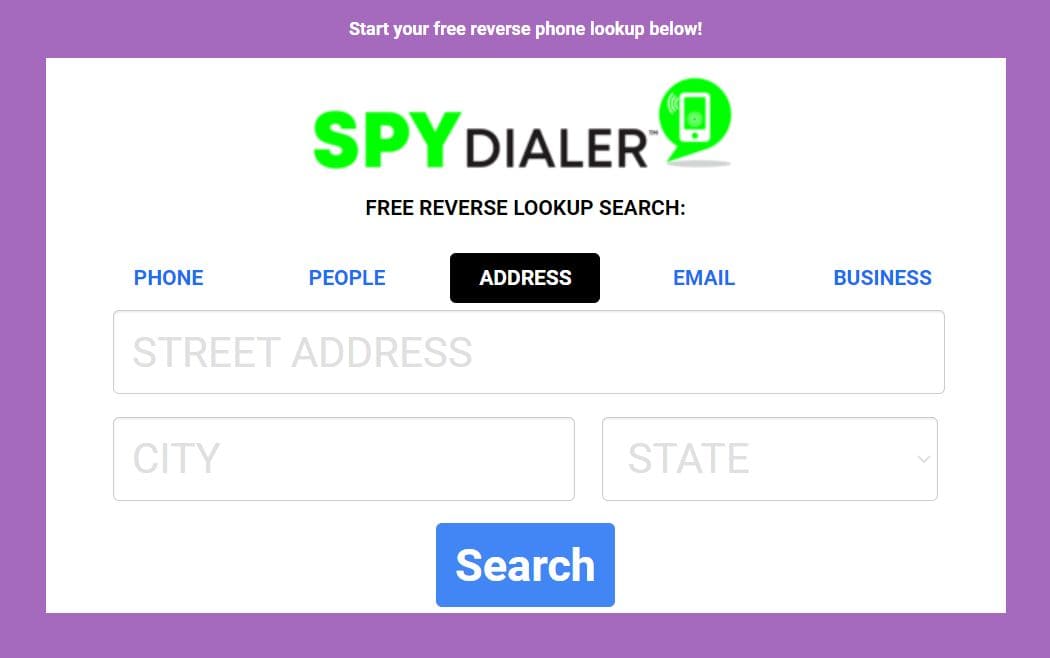
Spy Dialer finds information about phone numbers anonymously and for free. It can reveal spam phone numbers and also provide details about the caller.
User Experience:
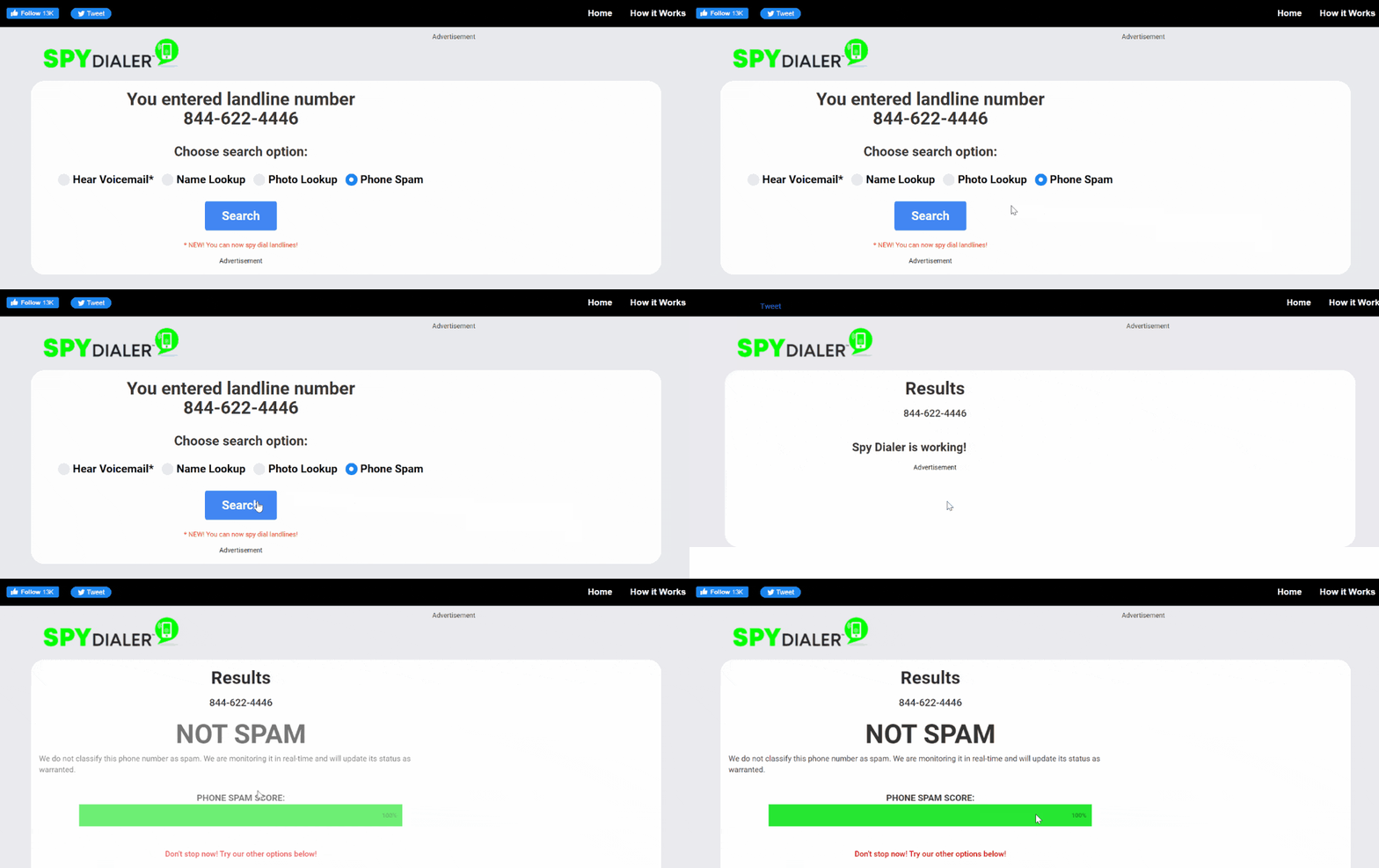
Spy Dialer has various search options. During my testing, the free reverse phone lookup allowed me to search for any spam reports associated with the number. Unfortunately, although other websites had picked the number as spam, the platform had not listed it as so.
Spy Dialer works through the information it gets from users. Hence, if a user does not flag the number, the search engine will not list it as spam.
While experimenting with this service, I found Spy Dialer app for Windows. You can check an unknown phone number through its online portal or the app. The Spy Dialer app has 100+ downloads and no reviews yet.
| Quickness | Simplicity | Effectiveness | Safety |
|---|---|---|---|
| 4.7 | 4.7 | 4.6 | 4.8 |
Pros:
- multiple phone number search options;
- you can search 25 phone numbers for scam per day;
- uses publicly available information;
- can provide photos of the scammer.
Cons:
- results are not 100% accurate.
CallerName
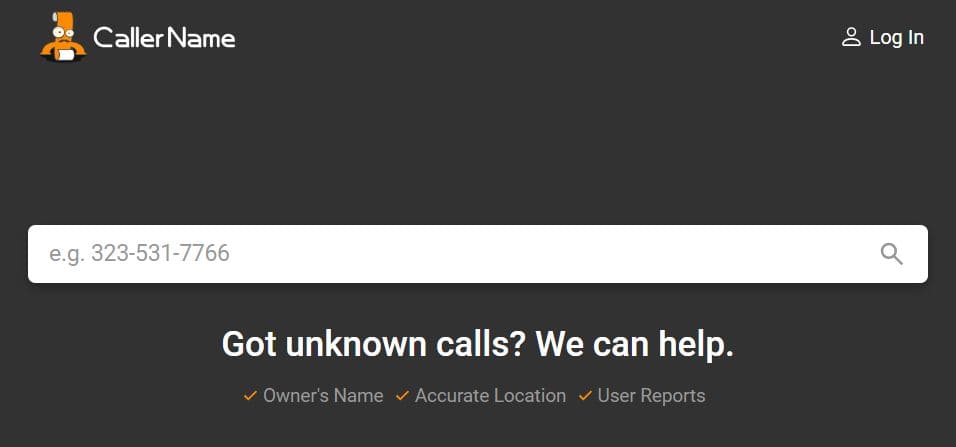
CallerName is another of the many reverse phone number lookup sites. This site can verify numbers and whether the area code is assigned.
User Experience:
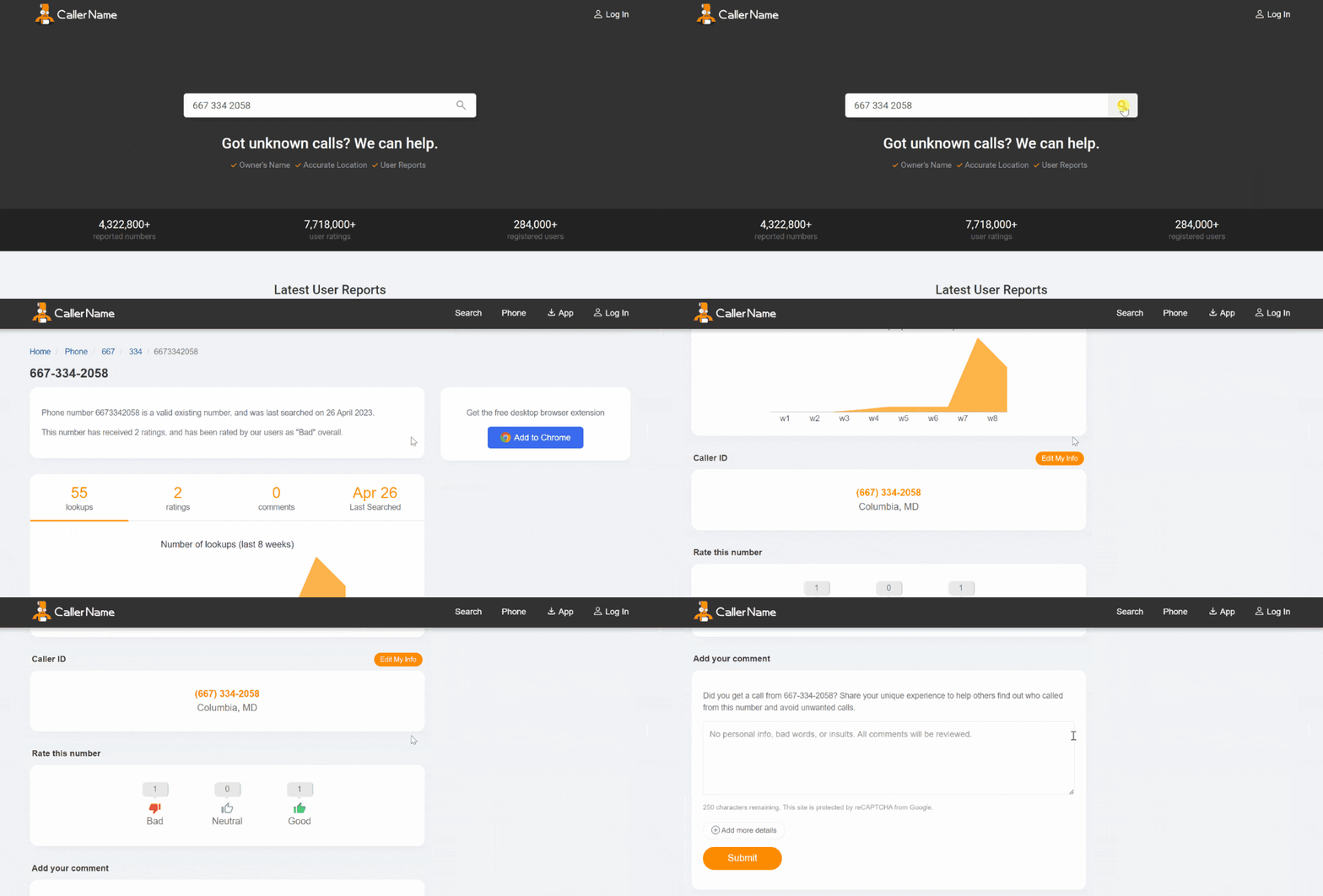
I checked a known scam number on CallerName, and it returned results indicating the number was invalid since the area code was unassigned. If I received a call from the number, it would be spam. Nonetheless, I could not verify the information since there was no detailed report about the number.
The good thing is that CallerName has an app for iOS and Android. It has 100K+ downloads with a 4.4 stars rating on Google Play and 4 stars on Apple Store. Users can perform reverse phone number lookups for free. Moreover, it encourages you to indicate whether a number is safe, so it can update its database.
| Quickness | Simplicity | Effectiveness | Safety |
|---|---|---|---|
| 4.7 | 4.7 | 4.7 | 4.8 |
Pros:
- verifies the validity of a phone number;
- no phishing or malware content on the website;
- can check carrier and line type;
- retrieves the actual names of the caller.
Cons:
- it lacks an opt-out option;
- some results could be out of date.
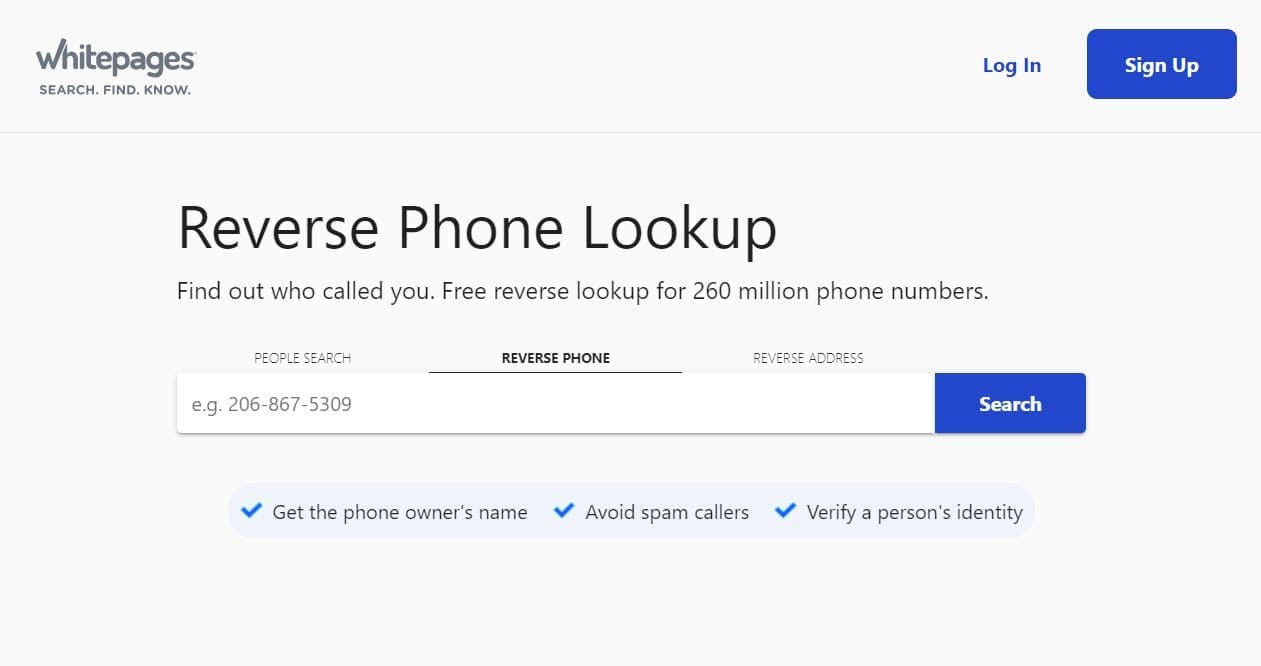
White Pages
White Pages provides online fraud screening, identity verification, directory services, and background searches. Its large database of contact information on US residents helps users identify phone scammers.
User Experience:
Using White Pages was fast since it has an easy to user interface. It displayed the results of the number’s owner, phone type, and the number’s spam score. If the number is valid, the platform reveals other relevant information like address, city, state, and age.
White Pages verifies information about its users by calling their cell phone numbers. If a number is not matched to a valid user, White Pages will list it as having a high spam score. It also matches the number against its database of phone numbers known for scam or spam calls.
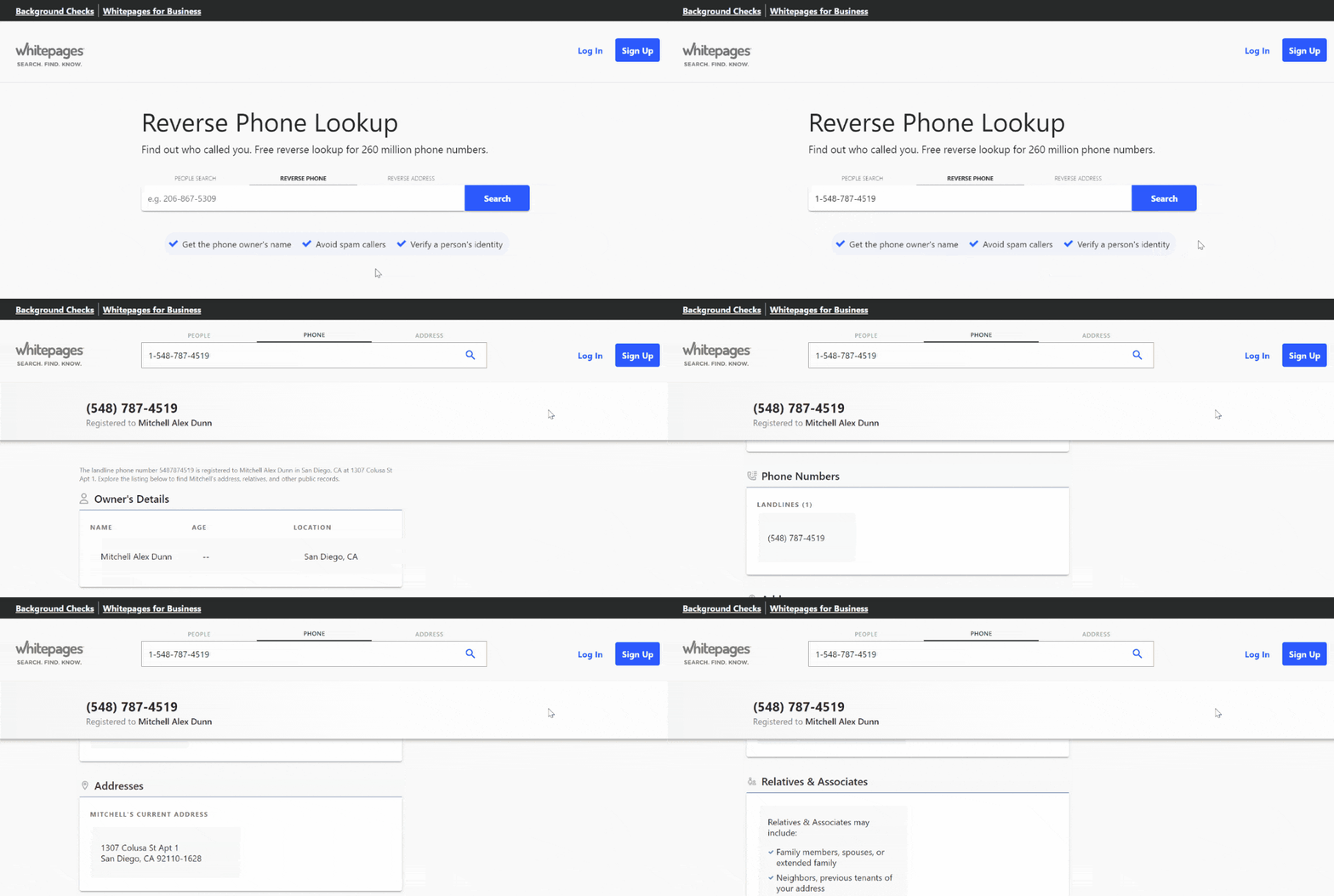
The White Pages app for iOS and Android provides accurate and updated information. It has over 5M downloads on Google Play and 4.3 stars rating. Apple users have given the app 4.7 stars. Updates are done daily to add to new listings. The paid version allows doing background searches and can reveal the criminal history of a mystery caller.
| Quickness | Simplicity | Effectiveness | Safety |
|---|---|---|---|
| 4.9 | 4.8 | 4.8 | 5 |
Pros:
- gives detailed owner’s info;
- no need to sign up to do free scammer phone number lookup;
- can show associates and background information for a small fee;
- the biggest database of phone records.
Cons:
- does not reveal all owner’s names;
- associates, relatives, and background info is not free.
US Phonebook
US Phonebook helps users to identify unknown callers for free quickly.
User Experience:
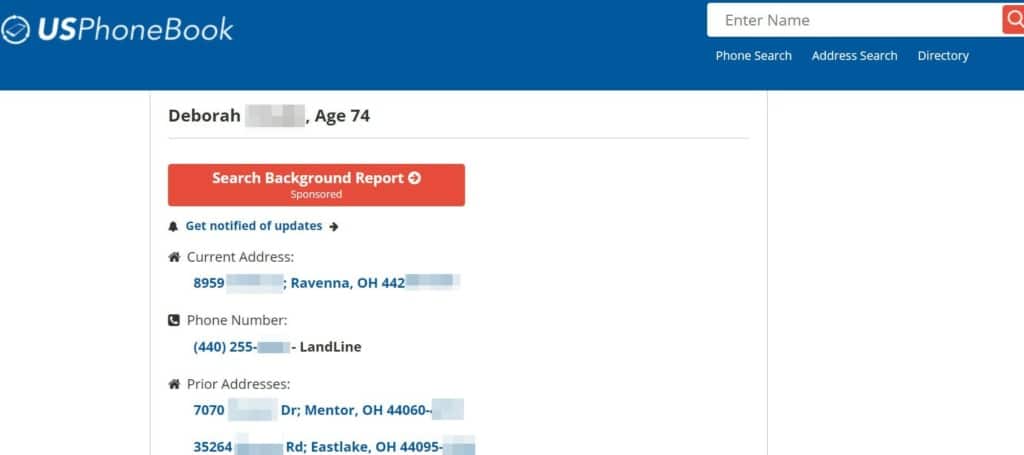
US Phonebook search was relatively fast, with just a few clicks. I got results showing the spam and fraud potential of the phone number.
Based on my experience, US Phonebook labeled the phone number as safe meaning it was not from a scammer. It showed the previous phone numbers of the person, their previous address, relatives, and current address for free.
The US Phonebook app is great for conducting instant spam searches on the go. You can download it from Apple or Google store which will allow you to add unknown phone numbers and spammers to a list.
I also searched US Phonebook on social media and found it has a 3.2-star rating on Facebook. Thus, it’s a legit website that people use to identify scam numbers.
| Quickness | Simplicity | Effectiveness | Safety |
|---|---|---|---|
| 4.8 | 4.7 | 4.7 | 4.8 |
Pros:
- reveals a cell phone number’s safety;
- shows detailed contact and location information;
- earns social proof through Facebook reviews;
- can check any 10-digit number.
Cons:
- does not show other people’s comments;
- the detailed report requires payment.
That’sThem
This web-based search engine lets users quickly find out who called from a strange number. Using this service, I found out that this reverse phone lookup tool is completely free.
User Experience:
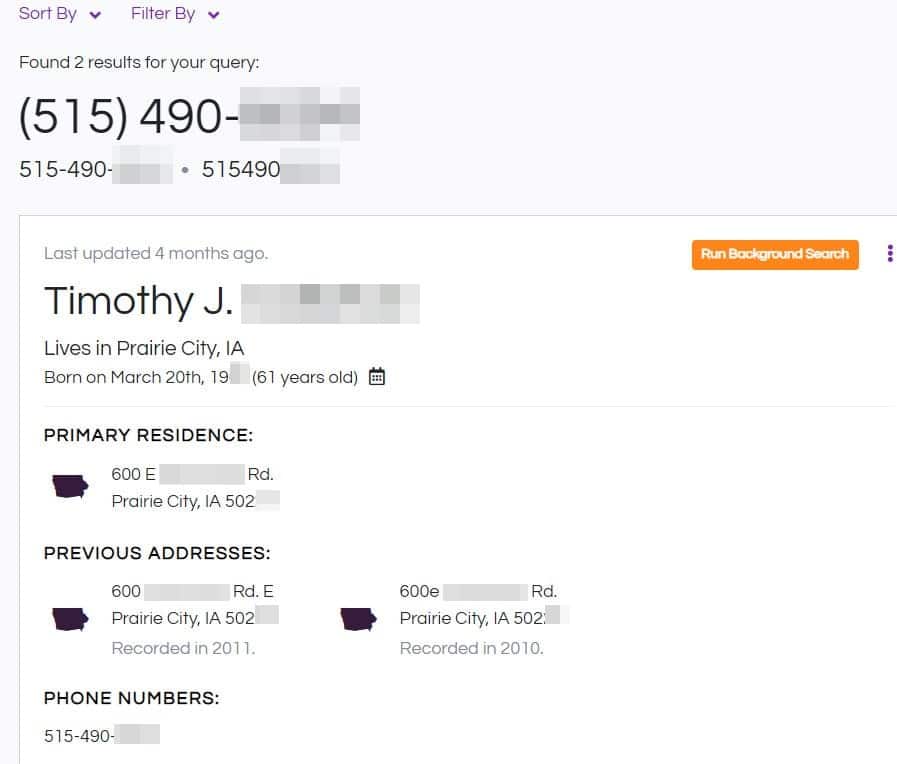
A simple search for a number on That’sThem revealed details about the person allowing me to judge whether the caller was a scammer. It showed me their full contact details, previous addresses, primary address, and IP addresses.
That’sThem provided full details about a person so I could tell whether their information contained any spammy reports. It even showed the wealth and travel score for further analysis.
That’sThem does not have an app. All its services are available via a browser.
| Quickness | Simplicity | Effectiveness | Safety |
|---|---|---|---|
| 4.8 | 4.7 | 4.6 | 4.8 |
Pros:
- reveals detailed information about a caller;
- shows all contact details of a person;
- displays current and previous location addresses of the caller;
- it’s available 24/7.
Cons:
- does not do a background check;
- does not mark a caller as scam.
Almost Free Scammer Phone Number Lookup Services
These tools may require a little fee but give more comprehensive report.
TruthFinder
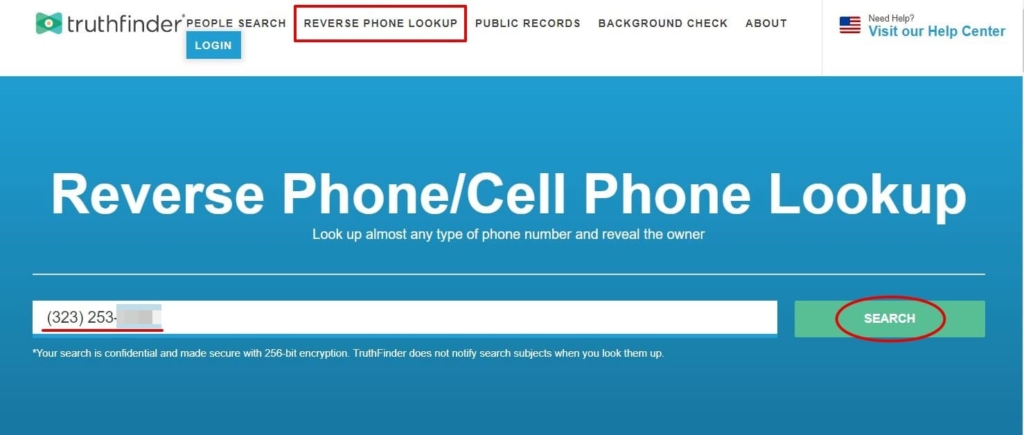
TruthFinder is a comprehensive background check company that aggregates information from government and public sources. It offers different search options, including reverse phone number lookups for unknown numbers.
Price:
$4.99.
User Experience:
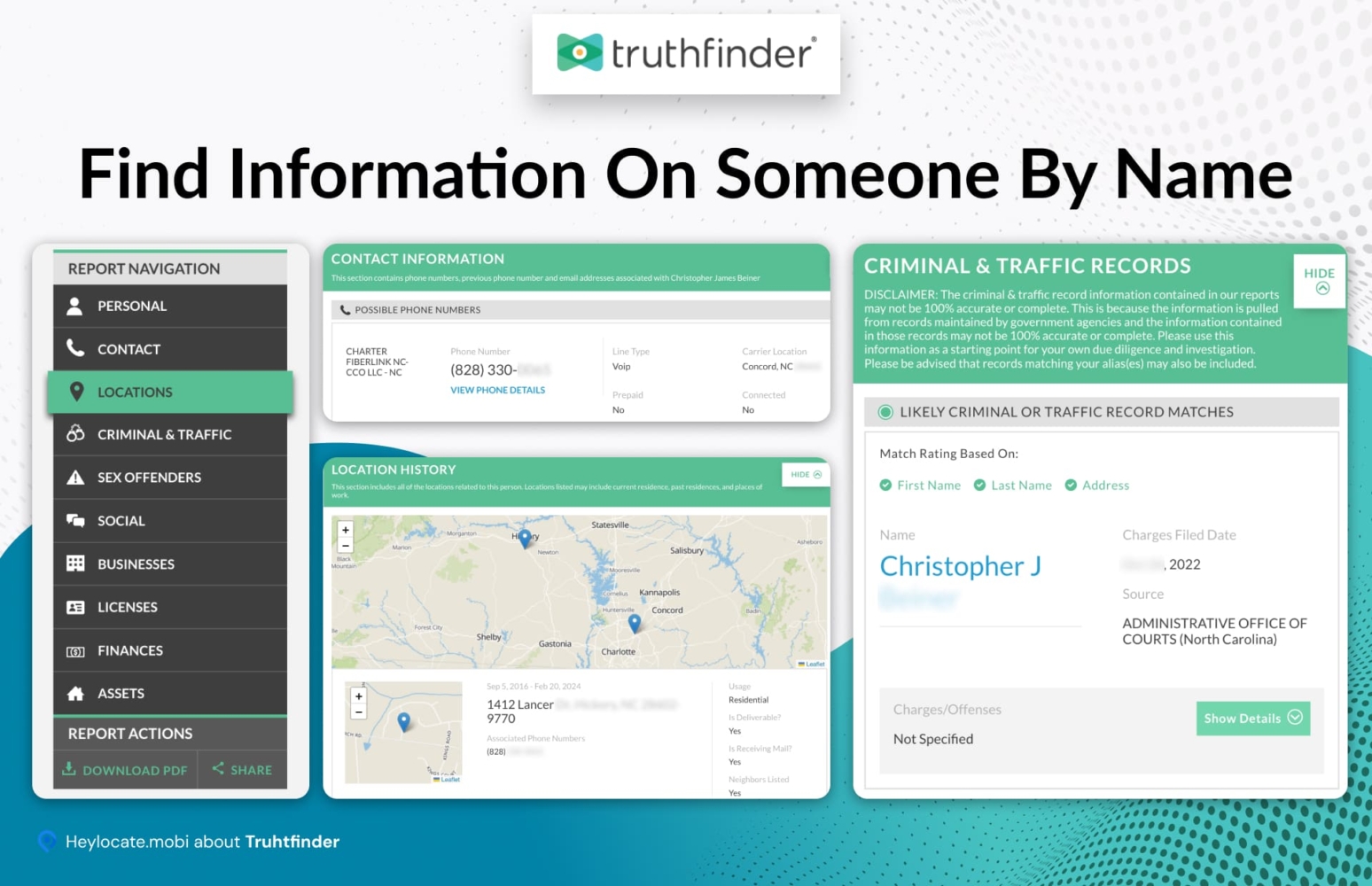
Truthfinder says you can save hundreds of dollars by extensively searching for an unknown phone number. TruthFinder had results with the owner’s first and last name, current address, available photos, social media profiles, location history, and family members.
While experimenting with TruthFinder, I could make a detailed search for the criminal history, sex offenders around the person’s location, and employment history.
TruthFinder is a verified source of public records. Its extensive reports help verify the information about a mobile number. Nevertheless, none of the information is free. A reverse phone lookup costs $4.99. Since TruthFinder updates its database daily, the results are always accurate.
The TruthFinder app is available on Apple Store and Google Play. With 1M+ downloads on Google Play and a 4.5-star rating, TruthFinder is quite popular. It’s latest update was in April 2023, and you can use it to identify scammers, track a cell phone with just a number, and perform background checks on the go.
| Quickness | Simplicity | Effectiveness | Safety |
|---|---|---|---|
| 4.6 | 4.7 | 4.8 | 4.9 |
Pros:
- one subscription offers unlimited phone reports;
- shows scammer’s name;
- includes any available photos of the scammer;
- the report can include social media profiles.
Cons:
- one needs to pay more for a background search;
- you cannot pay for only one report.
Intelius
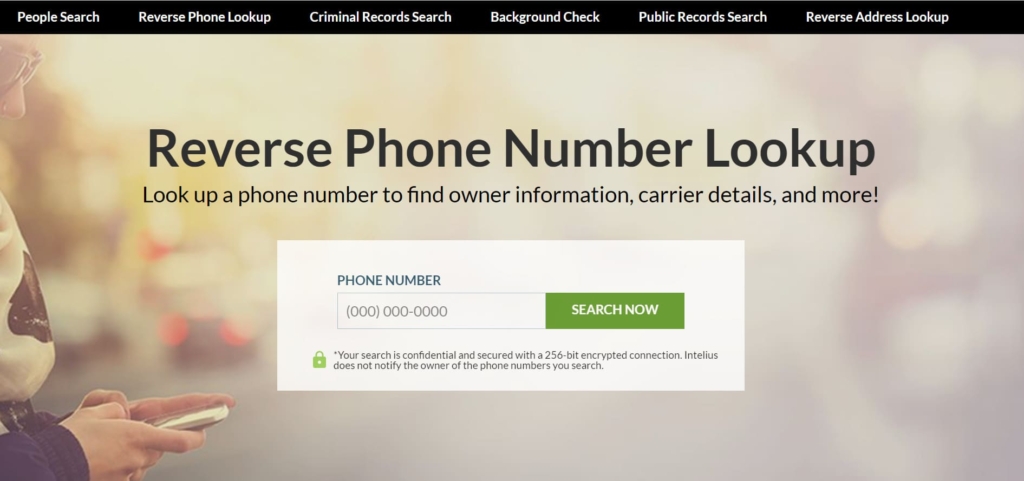
Intelius online search tool can identify owners of unknown phone numbers. It uses data from specialized sources, allowing users to easily perform scam phone number check.
Price:
- $0.95 for a 6-day trial;
- $34.95/mo.
User Experience:
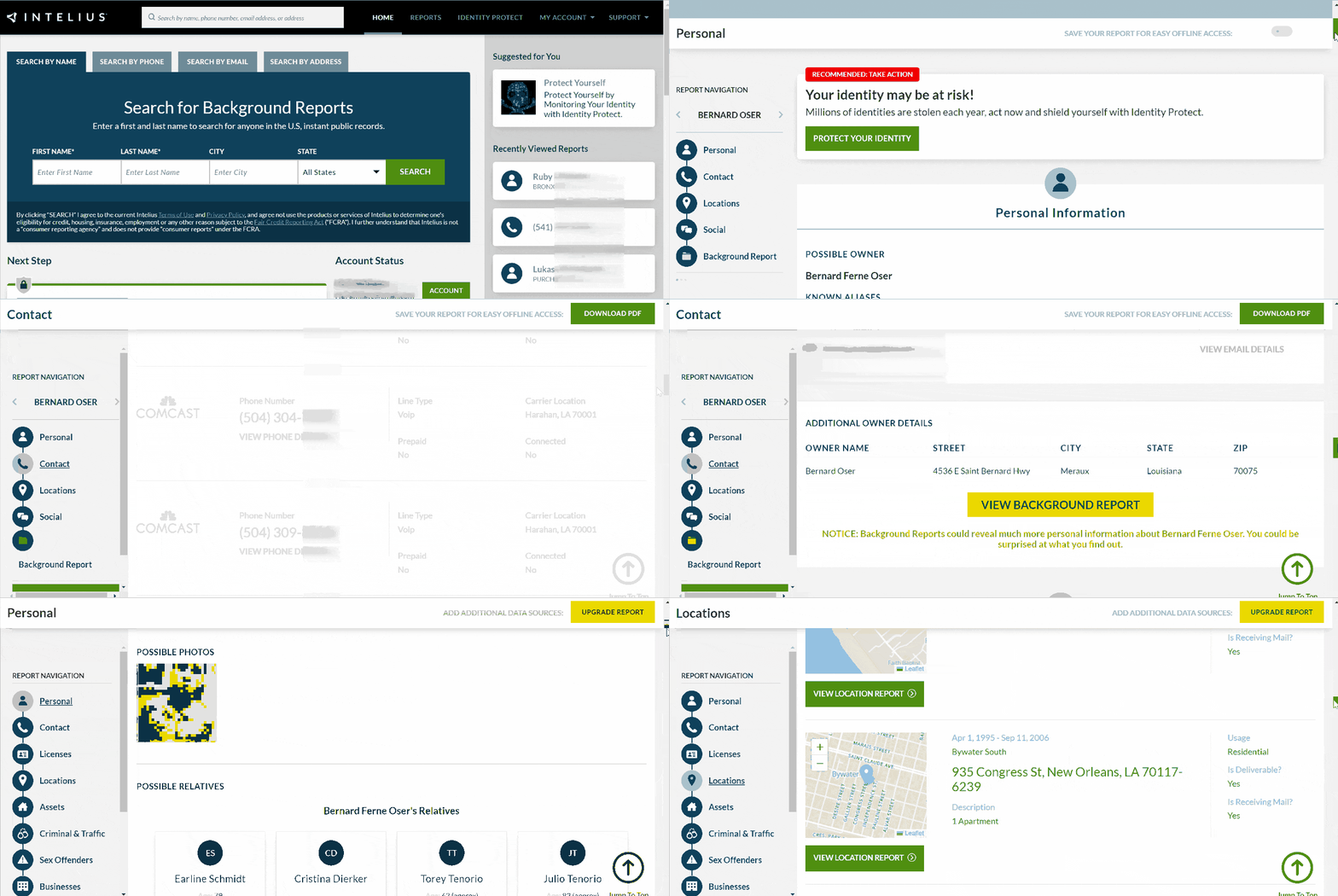
Intelius showed the owner’s name and location in a few seconds. The search was not free; I paid the 6-day trial free, that’s only $0.95. This reverse phone lookup tool is helpful for unlimited monthly phone number lookups since it charges $34.95/mo for person, phone, and address reports.
The cell phone number search also showed the number’s carrier. Hence, I would identify it as spam if it were not a local number. Once I opened the report, it revealed the other phone contacts associated with the owner, their location history, social media profiles, and a background report.
Intelius revealed information I wouldn’t get with a free reverse phone lookup which is why it’s one of the best ways to check if a number belongs to a scammer.
Intelius also has an app available for Android and iOS. It gives users background searches on the go with just a few clicks. The app has 100K+ downloads and 4.6 stars rating. Its latest update was in November 2022.
| Quickness | Simplicity | Effectiveness | Safety |
|---|---|---|---|
| 4.8 | 4.7 | 4.8 | 5 |
Pros:
- unlimited reports with a single subscription;
- allows paying per search;
- produces detailed background reports;
- accurate and reliable search results.
Cons:
- does not list some numbers;
- some reports are incomplete.
Spokeo
Spokeo is a subscription-based service that has helped millions of users reconnect with friends and relatives. It has also helped people avoid scammers like how Gilbert avoided a timeshare scammer.
Price:
$19.95.
User Experience:
Spokeo reverse number search goes through billions of records before summarizing the owner’s details. This search engine yielded verifiable search results with the owner’s name, aliases, family information, current address, and location history.
Spokeo does not have a free trial, but I got access to a free trial for this review. Nonetheless, you will need to pay a monthly subscription fee of $19.95 for 100 searches with detailed background reports.
The detailed background report had information about a person’s estimated income, property ownership, and criminal records. It could also reveal businesses, so if a person had called to say they were from a particular company but was not on Spokeo’s result, it mostly turned out to be a scammer.
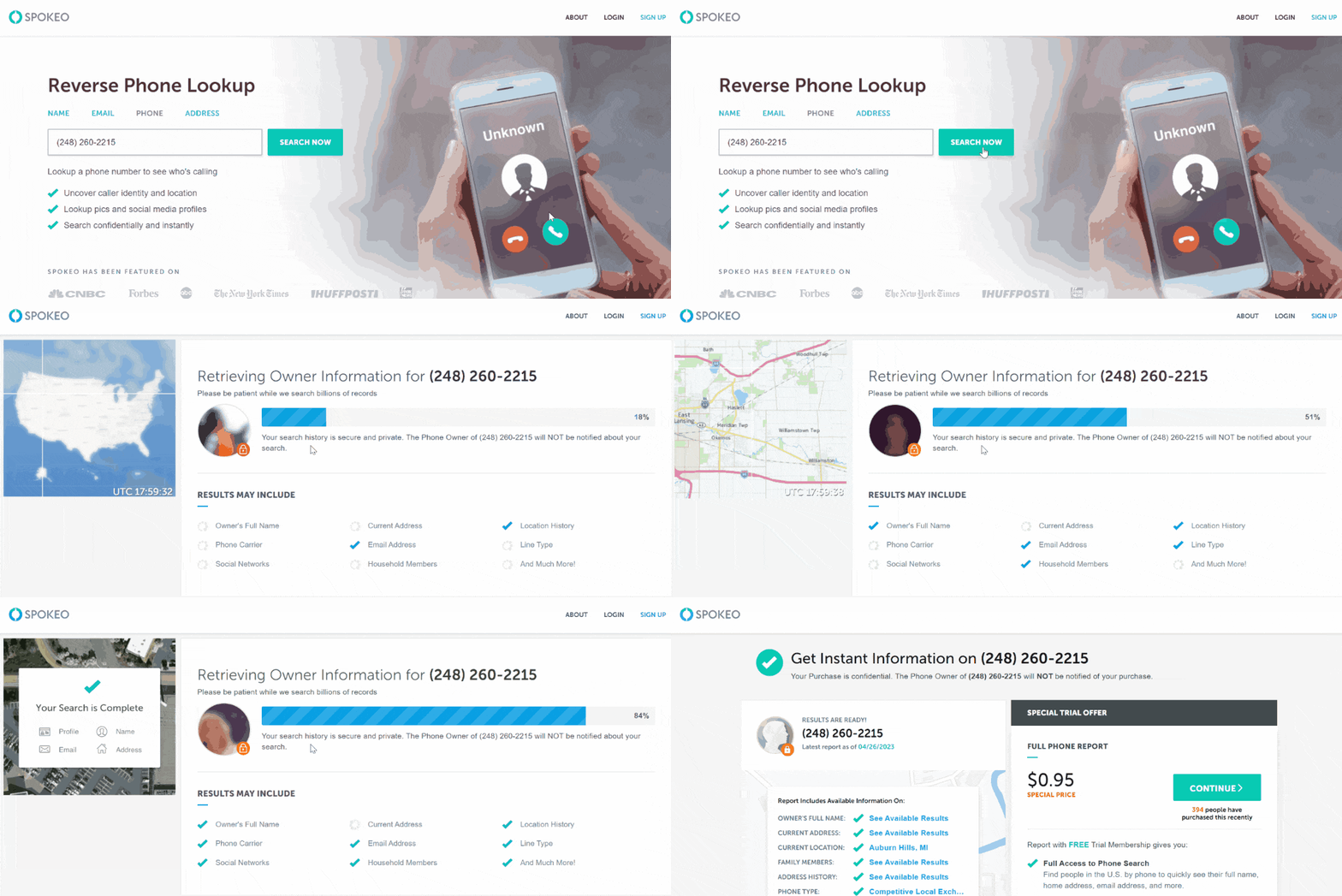
The Spokeo app for Android can block scammers & telemarketers and reveal unknown callers. It has a 4-star rating from 100K+ downloads. Its latest update was in August 2021. You can use it to find missing or lost contact details. However, the app is only available for Android devices.
| Quickness | Simplicity | Effectiveness | Safety |
|---|---|---|---|
| 4.7 | 4.7 | 4.8 | 4.9 |
Pros:
- sorts the data in real time;
- offers PDF downloads;
- can determine a person’s name and family;
- collects information from public records and social media platforms.
Cons:
- searches only US phone numbers;
- some information requires additional fees.
Instant Checkmate
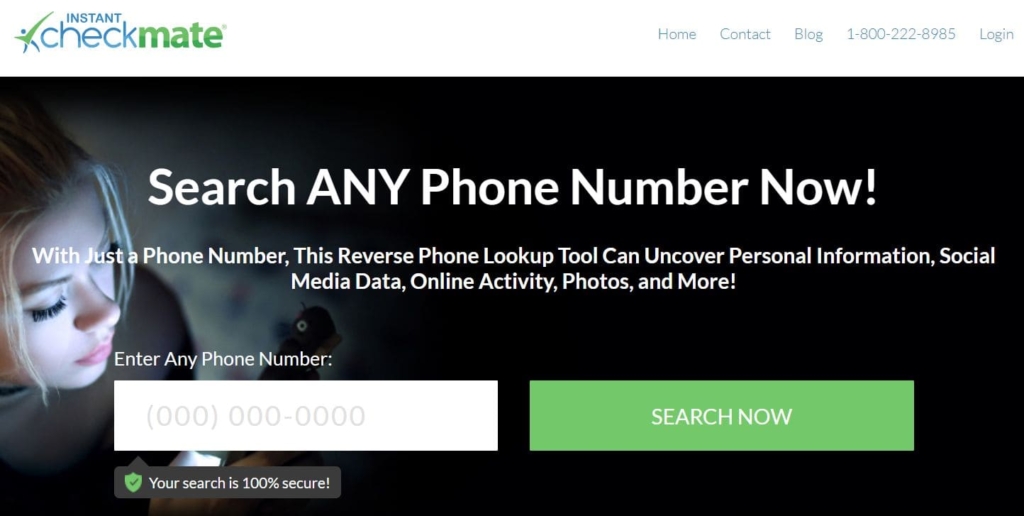
Instant Checkmate allows users to search through public records for anyone’s information. Instant Checkmate is a leading people search engine that gives instant access to millions of documents.
Price:
- $1 for a 5-day trial;
- $35.12/mo;
- $28.09/mo paid quarterly.
User Experience:
Instant Checkmate reverse phone number lookup revealed the name and address of the caller. There was also demographic information like address and whether any organization had registered the number. I did not get any information for free but paid the $1 for a 5-day trial.
Instant Checkmate is a legit website; hence, any information it yielded was accurate. In addition, the site updates its data every 24 hours for the best results. It does not show any messages of anyone who has been scammed. It gives you information that you will use to judge whether an unknown call is a scammer.
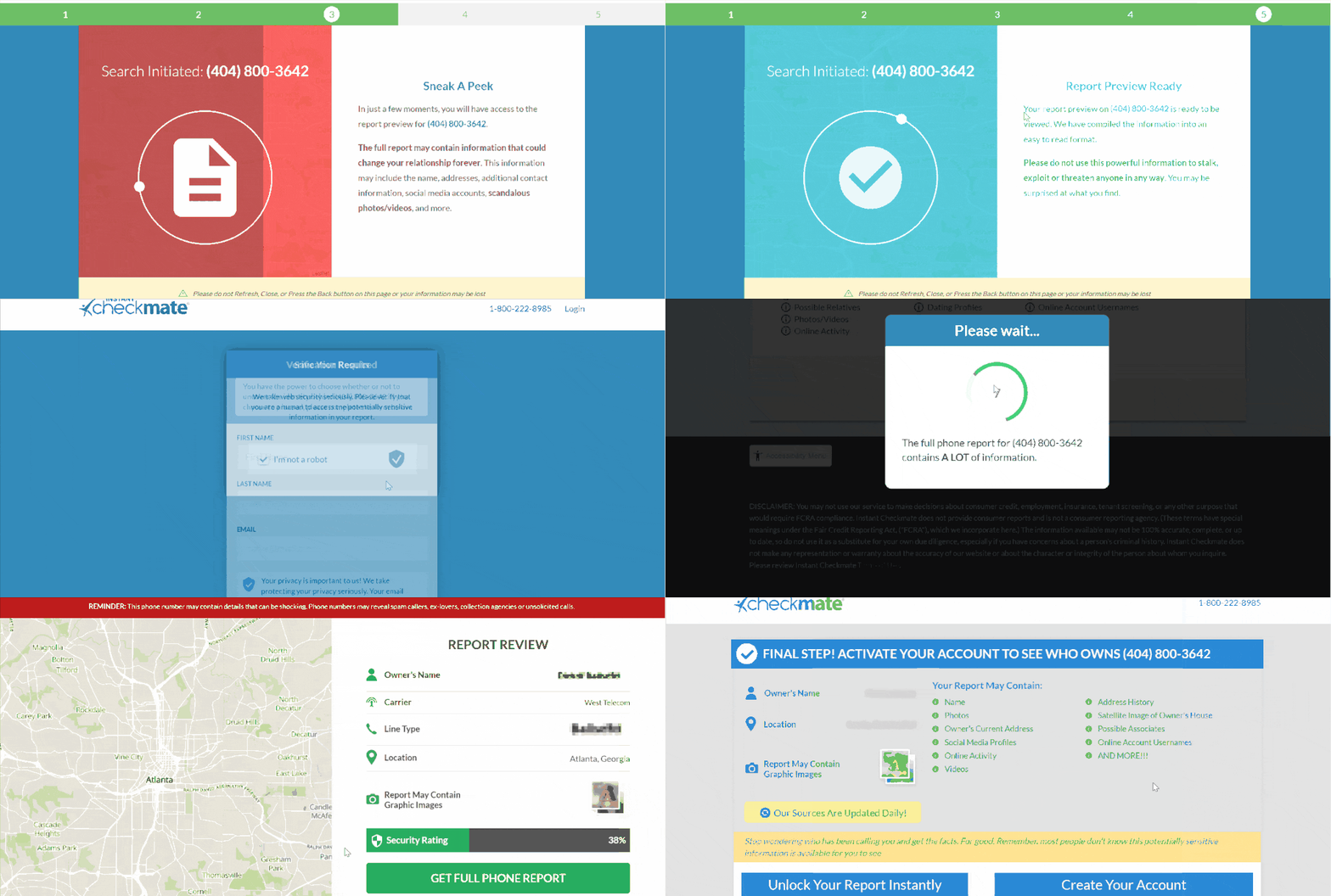
The Instant Checkmate app is available on the Apple Store and Google Play. Millions of people access the app daily to verify callers, check criminal records, contact info, financial info, etc. It has over 500K users and a 4.4 stars rating on Google Play.
| Quickness | Simplicity | Effectiveness | Safety |
|---|---|---|---|
| 4.6 | 4.8 | 4.8 | 4.9 |
Pros:
- it has a sex offenders database;
- includes county, federal, and social media info in one report;
- unlimited reports with one subscription;
- you can use data points to generate reports after subscription.
Cons:
- renews subscriptions automatically;
- reveals results only with a paid membership.
Affiliate and Fake Scammer Lookup Services
We don’t recommend using the next services, as they lead to the same sites as reviewed above or don’t even give any result.
Cocofinder
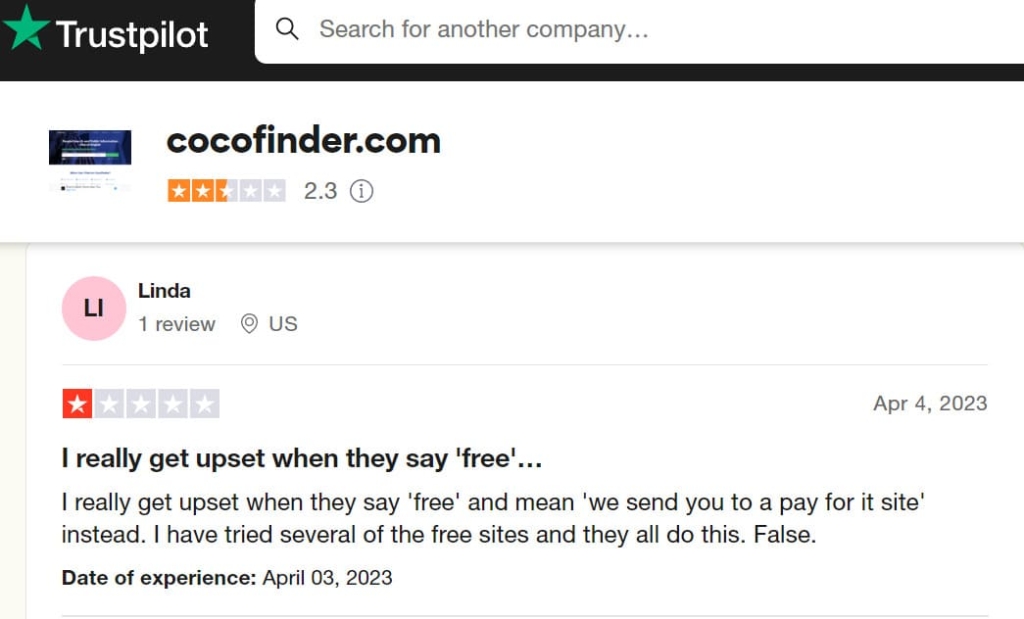
Whenever I tried to search for a number on Cocofinder, it would redirect to TruthFinder and open a new tab for BeenVerified. While it says it’s free, it sent me to a paid site. This means it’s neither free nor genuine. Users also indicate their frustration with Cocofinder citing its false claim of being free.
Spytox
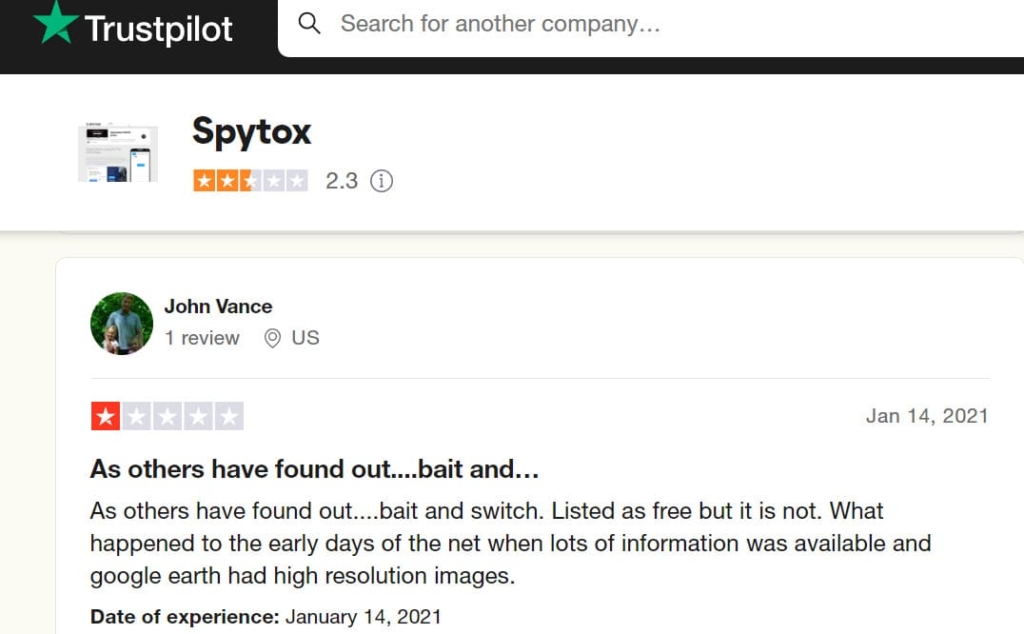
Spytox claims it’s an authority search engine. However, it did not reach the search results page after indicating it was searching for the information. Instead, it showed a (404 not available) result. Scam-detector.com has given it a low trust score indicating it’s not a legitimate website.
Zosearch
Another fake site is Zosearch. No matter how many times I hit search, the site could not initiate the search. Although it does not come up on phishing websites, it simply does not work as intended. Zosearch does not also have customer reviews indicating it receives very few visitors.
Affiliate Sites:
These sites are affiliates of Spokeo, TruthFinder, and BeenVerified.
- https://greatpeoplesearch.com/
- https://www.zabasearch.com/
- https://numlooker.com/
- https://usphonesearch.com/
- https://usphonelookup.com/
List of Scammer Phone Numbers in 2023
Since scams are becoming more prevalent, you can watch out for these list of scammer phone numbers in 2023. It’s important to know that scammers change their numbers often to avoid being caught. However, they operate in known area codes as follows:
- 216 – Cleveland, Ohio
- 218 – Northern Minnesota
- 232 – Sierra Leone
- 242 – Bahamas
- 268 – Antigua and Barbuda
- 284 – British Virgin Islands
- 332 – New York City
- 347 – New York City
- 441 – Bermuda
- 469 – Dallas, Texas
- 473 – Grenada, Carriacou and Petite Martinique
- 649 – Turk and Caicos Islands
- 646 – Manhattan
- 657 – La Palma, California
- 664 – Montserrat
- 712 – Western Iowa
- 767 – Commonwealth of Dominica
- 809, 829, 849 – associated with the Dominican Republic
- 869 – St. Kitts and Nevis
- 876 – Jamaica
Where to Report a Scam Crime
If you’ve been a phone scam victim, report the incident to your phone’s carrier, so they can block the number. In addition, you can engage law enforcement for lost money or go to ReportFraud.ftc.gov or contact the Federal Communications Commission at 888-225-5322.
Conclusion
Get ahead of scammers by discovering their identity using the best free scammer phone number lookup services. While there are lots of options for a scam phone number check, most only reveal the number’s scam score, and they may be inaccurate. It’s best to use reverse phone number tools with a little pay to get detailed information about an unknown caller.
My favorite is TruthFinder since it reveals personal details, companies, and associated with the caller. TrueCaller has free and paid versions, with the free plan allowing you to block scammers and identify spammy numbers when they call. InstantCheckMate search through criminal records, and Intelius can show related social media and persons.
Frequently Asked Questions (FAQs)
It is rather difficult to track an experienced scammer by yourself. Still, you can use whatever information you have about this person to check in search engines, social media or reverse lookup tools like TruthFinder or Intelius.
Conduct a quick search on Truecaller to see if the number has been listed as scam. You can also do a search on Google with the number you intend to search for written in quotation marks.
Some 100% free phone lookup are SpyDialer and TrueCaller. You can expect only the scam score of the number and perhaps their name or associated scam on these sites.
Use a reverse phone number lookup site to check if a phone number is spam. TruthFinder is a top choice since you can do a background search. Other top options include Spokeo, Intelius, and Instant Checkmate.
Check the number on CallerName or White Pages, since these sites validate the number. They can tell whether the area code is assigned and if any carrier registers the number.




 Monday-Sunday: 5:00am - 8:00pm (PT)
Leave a Comment