




 Affiliate Disclaimer
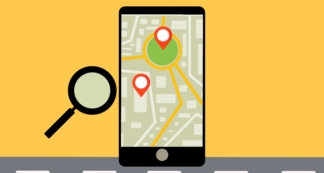
 “To ping a phone” simply means to attempt to find the current location of a phone. There are different ways to ping a cell phone location, depending on your needs: to track your device or someone’s.

There are many reasons for needing to find the location of a cell phone. Perhaps you want to track down your lost or stolen device. Maybe you believe your spouse is being unfaithful and want proof to confront them with their infidelity. Or you just need to be sure that your children are in a place where they should be.
Google states you can’t directly ping a cellphone number unless you access the carrier’s system. Therefore, it’s only available for carriers and law enforcement within range. But you can ping a cell phone location freely and legally too. The civilian counterpart is installing a phone-tracking app that sends the phone’s location to the person who installed and administered it.
Provide the Phone Number to Locate It Swiftly
- Number Tracking
- Phone Lookup
Top Pick Based on Our Research
You can read the whole review further, but if it is too long to read, here are our top 3 services that track location by text message:
🥇 Scannero
This Web-based service pings phone location through SMS with a tracking link. Send it anonymously and without installing any software.
🥈 uMobix
It is a cell phone and tablet tracking app that helps parents to ensure their children’s safety. uMobix tracks the location of your child’s smartphone and can be used for ethical parenting purposes.
This service aims at enabling the tracking of mobile phones anywhere in the world by sending location requests via text message. The ability to track has been made available on app and desktop versions.
Table of top services to ping a phone
Many services claim to be free and effective, but they have limitations like the number of requests, lack of customer service, and sometimes even inability to track the device. We have done the research for you, scouring the internet to find services that really work and also provide reliable results.
So to avoid the headaches that come with searching for the right app, sometimes it’s better to use paid services that are publicly audited for trustworthiness, clarity, and accuracy. In fact, you don’t have time for mistakes or to test out unreliable options, and do you really want to take your chances when it comes to your children’s or loved one’s safety?
Total apps researched 40
Total apps shortlisted 16
| Service | Best for | Compatibility | Price | Free trial | Effectiveness (1-5 points) |
|---|---|---|---|---|---|
| Locationtracker | Tracking via SMS | All devices | €39.99/month €139.99/year | No free trial | 4.4 |
| Scannero | Finding a phone’s location by phone number | Android, iOS, PC | $0.89 one-time charge or $49.80/month | No free trial | 4.8 |
| Phonsee | Monitoring a child’s phone | Android and iOS | 1 month $42.51/mo; 3 months $24.79/mo; 12 months $8.85/mo | No free trial | 4.6 |
| Detectico | Finding someone by number | Android, iOS, PC | $0.89 one-time charge or $49.80/month | No free trial | 4.6 |
| OverWatch | Free mobile tracker | Android and iOS | €12-49 per month, depending on the package | A demo is available | 4.8 |
| Mspy | Parental control and mobile tracking | Android and iOS | $11.66/month | A demo is available | 4.4 |
| XNSPY | Cell phone monitoring | Android and iOS | €12-49 per month, depending on the package | A demo is available | 4.8 |
| GEOfinder | Trace a phone number | All devices | $39.99/month | $1.0/trial | 4.8 |
| uMobix | Cell phone tracker for modern parents | Android OS 4+, all iPhones and iPads | $49.99/month | A demo is available | 4.6 |
| Cocospy | Parental control, tracking, and remote surveillance | Android and iOS | €12-49 per month, depending on the package | A demo is available | 4.4 |
| EyeZy | Parental control, phone monitoring | Android and iOS | €9-47 per month, depending on the package | A demo is available | 4.4 |
| Phone number tracker | Phone tracking by number | Android | Free | Free | 3 |
| Followmee GPS tracker | Cell phone tracking | Android and iOS | Free | Free | 3.2 |
| Mobile number location | Phone tracking by number | Android | Free | Free | 3 |
| Number location finder | Finding someone by number | iOS | Free | Free | 3.6 |
| Search & Track by Number | Phone tracking by number | iOS | Free | Free | 3.8 |
We took some resources from the top reviews of the best, and almost all of them were awful. So trust only verified sources of information or blogs of specialized services related to telecommunications. For example, like our HeyLocate blog.
How to ping an iPhone
An iPhone has a dedicated in-built app Find My that allows pinging and tracking iOS devices.
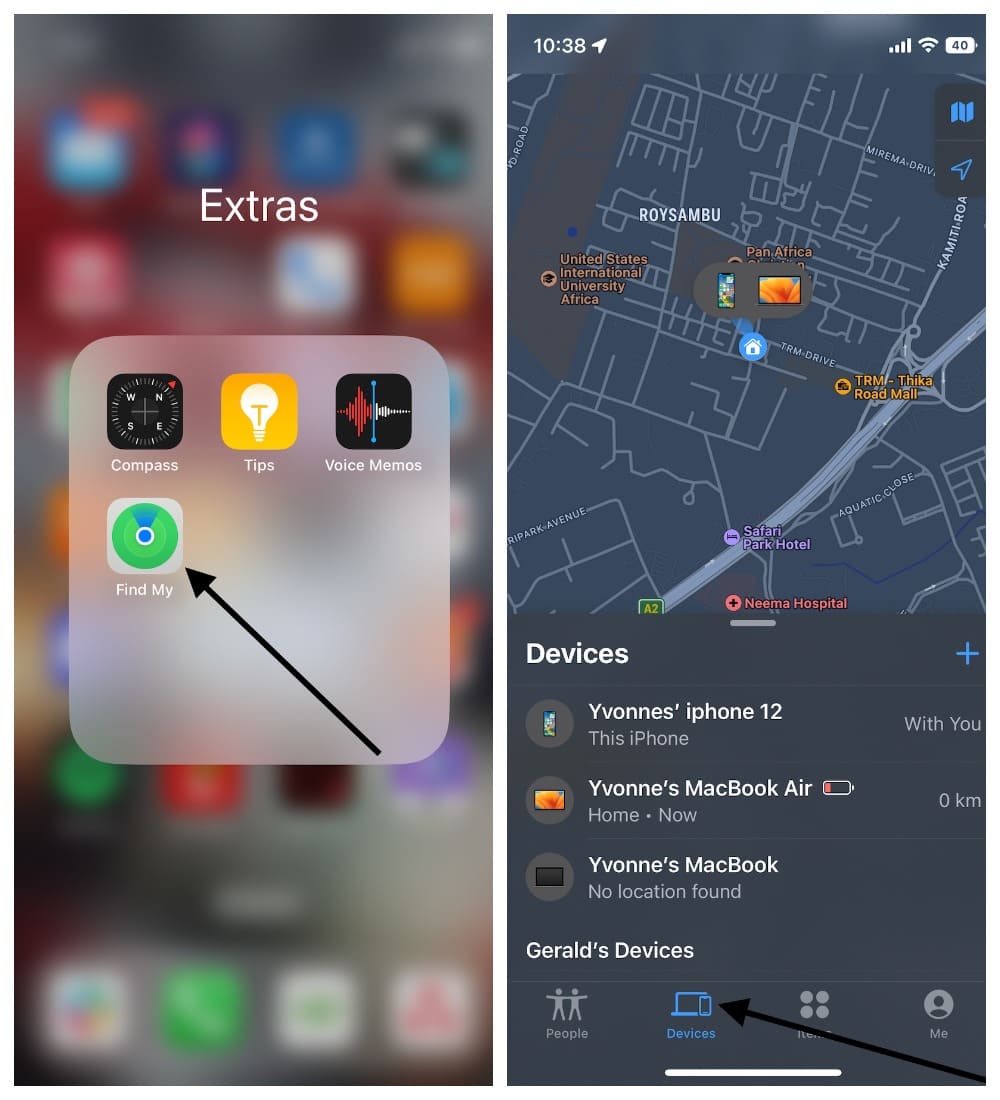
Play Sound on a Lost iPhone
- Go to Find My app on your iPhone.
- Tap the Devices icon at the bottom.
- A list of your Apple devices linked and synced to your iPhone will appear in the Devices list.

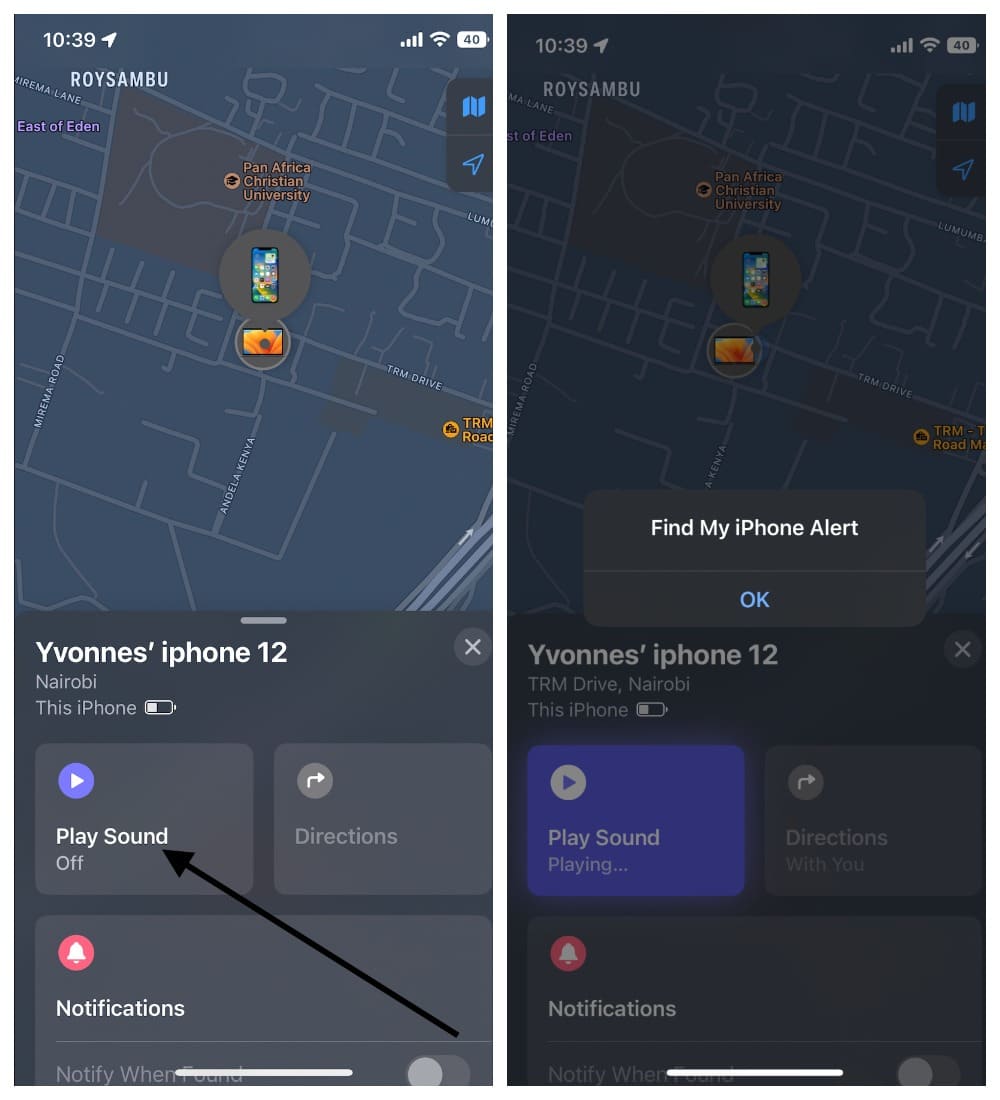
- Select the specific device you want to ping.
- Tap play sound, and your iPhone will make a loud noise until you stop it or exit the Find My iPhone app.
- If your iPhone is nearby, you’ll be able to locate it.
How to Find Someone’s iPhone
Find my app lets you track your friends’ location in real time so you know where they are. You can share your location with them and see their shared information, too. To use Find my, you must have iCloud enabled on your phone and be signed in with an Apple ID. Find my friends also requires location services to be enabled. If they are not enabled, then the app will not work as intended.
- Launch the Find my app by tapping the icon.
- Then tap the People button at the bottom of screen.
- Next, tap the Start sharing location button.
- Now, tap the Add button in the top right corner.
- Next, add your friend’s name, email address, or phone number.

- Then, choose how long you want to share your location. It can be: Share for one hour, Share until the end of the day, or Share indefinitely.
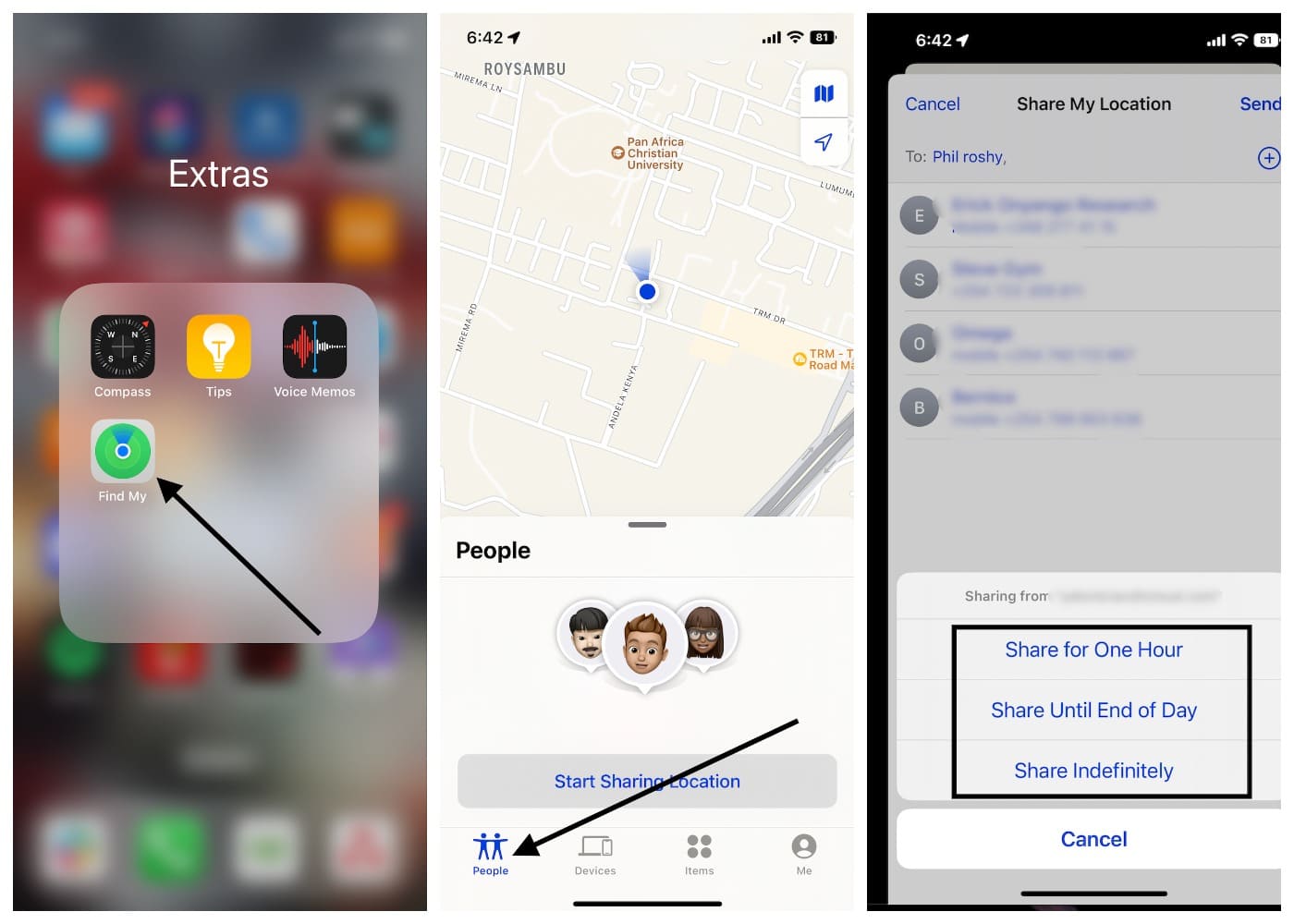
Now you can share your location with a person you chose, and they will see your location on the map.
How to ping iPhone from Apple Watch
To ping an iPhone from an Apple Watch, access the watch’s control center and tap a button to ping your phone.
- Open the Control Center on Apple Watch by swiping up from the bottom of the watch face.
- Look for the Ping icon, which looks like a phone with curve lines on both sides.
- Tap the Ping icon and hold the button for three seconds. Your iPhone will make a loud noise, even if it’s on silent. It will also have a flashlight so that you can find it easily.
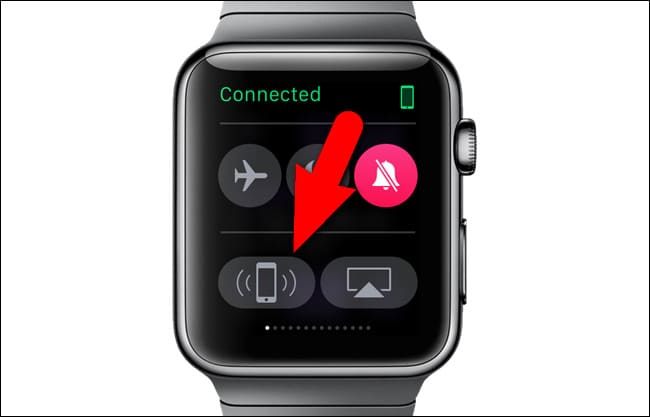
To ping your phone with your Apple Watch, the phone has to be in close proximity. Otherwise, it won’t be able to do so. This feature is most useful when your phone slips under the sofa or is lost somewhere in your car.
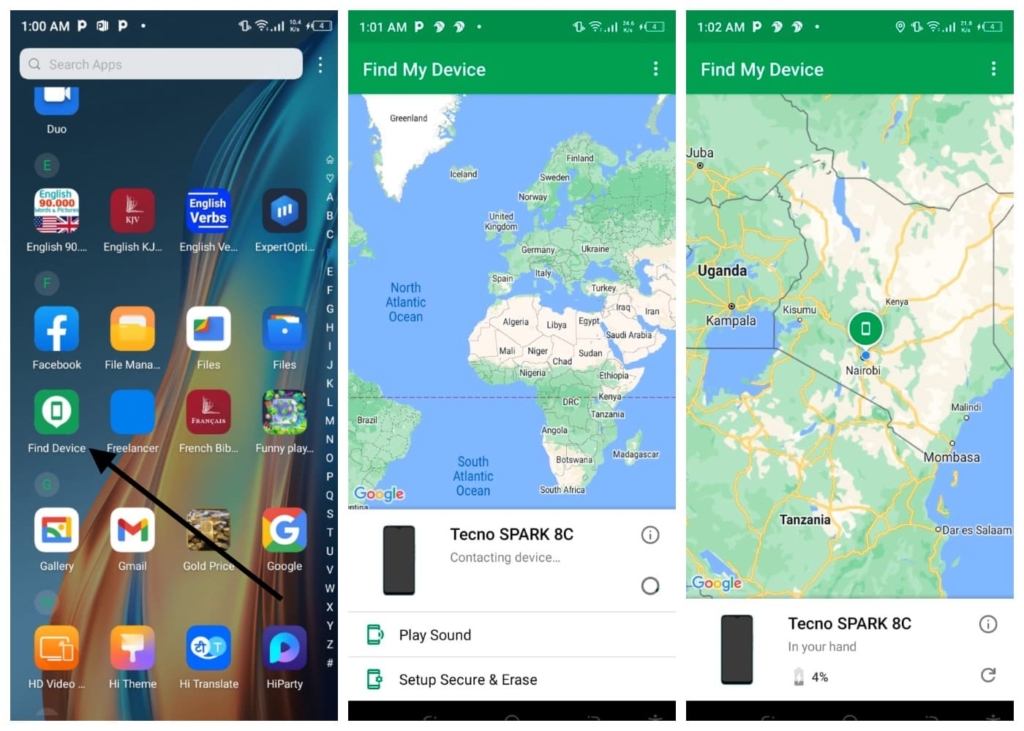
How does Find my Device work for pinging Android
The Find My Device service helps you find, lock, and erase your device directly from another Android phone, PC or tablet. This app suits every Android phone, although some mobile brands have their own locators, like, for example, SmartThings Find to track Samsung phone.
- Go to the Find My Device app.
- If you have more than one device you want to locate, select Add Device.
- Select your device from the list, or enter a new device’s information to add it to your list.
- Choose the options you would like to use, such as “Find my smartphone”.
- In the App Settings, you have different options to locate your device or change its settings.
Ping a phone number with third-party apps and services
Different third-party apps and services offer the ability to locate a lost phone via text message, have GPS tracking features, and some also allow you to remotely monitor the device. It is important you do research before committing to any service. But we have already done this for you. Just choose what works better for your needs.
Scannero
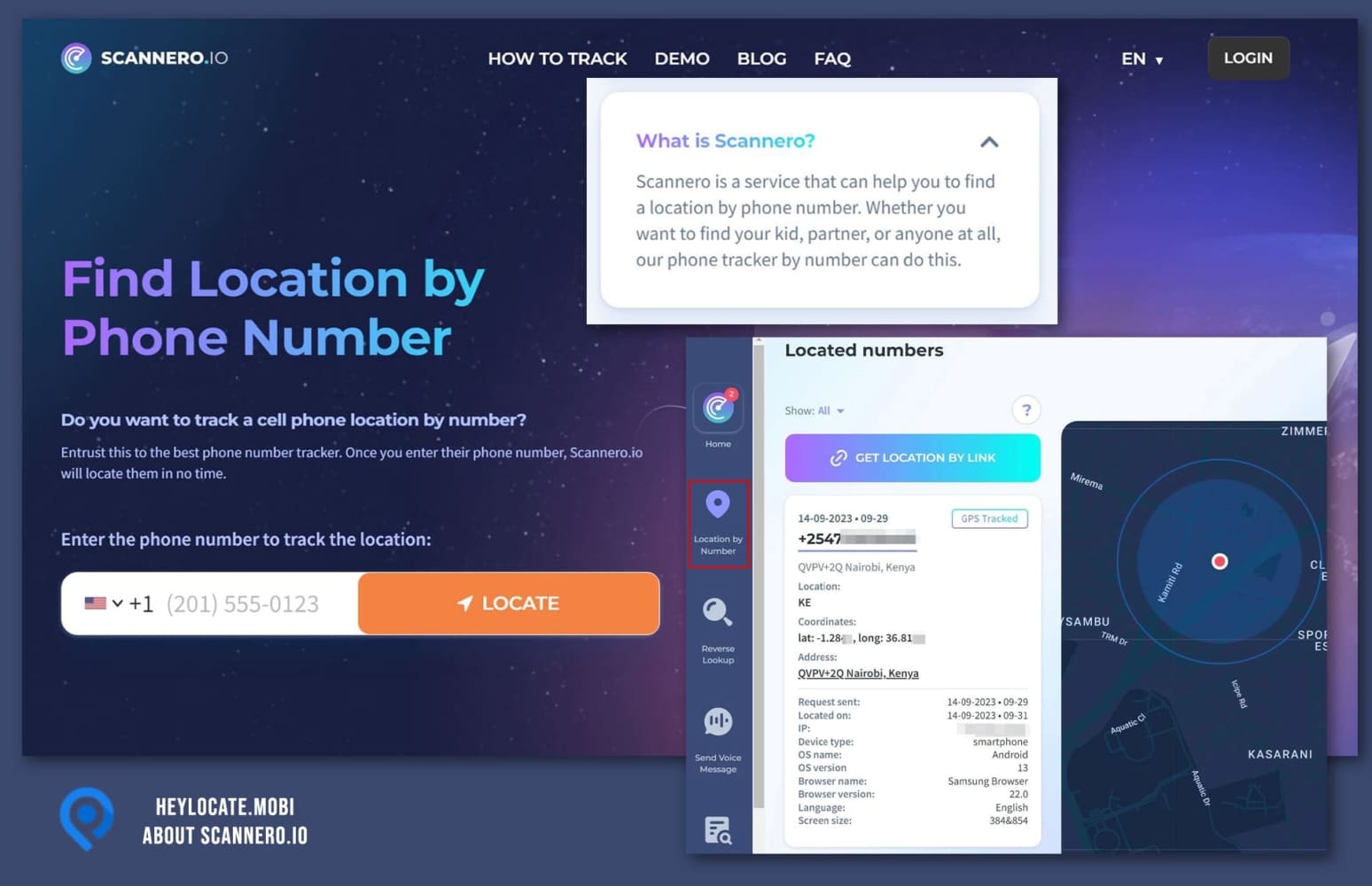
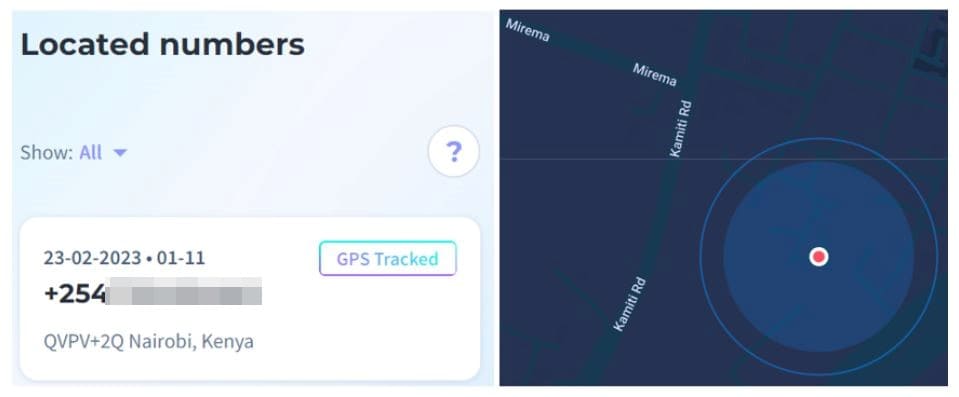
Scannero is a phone tracking service that can find the location of a mobile phone by sending a text message to the phone number. It provides you with the exact location of a phone on the Scannero dashboard.
Compatibility:
Android, iOS, PC.
Features:
- precise location tracking;
- reverse phone and username lookups;
- sends message to lost phone;
- sends voice message to lost phone;
- data privacy checker.
User Experience:
I found Scannero to be an easy service to use to ping a phone’s location. After I sent a text message to the recipient, I got the precise phone’s location on a map. I did not have to wait long since the custom messages had a sense of urgency. Scannero had no distracting ads, and I could navigate the platform’s features as I liked.
| Quickness | simplicity | Effectiveness | Safety | Accessibility |
|---|---|---|---|---|
| 5 | 5 | 4 | 5 | 5 |
Pros:
- no need to install an app on the target’s phone;
- can help find a stolen phone;
- tracks both Android and iOS devices;
- supports all networks.
Cons:
- requires charges for everyday tracking;
- the phone has to have an internet connection.
Phonsee
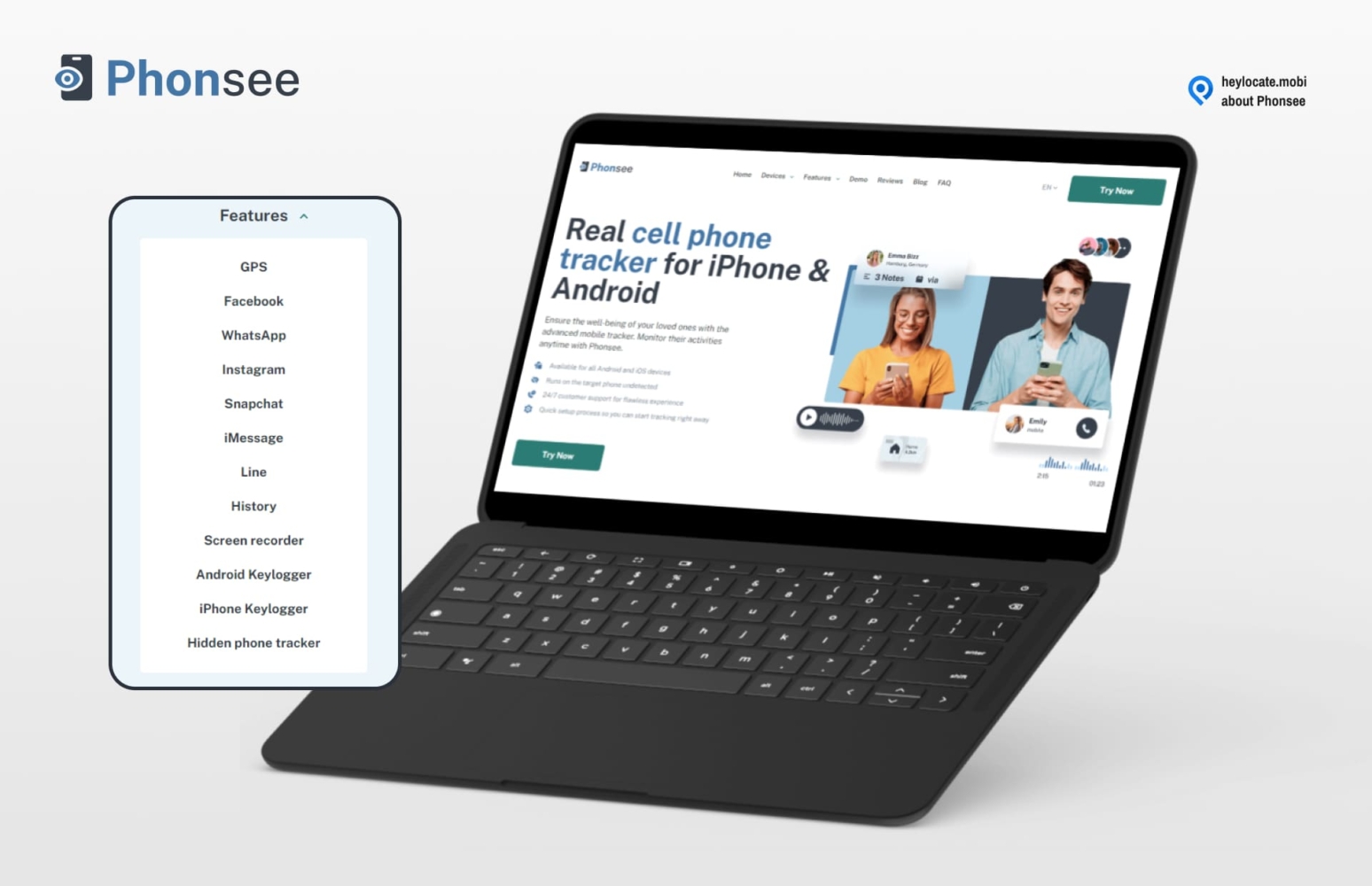
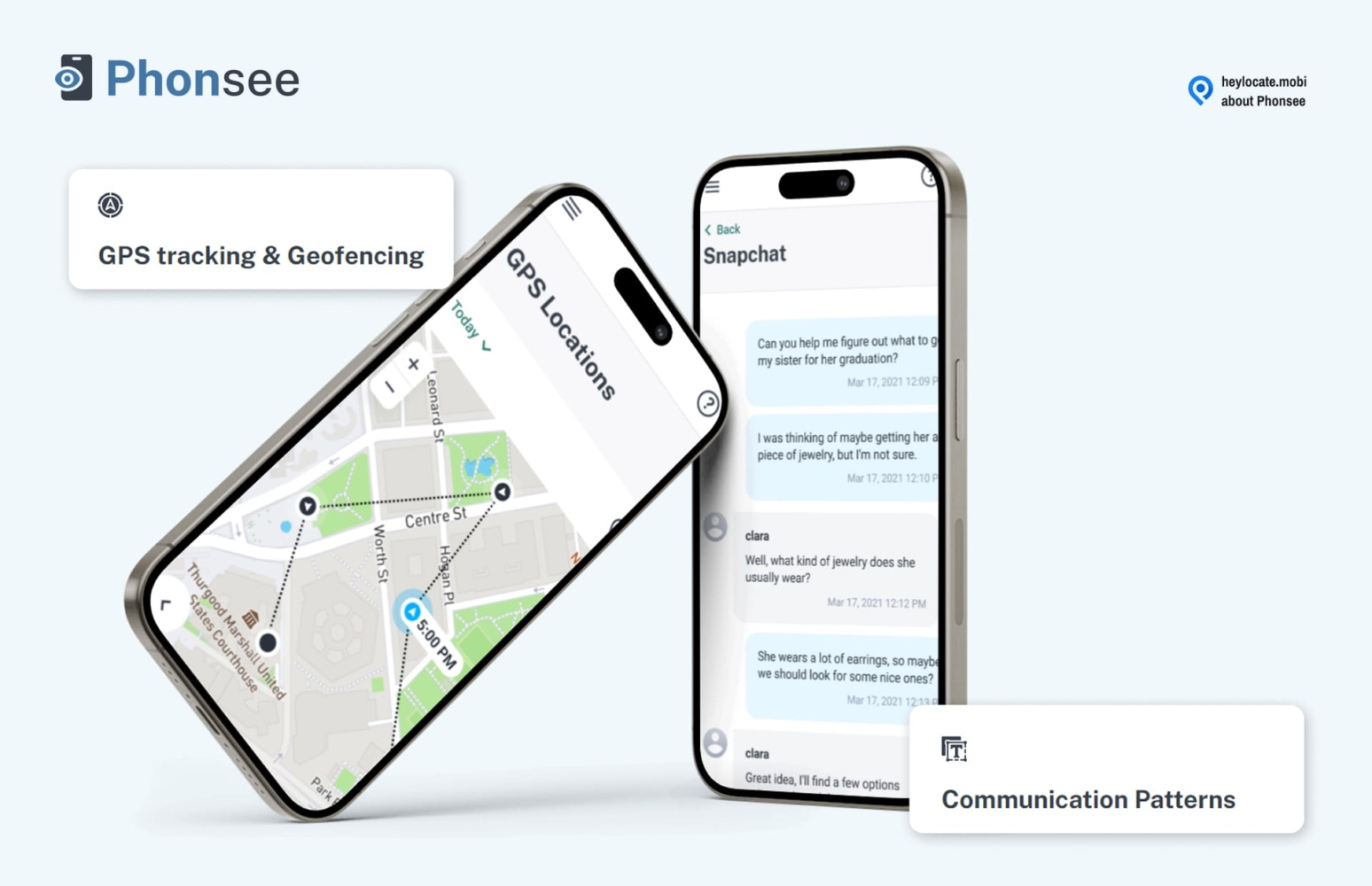
Phonsee is a mobile tracking application for both iPhone and Android devices. The app offers real-time location monitoring so you can ping a phone at anytime. Phonsee has a quick setup process and offers 24/7 customer support for a seamless experience.
Compatibility:
Android 4.0+, All iOS.
Features:
- live location tracking;
- 24/7 customer support;
- social media monitoring;
- screen recorder and keylogger.
User Experience:
Phonsee was pretty straightforward to use for pinging a phone’s location. Once I installed it on the monitored phone, I could see its location anytime. I used this app to monitor a kid’s phone, but you can also monitor employee devices or a partner’s phone activities.
| Quickness | simplicity | Effectiveness | Safety | Accessibility |
|---|---|---|---|---|
| 5 | 5 | 4 | 5 | 4 |
Pros:
- accurate real-time GPS location tracking;
- the geofencing feature creates safe and dangerous virtual boundaries;
- comprehensive text message and calls monitoring;
- can block offensive apps and websites.
Cons:
- requires a monthly subscription;
- installing on iPhones can be challenging if 2-factor authentication is required.
Detectico
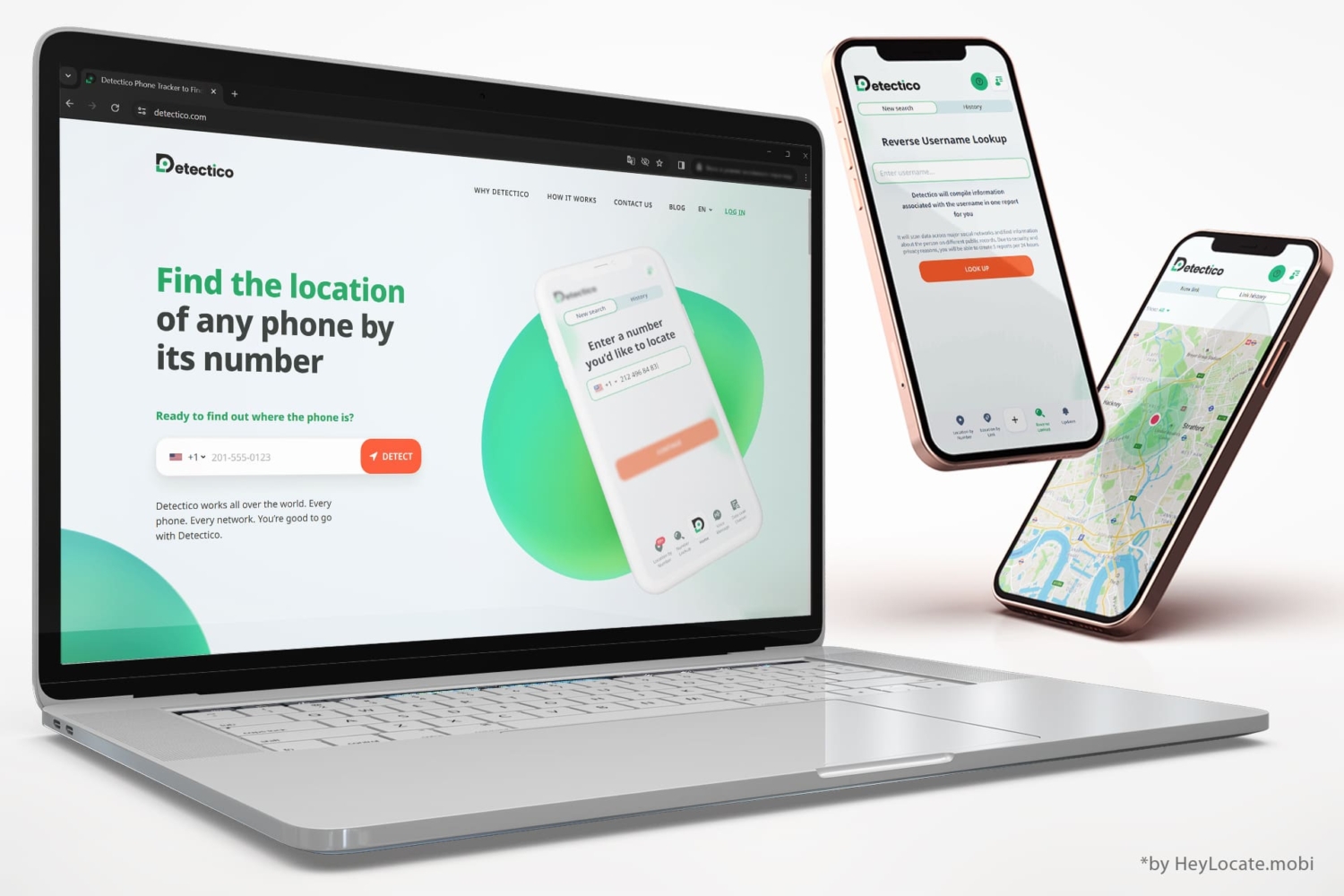
Detectico is an online platform that can ping a phone’s location using its phone number. The service can locate any phone number, so you can use it to find a lost device or ensure the safety of a loved one. Detectico can also identify the owner of a phone number so you can ping even the phones of unknown callers.
Compatibility:
Android, iOS, PC.
Features:
- live location mapping;
- private and anonymous;
- no software installation required;
- precise location tracking.
User Experience:
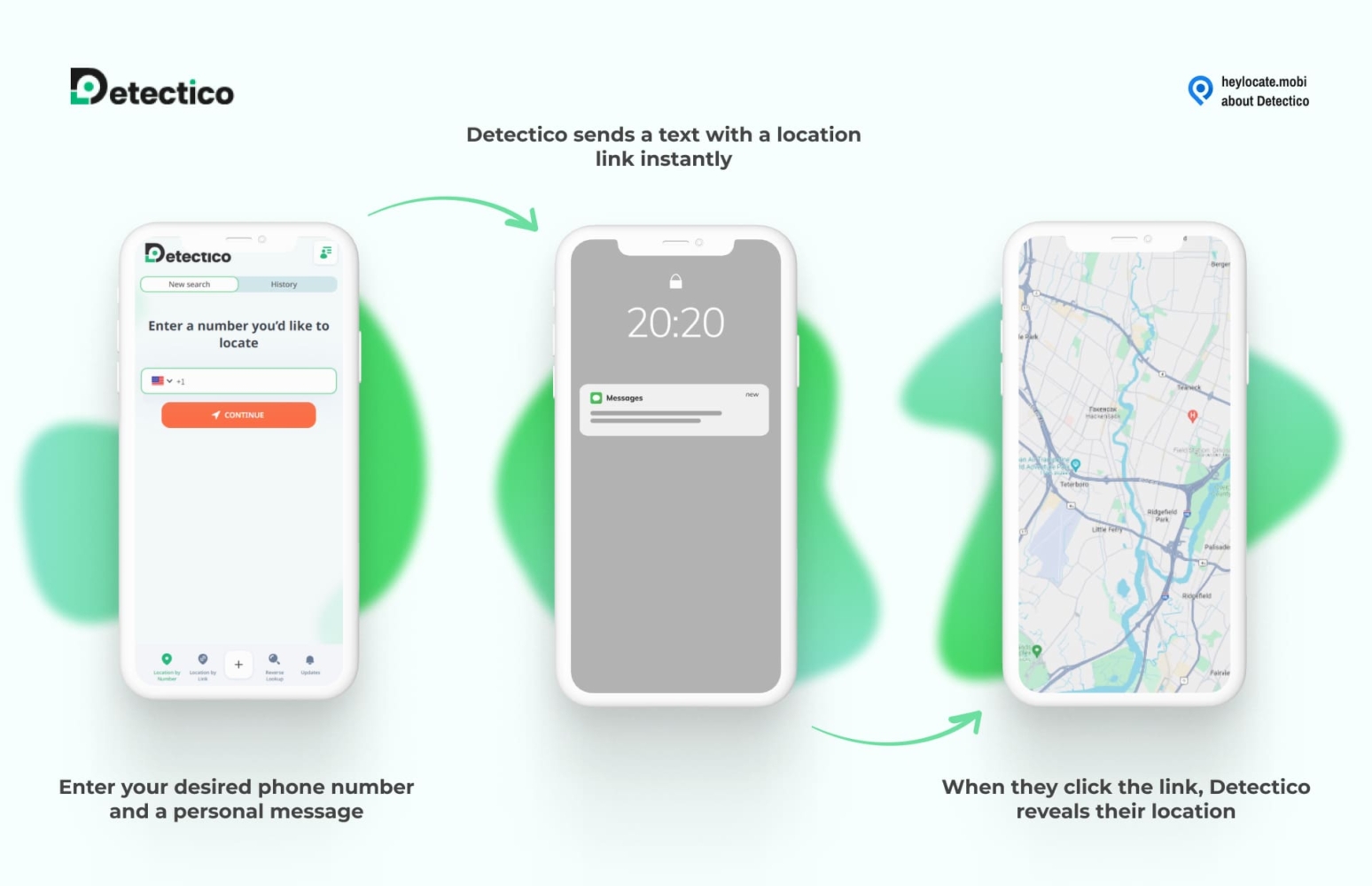
Detectico’s dashboard is simple to use. It did not have a customer funnel, and I was directed to a page to pay for a 24-hour trial that cost $0.89. After that, I chose from several custom messages and sent one. The platform sent the text message, and within a few minutes, it showed me the phone’s location on a map.
| Quickness | simplicity | Effectiveness | Safety | Accessibility |
|---|---|---|---|---|
| 4 | 5 | 5 | 5 | 4 |
Pros:
- works worldwide with all phone carriers;
- no installation is required on the target device;
- ensures the privacy of the user and the tracked phone;
- super precise GPS pinging.
Cons:
- requires an internet connection;
- effectiveness varies with the target’s responsiveness.
Mspy
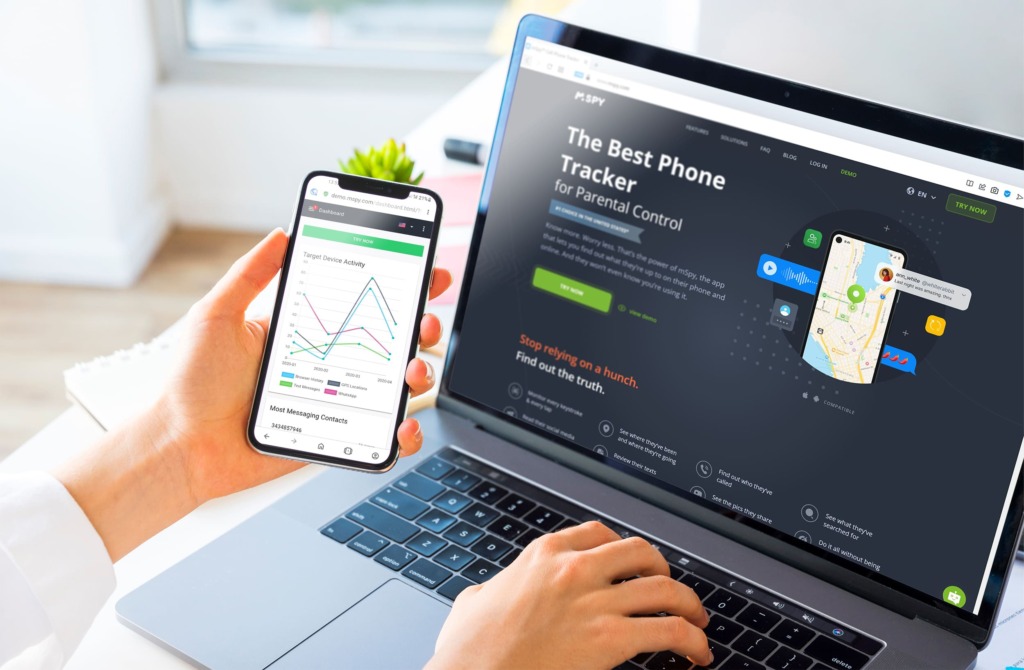
Mspy is another popular choice, mostly among parents who want to keep tabs on their kids and ping a phone number. The software was launched in 2010 by a London-based tech company. The app has 1.5 Million happy customers, supports 180 countries, and has an average rating of 4 stars.
The tech company has aimed to provide a high standard of the app and has recorded great success in doing so. The developers’ mission is to create a safer online world for kids and also help parents feel at ease.
Compatibility:
Most smartphones, tablets, and devices with Android or iOS.
Features:
- SMS Monitoring;
- screen recorder;
- call recording;
- app tracking;
- track real-time GPS Location;
- multilanguage support.
User Experience:
The installation process is hassle-free and easy to set up. The app is very user-friendly and easy to use. One needs to sign up for an account and install the app to control all the activities on the target’s phone.
Once the app is installed, the users can track the apps and activities being carried out on the target phone through the control panel on the Mspy website.
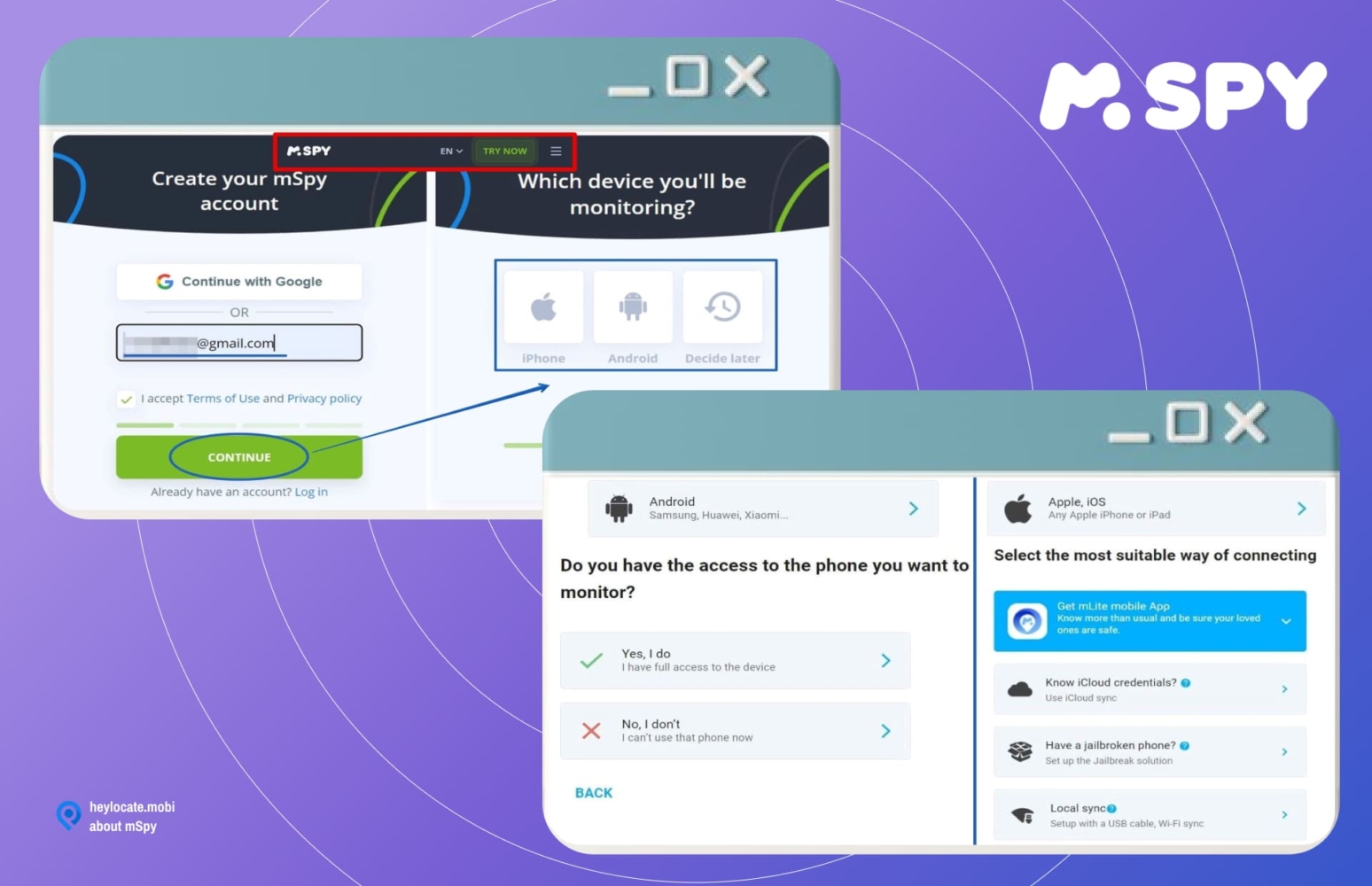
The app works quietly, and the target phone users do not know they are being monitored. No ads are featured in the interface of the app, and the syncing and reporting are done in a discreet manner.
The app is suitable for all users who are looking for how to ping a phone number or monitor their kid’s activities on mobile devices.
| Quickness | Simplicity | Effectiveness | Safety | Accessibility |
|---|---|---|---|---|
| 4 | 5 | 4 | 4 | 5 |
Pros:
- real-time updates and reports;
- high level of customer service;
- one can control the target phone from any world with an internet connection;
- precise GPS location tracking;
- screen recording.
Cons:
- the app requires a monthly charge;
- for iOS devices jailbreaking the target phone is a must;
- the app needs constant internet access to work properly.
EyeZy
Eyezy is another useful app that allows users to ping a phone number and to monitor the activities of the target phone. The app was developed by Fortunex Limited, registered at Georgioua Cyprusis.
The developers are a team of expert developers, consultants, and IT professionals, and also a big community of parents who care about their kids. Their mission is to deliver the best parental control solution so that parents can feel safe about their kids being in a virtual world.
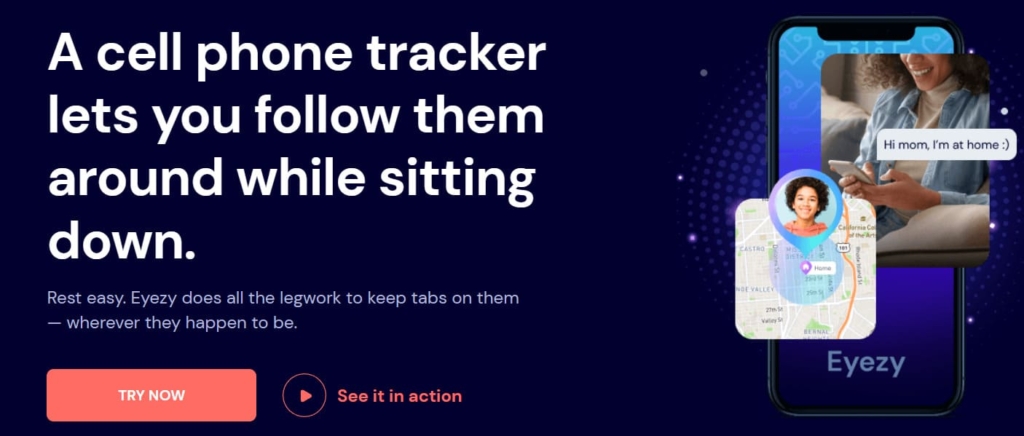
Compatibility:
Most iPhones and Android devices.
Features:
- calls recording;
- track phone location(GPS);
- read messages from WhatsApp and Facebook Messenger;
- web history visibility (Google Chrome, Mozilla Firefox, Internet Explorer);
- invisible shield.
User Experience:
The app is very user-friendly and easy to use. It requires one to sign up and download the Eyezy app to control the activities of the target phone. With a monthly subscription, you can install the app on the target phone and then link your child’s or target device. However, beware that the device will be visible on the target’s phone.
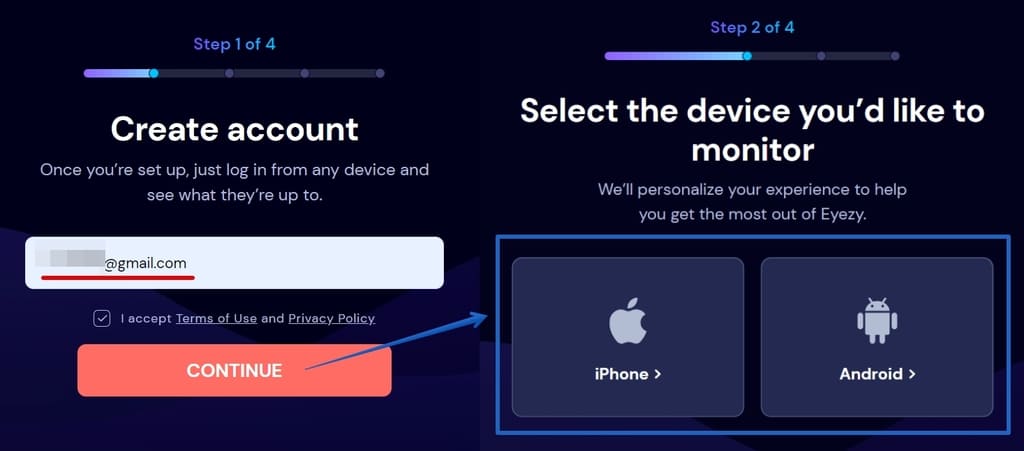
The app works by real-time monitoring and automatically tracking the user’s activities. There are no ads featured in the interface of the app. The syncing and reporting are done stealthily.
| Quickness | Simplicity | Effectiveness | Safety | Accessibility |
|---|---|---|---|---|
| 5 | 4 | 4 | 4 | 5 |
Pros:
- 24/7 customer support service;
- the app is free of any ads;
- precise GPS location tracking;
- the app tracks user activities (photos, contacts, chats, and more) in real-time and also provides regular reports via the control panel on their website.
Cons:
- the app requires a subscription. The users need to pay a monthly fee to use the app;
- the app needs constant internet access to work.
uMobix
Umobix is a software owned by ERSTEN GROUP LTD in the United Kingdom. The developers have successfully launched several parental control/monitoring apps. They aim to provide a high standard of the app and also want to bring a safe and secure online world for kids.
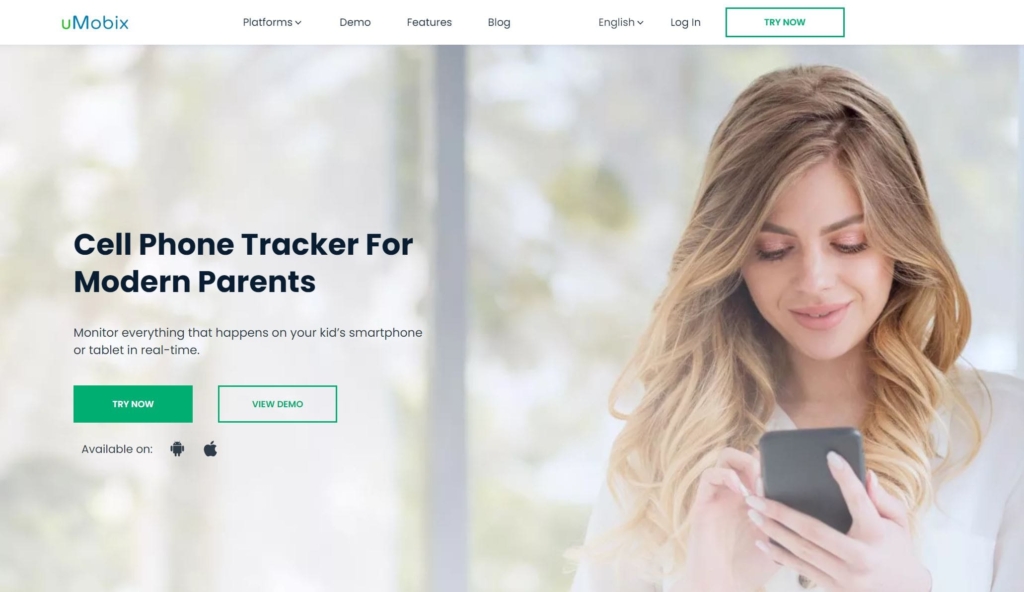
Compatibility:
IOS and Android devices. The site also offers a checker for the device to know whether the app will be compatible with that device.
Features:
- keylogger;
- track GPS location;
- track phone calls;
- monitor over 30+ popular apps and social media platforms;
- view deleted info.
User Experience:
The installation process is easy and user-friendly. You will first need to have a target phone at your disposal to download and install the app.
However, for phones, if you know the child’s or target’s iCloud ID and password, you do not need to have the phone physically. Just link the account details to your account, and you can then secretly monitor the target phone from any part of the world through the control panel on the Umobix website and control panel.
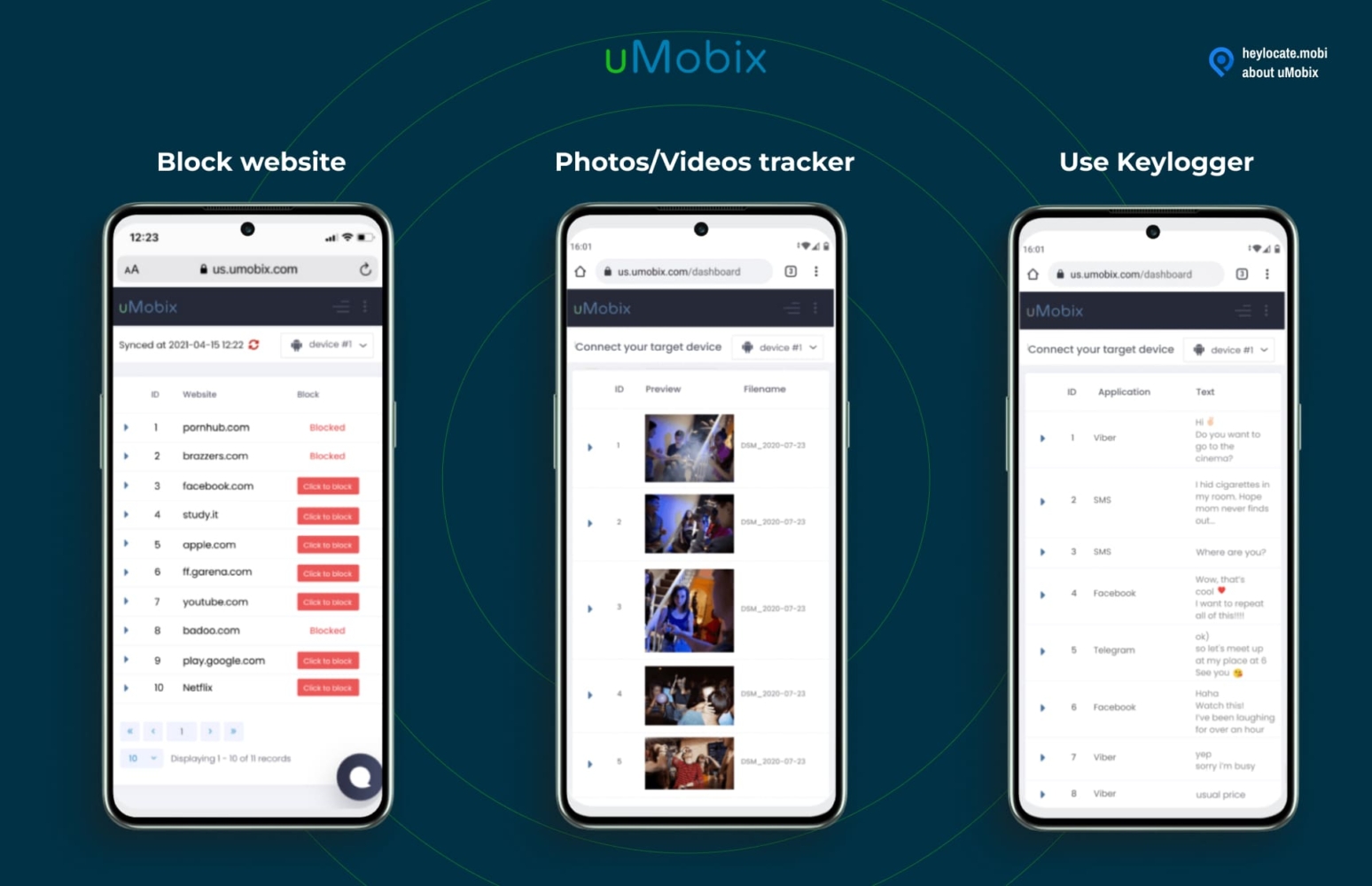
Ads are not featured in the app’s interface, and syncing and reporting are fast and efficient.
The software is suitable for parents who are concerned about their kids’ activities on the target phone. The software is also useful for employers who want to monitor their employees.
| Quickness | Simplicity | Effectiveness | Safety | Accessibility |
|---|---|---|---|---|
| 4 | 5 | 4 | 5 | 5 |
Pros:
- the app works silently without any outside alerts and popups;
- there is no need to jailbreak the target phone;
- realtime alerts and reports are generated;
- high level of customer service.
Cons:
- target Android users can know that someone is monitoring them since the app is installed on their device, so it is not suitable for anyone looking for how to ping a cell phone without permission.
OverWatch
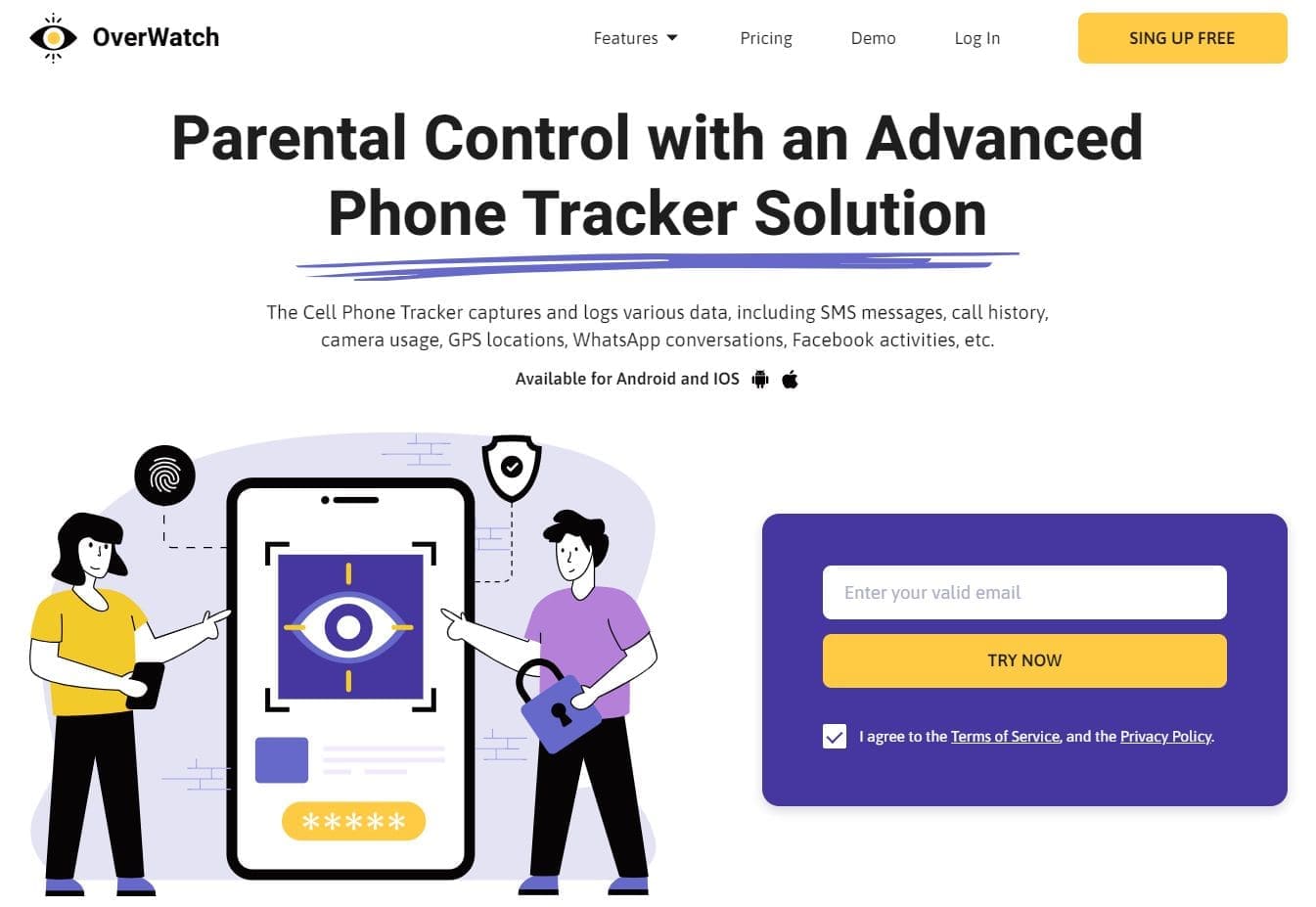
OverWatch is a software designed by OverWatch Corporation in 2002. The software is targeted at parents, businesses, and employers.
The developer’s mission is to provide quality assurance, variety, and flexibility to their customers. Delivering services that are second to none when it comes to parental control software and services, OverWatch is highly regarded in the industry. In the past 12 years, their products have been installed in over a million computers within 196 countries around the world.
Compatibility:
iOS, Android, and PC devices.
Features:
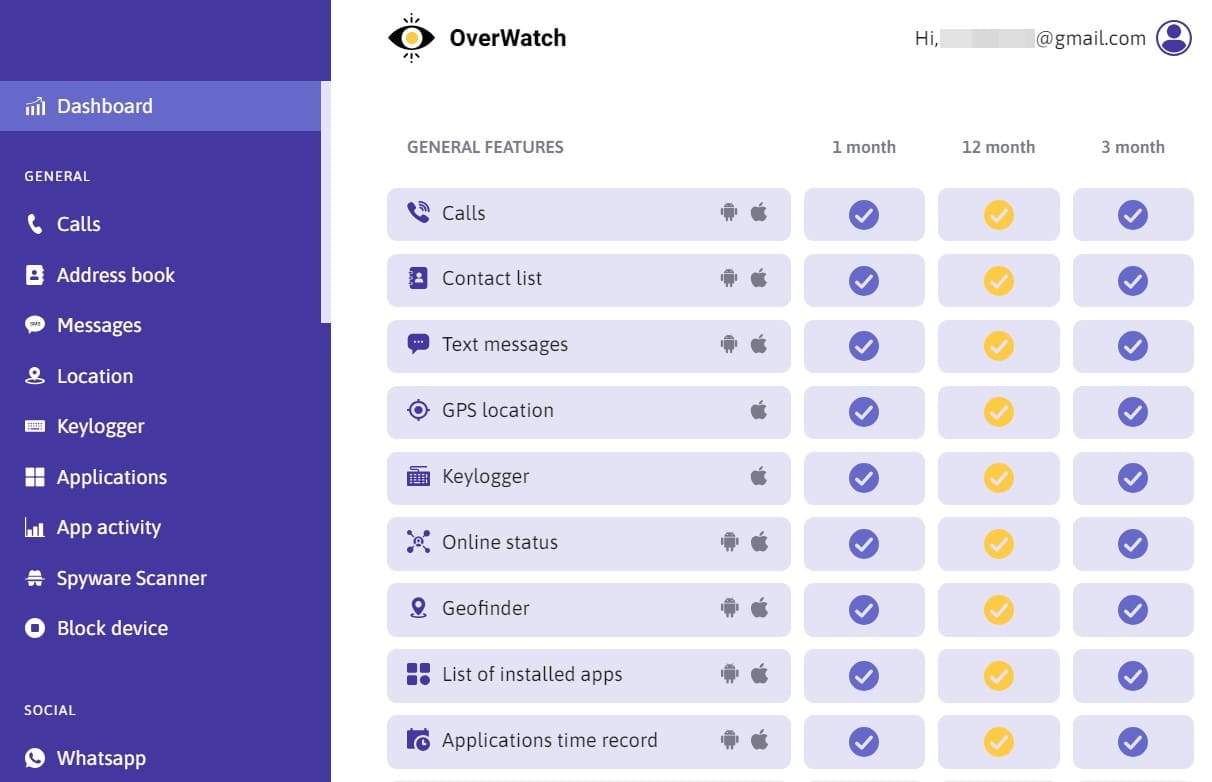
- Android key logger;
- track GPS Location;
- monitor social media platforms and popular messaging applications;
- monitor browsing history and search history;
- call data and recording.
User Experience:
The software has a user-friendly interface and is easy to download and set up. The site provides all the information about their product and services in detail and also offers a FAQ section where users can get additional information about the app.
When you download the app and install it, you link it to the online account and control panel of OverWatch. They provide a live control panel where you can monitor the target phone and all its activities in real-time.
The software has instant alerts on calls, texts, sites visited, apps used, etc. They also have a message center that alerts when abnormal activity is detected on the target phone. This will help business owners secretly monitor employees.
Ads are not featured in the app’s interface, making it easy for users to have an enjoyable experience with the software.
| Quickness | Simplicity | Effectiveness | Safety | Accessibility |
|---|---|---|---|---|
| 5 | 5 | 4 | 5 | 5 |
Pros:
- the app works silently without any outside alerts and popups;
- there is a demo version that allows users to know more about the software before purchasing it;
- real-time alerts and reports are generated;
- high level of customer service.
Cons:
- it is not free software.
GEOfinder.mobi
GEOfinder.mobi is another service operated and owned by ERSTEN GROUP LTD that is well-known for the ability to create and run some of the most innovative and advanced high-technology apps.
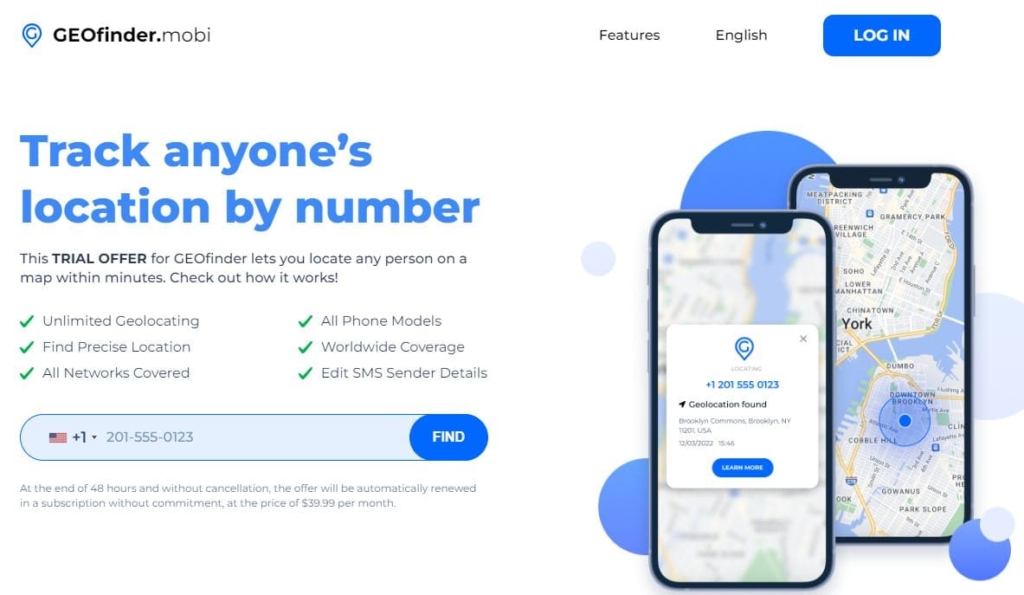
The service can be used to ping a phone number with text messages. It is a convenient way for users to find out the current location of their phone or the location of their relatives and friends. The company is also known for its cutting-edge development, quality, and creative methods.
Compatibility:
All types of phones and desktop computers.
Features:
- easy-to-use interface with no installation required;
- worldwide availability and coverage of all networks;
- VPN Checker;
- Wi-Fi Tracker;
- real-time GPS location and motion tracking.
User Experience:
This website tool is effortless to use and has a professional and easy-to-use interface. There is no need to install any software. Users use the website and enter their phone number and the text message they want to send.
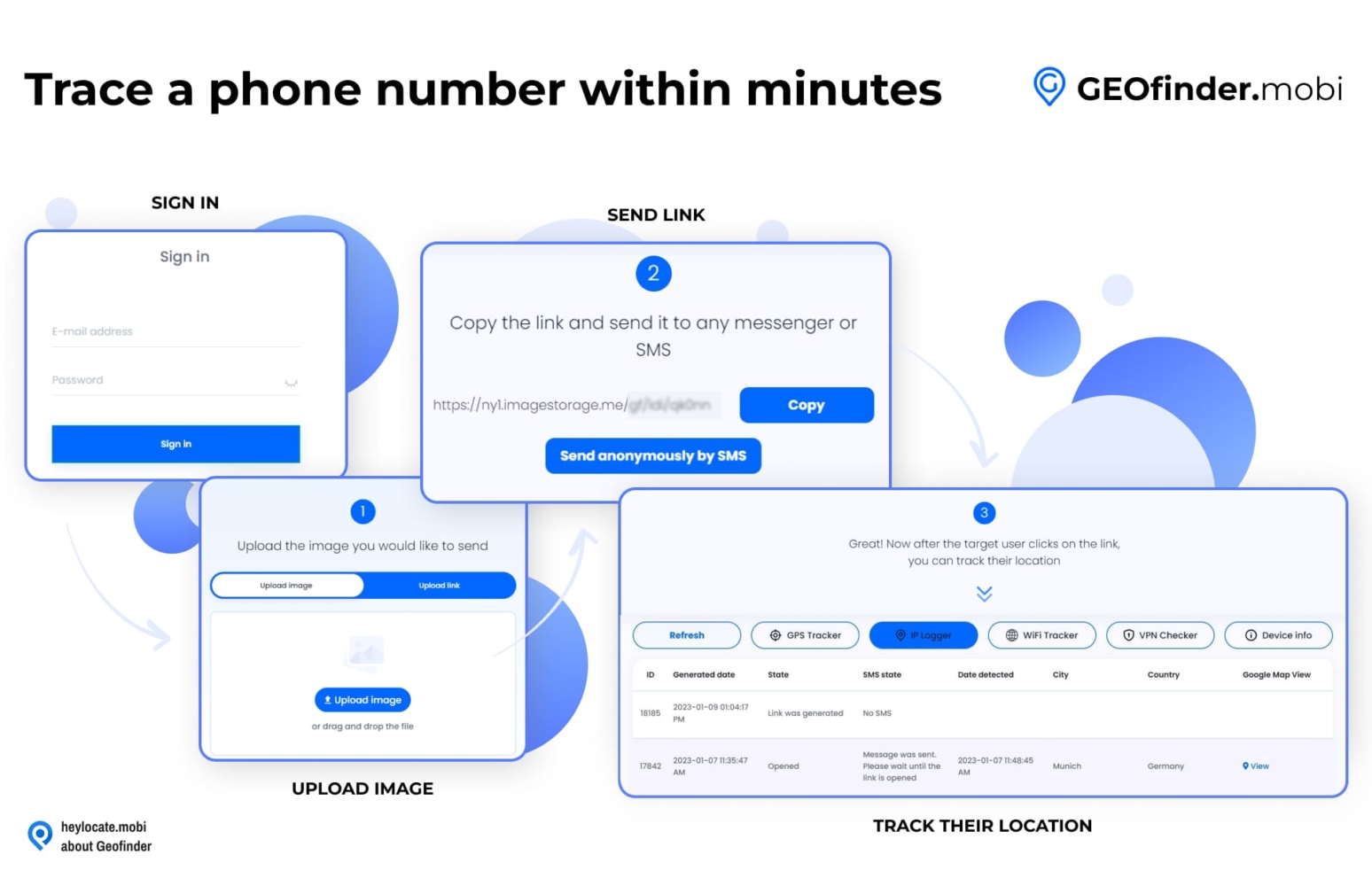
The software then sends a text with a link to the target phone number. The target user needs to tap the link for the location information to be sent to the user. The software can take some time to get a location since the only available method is the target to tap the link.
No popup ads that may distract the user. GEOfinder.mobi is best for anyone looking to find the current location of their relatives and friends.
| Quickness | Simplicity | Effectiveness | Safety | Accessibility |
|---|---|---|---|---|
| 5 | 5 | 4 | 5 | 5 |
Pros:
- worldwide coverage;
- no installation is needed;
- no pop-up ads;
- customer support system.
Cons:
- requires a subscription, which can be expensive for some people;
- may take time to get an accurate location.
LocationTracker
Locationtracker.mobi is a smart and reliable service that ping a phone number and locates the current location of a target phone. The service is operated and owned by ERSTEN GROUP LTD, registered in the United Kingdom.
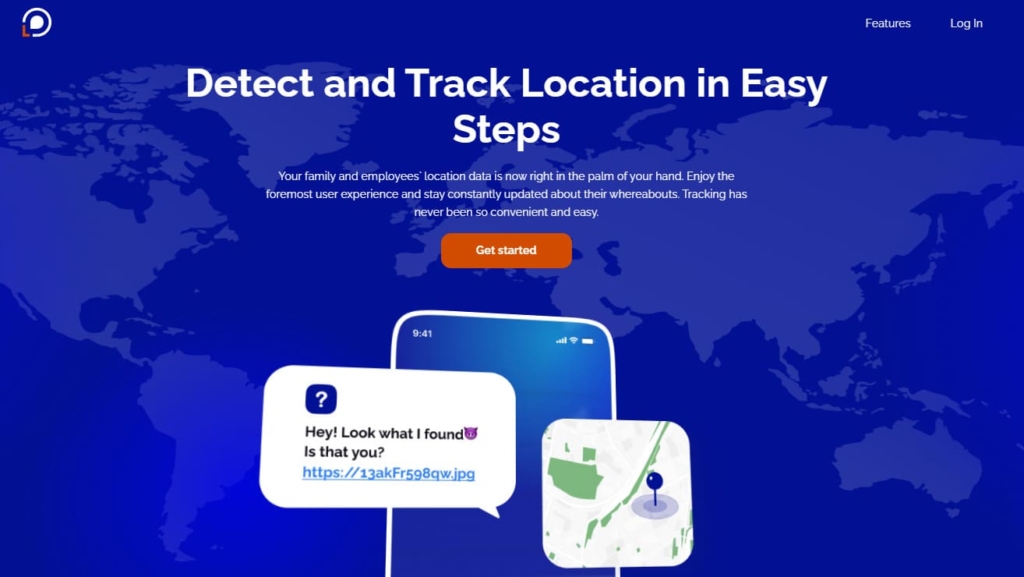
They are also developers for the GEOfinder.mobi and uMobix.com, which have been the most successful apps in the United States and Europe for the past few years. The goal of this service is to provide a convenient way for users to find out the current location of their phone or the location of their relatives and friends.
Compatibility:
Any Android, iOS, Windows, or Mac operating system.
Features:
- no installation is required;
- cell Phone Carrier Lookup;
- VPN Checker;
- Wi-Fi Tracker;
- real-time GPS location and motion tracking.
User Experience:
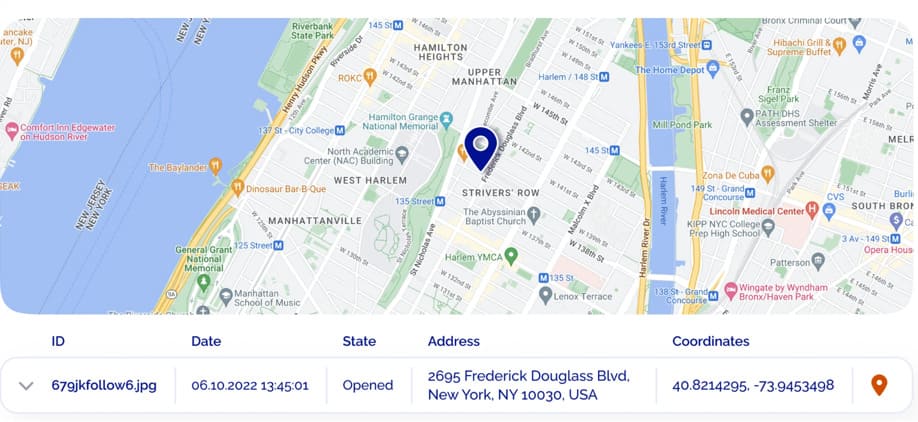
Locationtracker offers an easy and simple-to-use interface. There is no need to install any software. Users log in to the website and upload any image, then the software will generate a link that you will copy and send to the target phone number via any text messengers.
The target user needs to tap the link for the location information to be sent to the user. Upon receiving the link, users can start tracking the phone in real-time. It sometimes takes minutes for the software to get an accurate location since the only available method is for the target user to tap the link.
No ads that distract the user experience.
| Quickness | Simplicity | Effectiveness | Safety | Accessibility |
|---|---|---|---|---|
| 4 | 5 | 4 | 4 | 5 |
Pros:
- no installation is needed;
- customer support system;
- accurate location information.
Cons:
- it is not free software;
- it may take time to get the location.
XNSPY
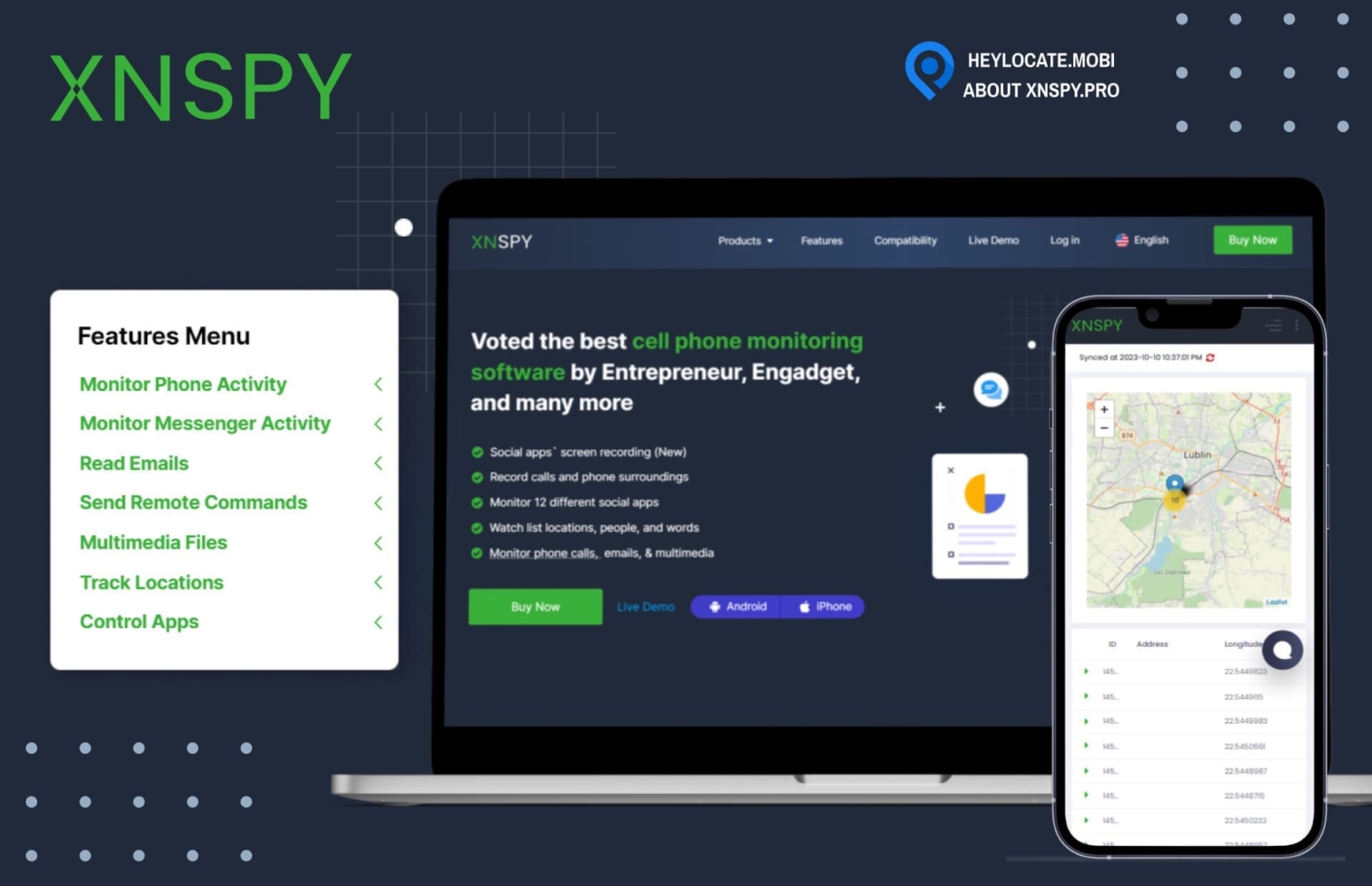
The XNSPY is one of the latest and most advanced cell phone monitoring software. The service is operated and owned by ERSTEN GROUP LTD, registered in the United Kingdom. It can be used to monitor your kids, employees, or spouse’s smartphone activity. The XNSPY was voted the best cell phone monitoring software by some groups like Engadget, Entrepreneur, and many more.
Compatibility:
All types of phones and desktop computers.
Features:
- no installation is required;
- 24/7 instant alerts;
- phone call and surround recording;
- Wi-Fi tracker;
- real-time GPS location and motion tracking;
- emails monitoring;
- keylogger.
User Experience:
The XNSPY has a professional and easy-to-use interface. You first need to subscribe to the service and then download and install the mobile monitoring software on the target phone.
Then set up the XNSPY dashboard and link the target phone to the dashboard. Here you can see the complete phone activity logs, including calls, SMS, and location. You will also be able to see the real-time history of the target phone location.
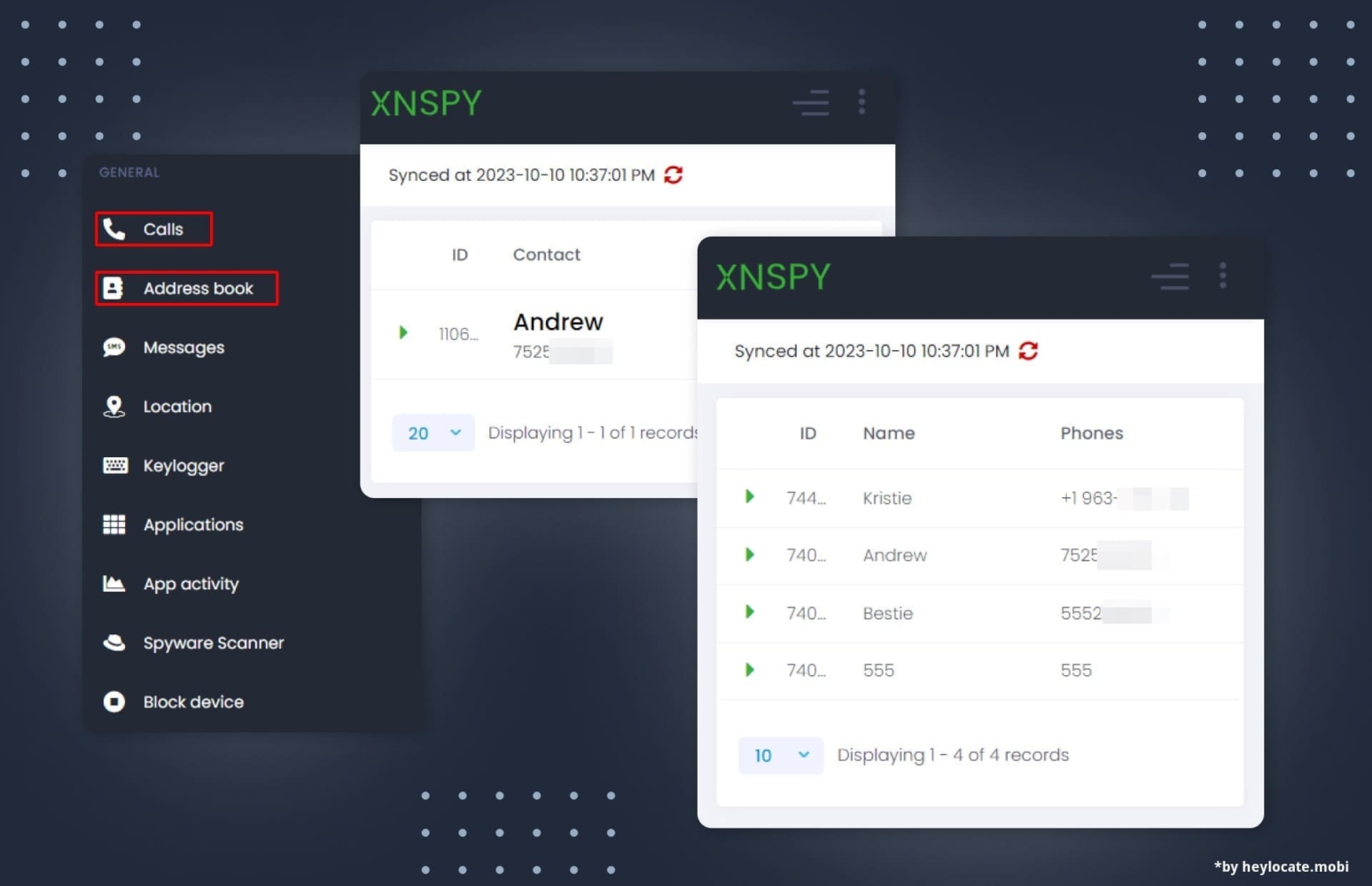
The software has no ads that may distract the user. It is best used for monitoring employees, kids, or spouses.
| Quickness | Simplicity | Effectiveness | Safety | Accessibility |
|---|---|---|---|---|
| 5 | 5 | 4 | 5 | 5 |
Pros:
- has a live demo to try before subscribing;
- real-time GPS location and motion tracking;
- specific activity alerts;
- customer support system.
Cons:
- requires a subscription.
Spyzzz
Spyzzz is a popular phone monitoring software. It was developed in 2019 by Tracxn in the United Kingdom. The team of developers consists of software professionals from the UK. Spyzzz is one of their many projects. They have earned a reputation for successfully designing and implementing apps that are easy to use but also have an authentic design.
Spyzzz provides users with instant alerts on phone activity, making it very useful for investigating important information from mobile devices. The service can be used to track someone’s location and real-time activities on their smartphone.

Compatibility:
All types of phones and desktop computers.
Features:
- keylogger;
- spy GPS location;
- remote control settings;
- call recording;
- emails monitoring;
- record phone calls;
- photos, videos, and file tracking.
User Experience:
The interface is easy to handle and is a consumer-friendly one. It has no ads that may distract the user.
After selecting a subscription plan and deciding the features you want, you can install the software to the target’s phone and start monitoring its activity in the Spyzzz dashboard.
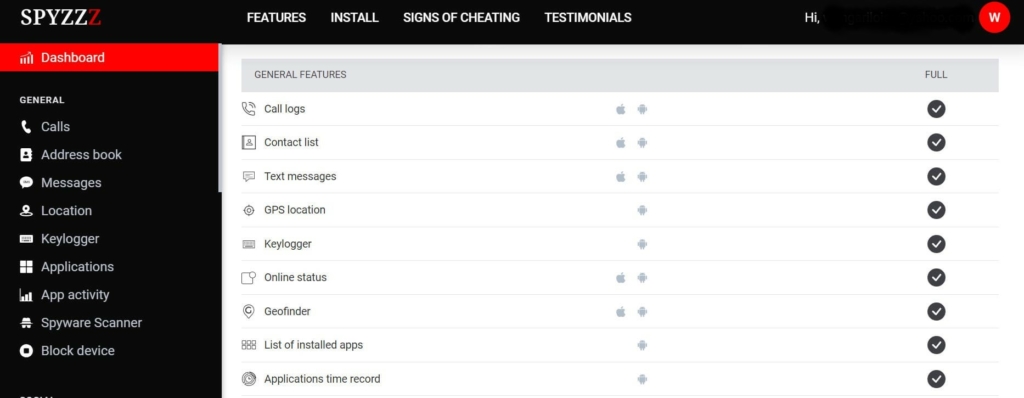
The dashboard provides the user with all the key information they need to know. It has a simple interface that is easy to understand and comes with detailed instructions so that users won’t have trouble using it. For anyone looking to track the location of their kids, employees, or spouse’s smartphone activity, Spyzzz is the perfect software.
| Quickness | Simplicity | Effectiveness | Safety | Accessibility |
|---|---|---|---|---|
| 5 | 5 | 4 | 4 | 5 |
Pros:
- easy-to-use interface with detailed instructions for first-time users;
- real-time GPS location and motion tracking;
- activity alerts;
- customer support system.
Cons:
- it is a little bit pricey.
Cocospy
This is another well-known monitoring software. It was developed and operated by the ERSTEN GROUP LTD as well. The group has created and operated several popular apps, like Xnspy, Geofinder.mobi and uMobix. The company aims to develop and operate innovative and advanced high-technology apps. Their apps are used all over the world.
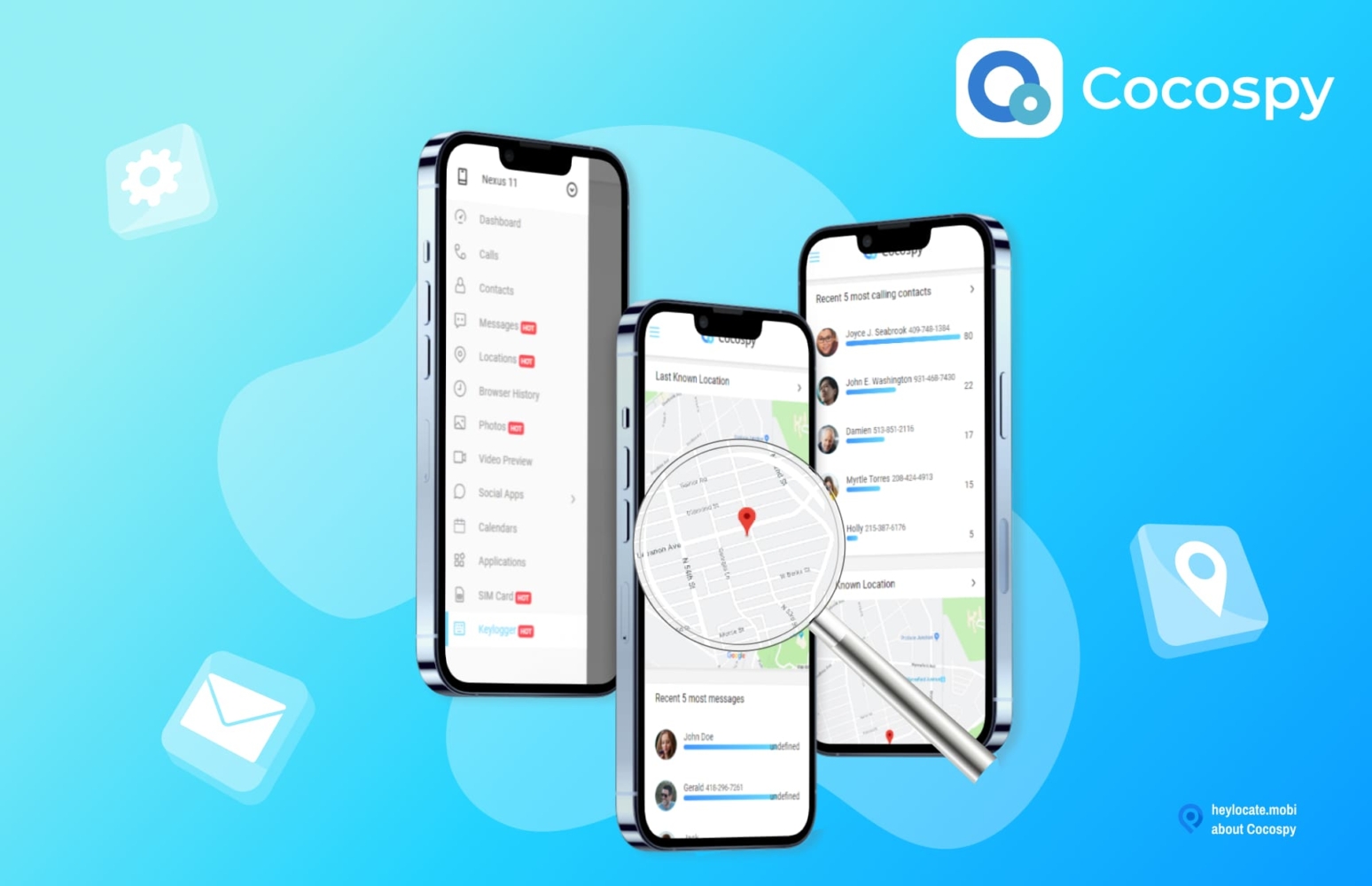
Cocospy is used by a million people in 190+ countries.
Compatibility:
All types of phones and desktop computers.
Features:
- geo-fence;
- stealth mode;
- record phone calls;
- remote control settings;
- photos, videos, audio, and file tracking.
User Experience:
With a simple and easy-to-use interface, this software is convenient to use. It has no ads that may distract the user.
You can use it from any web browser and install it on the phone you wish to track. You will then have to log into the Cocospy dashboard to access the target phone activity.
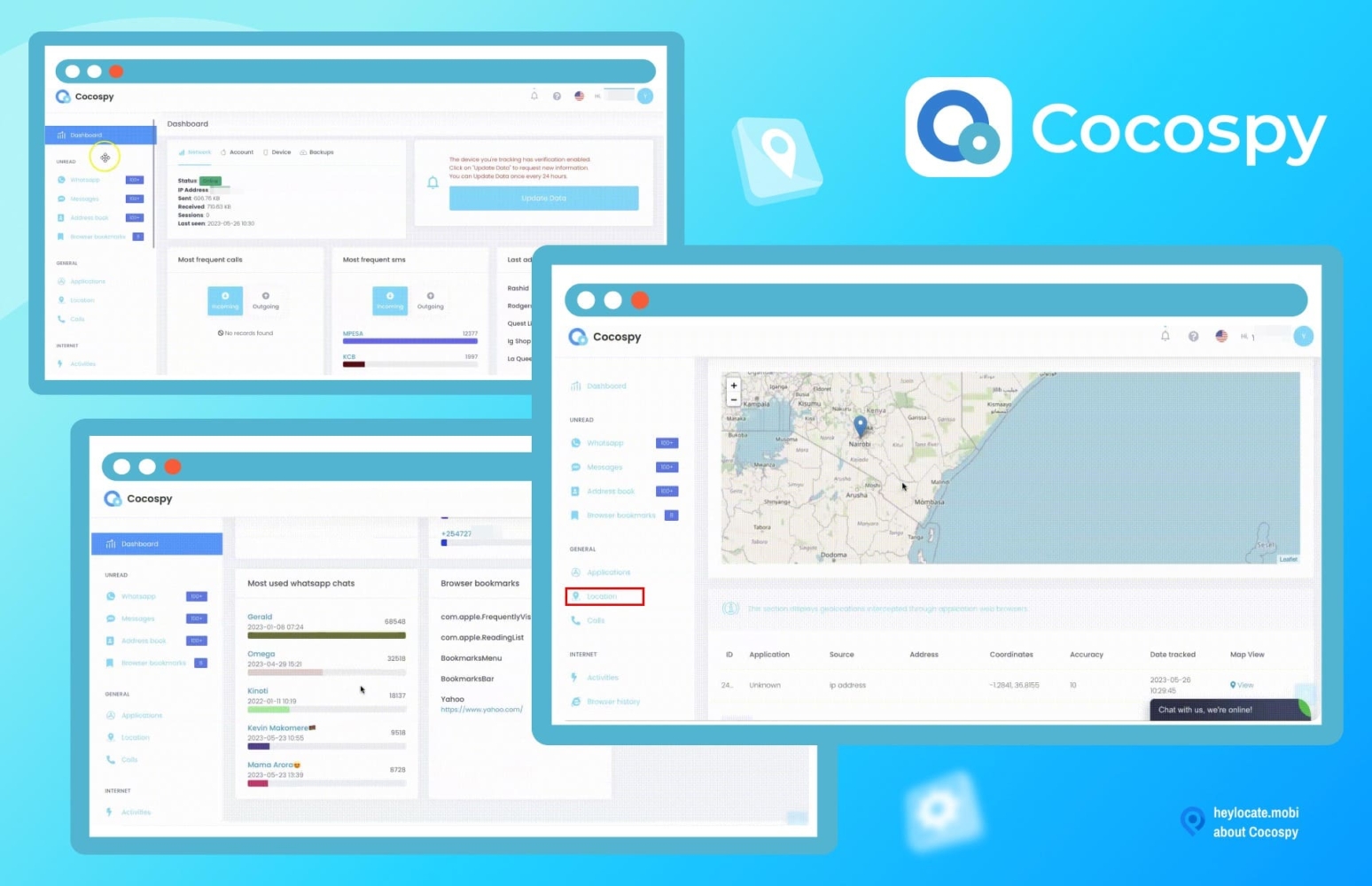
It can be best used for monitoring employees, kids, or spouses. It is fast, easy to set up, and comes with detailed instructions, a live chat customer support system, and a demo to try before subscribing.
| Quickness | Simplicity | Effectiveness | Safety | Accessibility |
|---|---|---|---|---|
| 4 | 5 | 4 | 5 | 4 |
Pros:
- detailed instructions for first-time users;
- activity alerts;
- keeps track of every activity that takes place on the target phone;
- customer support system.
Cons:
- you will need the target phone to install the app;
- requires a subscription.
Apps that claim to track phone number for free
There are many free trackers, but one can rarely have good experience with them.
Number Location Finder
This is a free app that was developed by Sounak Sarkar in 2016. The team aims to help people to find the location of others and also know where new phone numbers are located. The app has a 5-star rating and claims to be very useful for many people.
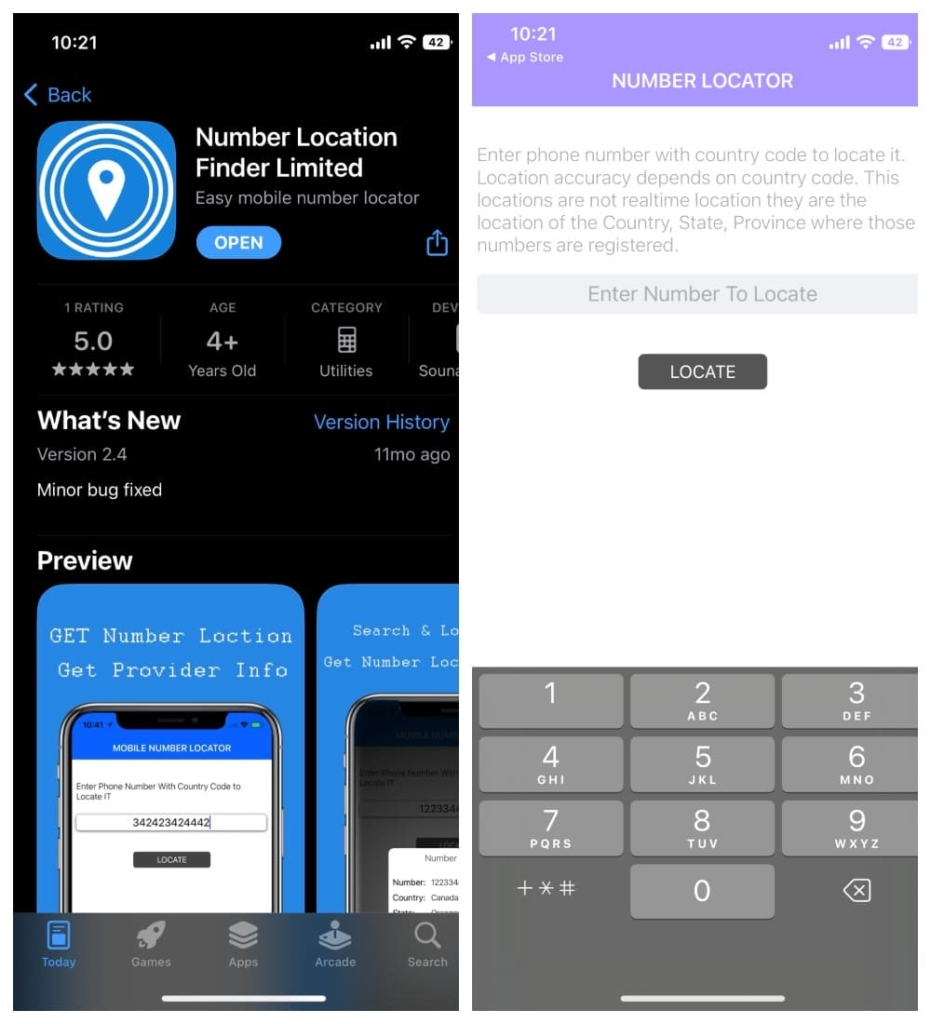
Compatibility:
iOs devices running from iOs 10 and above.
Features:
- shows real-time location;
- works on all carrier networks.
User Experience:
The user interface of the app is nice and has minimalistic features. It is quick to download and does not need any logins or account setup.
After launching the app, I entered the phone number that I wanted to track, and within 5 seconds, I got the results, however, it was just the phone carrier and country. I could not pinpoint the exact location.
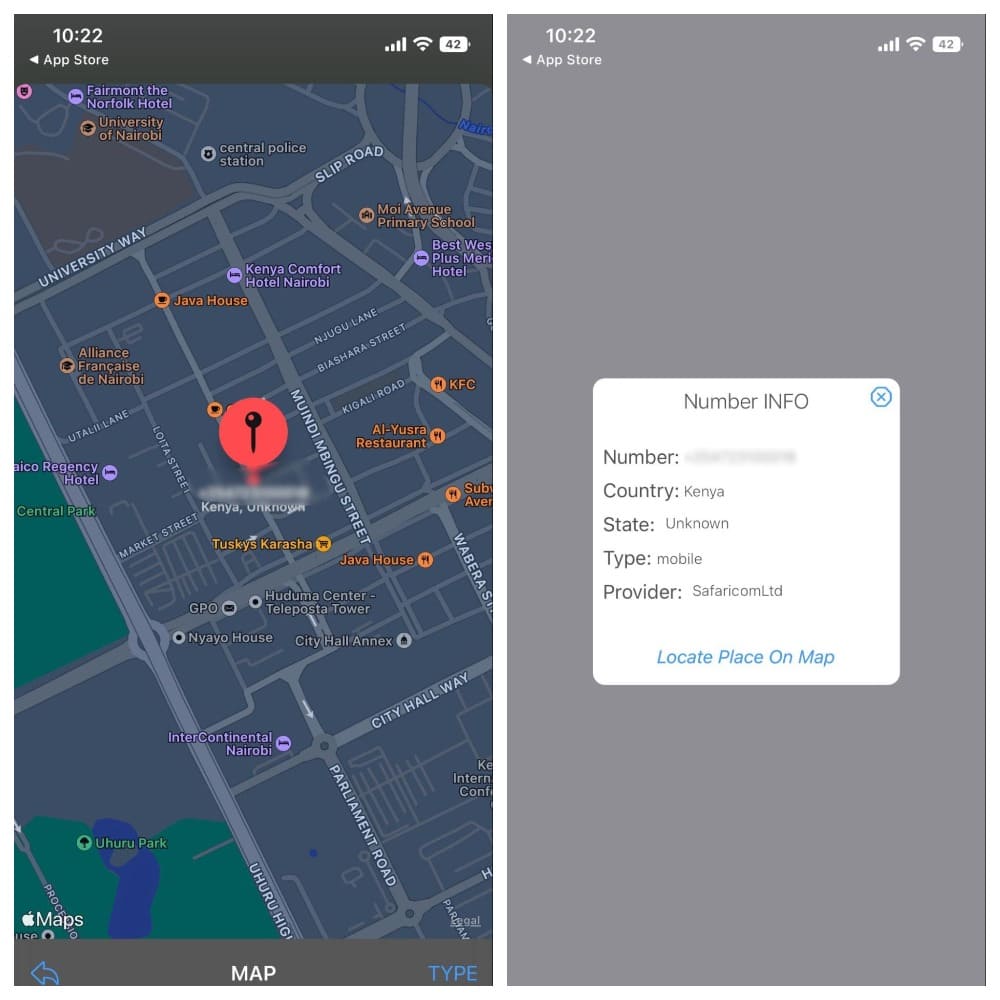
The app also has a map feature that shows the location of the number and provides details about the nearest place in case of doubt. The ads after every tap of the icon are also a bit annoying. So, if you are looking for how to ping a phone for free, that’s not an option.
| Quickness | Simplicity | Effectiveness | Safety | Accessibility |
|---|---|---|---|---|
| 3 | 4 | 4 | 3 | 4 |
Pros:
- works on all carrier networks;
- you can get to know the phone carrier and country.
Cons:
- the app could have been more precise;
- there are plenty of ads that can be annoying sometimes.
Mobile Number Location by Onex App
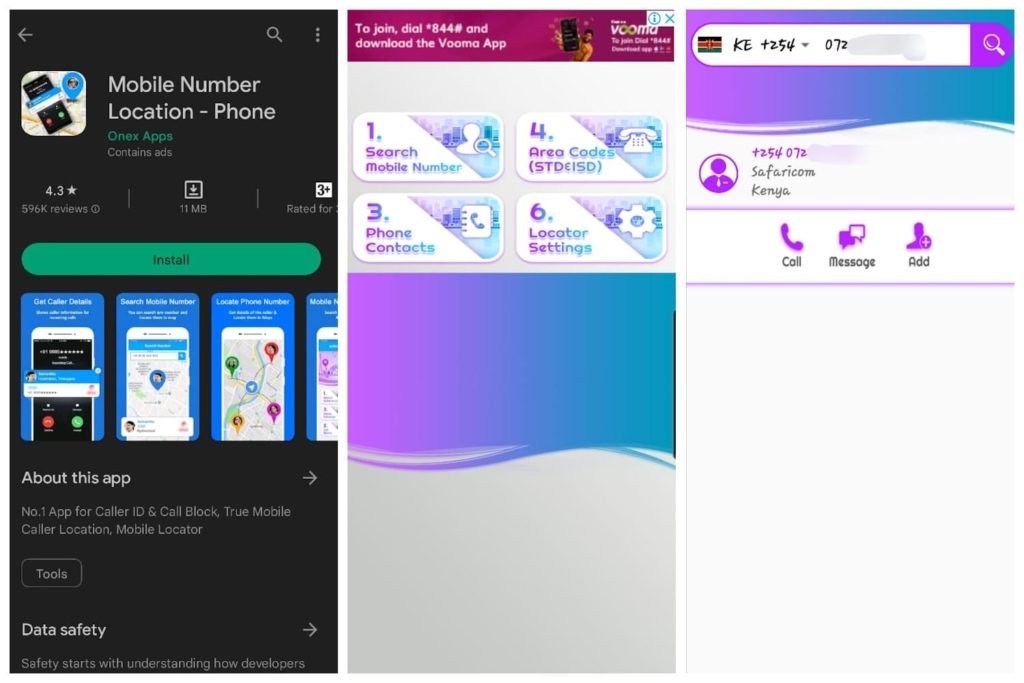
The Mobile Number Location is a cell phone tracking service that was developed by Onex App. The app has been rated 4 .3 stars and has 50+ million downloads. It claims to help you to Search Mobile Number, Mobile Locator, STD & ISD codes without the internet.
Compatibility:
Only Android.
Features:
- tracking using GPS and Mobile networks;
- compatible with most networks;
- can check area code.
User Experience:
The user experience is easy and simple to use. However, when it comes to the response rate, the app is not very fast. The pop-up ads after every tap are also a bit annoying.
When it comes to the location results, I was able to get the location in just a few seconds, but not the precise: no street or building. This tool did not prove helpful when it came to pinging a phone number or locating a particular device.
| Quickness | Simplicity | Effectiveness | Safety | Accessibility |
|---|---|---|---|---|
| 3 | 4 | 3 | 2 | 3 |
Pros:
- app has multiple features like phone contacts, call logs, etc;
- it is free.
Cons:
- slow responding rate, which can be very hectic;
- the location results are not precise and may not be accurate.
Phone Number Location Tracker by Future Droid Apps
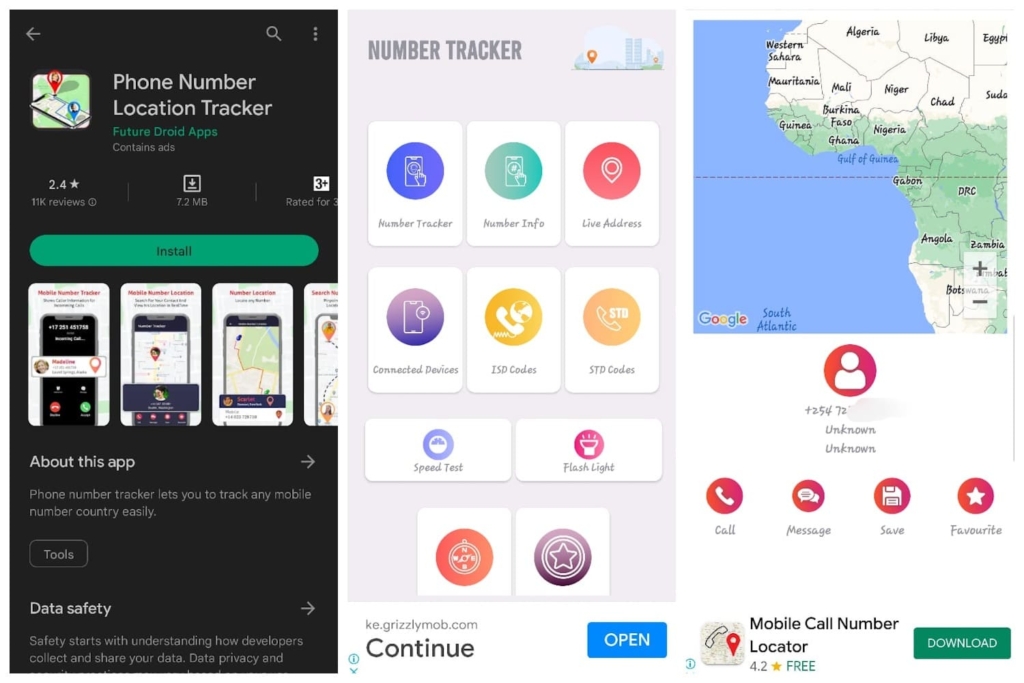
Phone Number Location Tracker was developed by Future Droid Apps, a group of experienced developers with a passion for creating apps and games that are useful and easy to use. Phone Number Tracker claims to pin and track any phone number worldwide. The app has 3.5K downloads, but 2.4 rating in the Google Play Store.
Compatibility:
Android operating system.
Features:
- real-time GPS tracking;
- check the phone location history;
- identify the ISD codes of incoming calls.
User Experience:
The app has a friendly interface and excellent user experience. The installation process is easy. However, there are ads that can be distracting. When I set up the app and tried to ping a friend’s phone number, I did not get any results. There was also no way to obtain more information about the number like the carrier, country code, etc. So, the app is not useful when it comes to looking at how to ping a phone for free.
| Quickness | Simplicity | Effectiveness | Safety | Accessibility |
|---|---|---|---|---|
| 3 | 4 | 3 | 2 | 3 |
Pros:
- the app has more features than the other alternatives;
- it is free.
Cons:
- the app does not provide detailed information about the number you are trying to ping.
Try Phone Number Location Tracker
FollowMee GPS Tracker
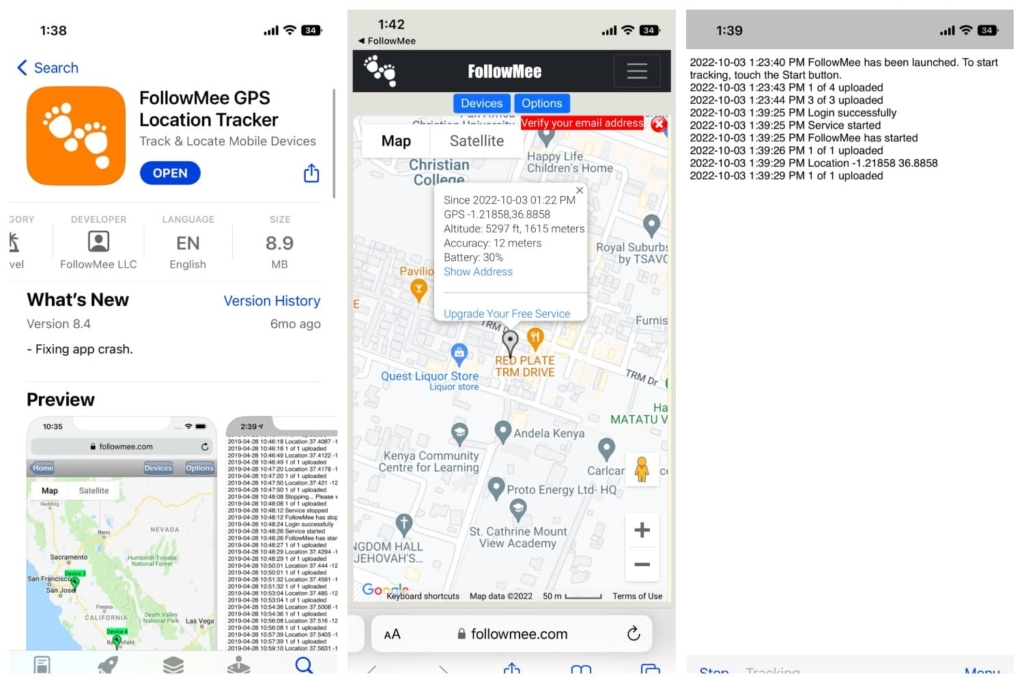
The FollowMee GPS Tracker was developed by FollowMee LLC developers. The app has had over 4.5M+ downloads in its app portfolio and has a 5 stars rating. The goal of the app is to allow users to track and trace a phone number location easily, without any difficulties, and also provide Google Maps data.
Compatibility:
iOS and Android devices.
Features:
- real-time location monitor;
- tracing location history;
- tracking multiple devices;
- SOS panic button;
- map display.
User Experience:
The installation process was fast, and also the tracking was easy and fast. The app turns your own device into a tracker, so if you want to track somebody, you need to install Followmee on their device.
Location permission needs to be set to “allow all the time”. The app collects location data to enable location tracking even when the app is closed or not in use. As the app is running, you can view the device location by visiting the website of the app.
I was skeptical about the next free tracker, but the app provided me with real-time location updates. No ads that distract you from your monitoring, but the app should be installed on every device you want to track.
| Quickness | Simplicity | Effectiveness | Safety | Accessibility |
|---|---|---|---|---|
| 3 | 4 | 4 | 2 | 4 |
Pros:
- detailed location data;
- it provides users with Google Maps data.
Cons:
- it does not have more extra features than other third-party apps.
Search & Track Mobile Number
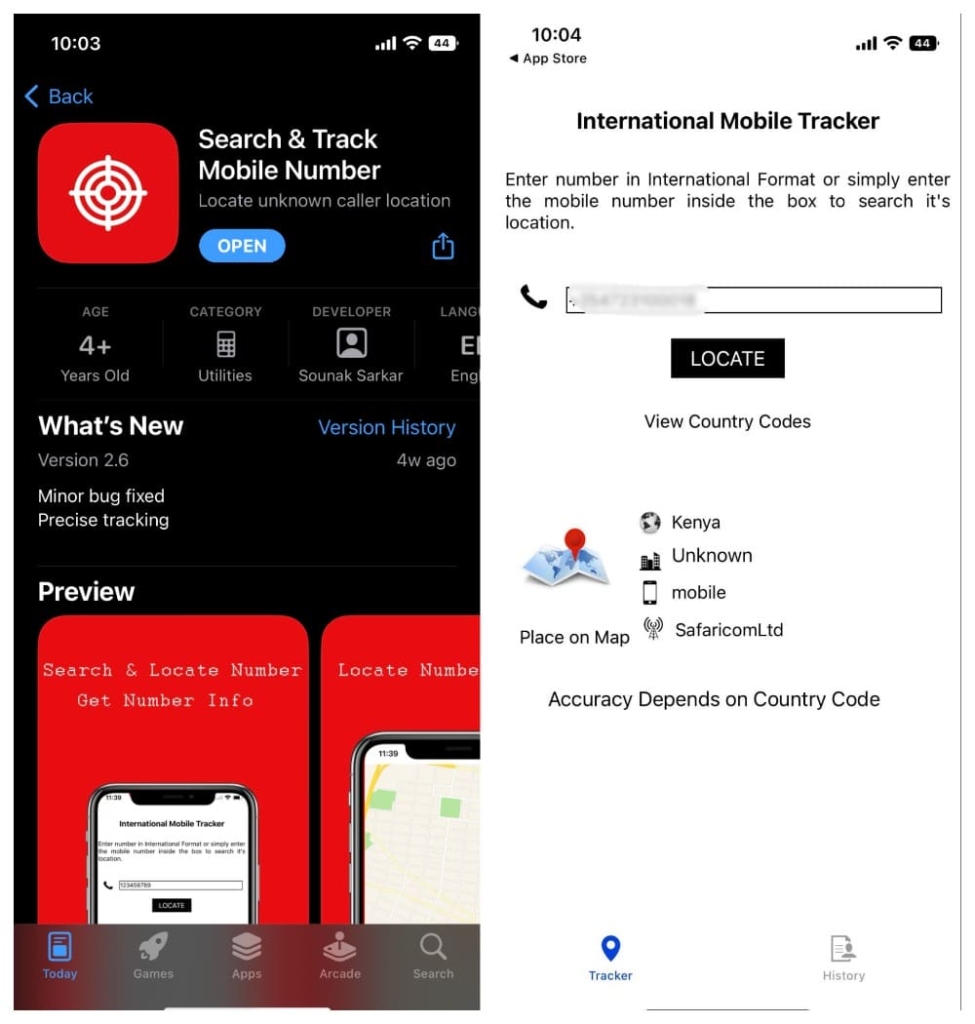
The search and track Mobile number was developed in 2015 by Sounak Sarkar. The developer has been working in the field of tracking and monitoring for many years.
The aim is to track and identify a person’s location. The app has yet to receive enough reviews, but it is projected to be the most popular free app that is designed to be used by consumers and businesses to find their location.
Compatibility:
iOs devices that run iOS 11.0 or later.
Features:
- the app supports 274+ countries;
- easy to find the location of iPhone and iPad;
- location history;
- real-time tracking;
- provides map location.
User Experience:
It only takes a few minutes to install, and you do not need to create an account to start using the app. Once I launched the app, there was an icon to input the number, and I clicked the locate icon, though a few ads popped up. Other than that, the app was fast in delivering the location results.
The location was not precise, as it only showed the country and mobile carrier. The accuracy would also depend on the country code, but this app is not the best choice if you are looking for “how to ping a phone for free”.
| Quickness | Simplicity | Effectiveness | Safety | Accessibility |
|---|---|---|---|---|
| 4 | 5 | 3 | 3 | 4 |
Pros:
- it is free;
- you can get to know the country and mobile carrier.
Cons:
- not the precise location.
Try Search & Track Mobile Number
How to ping a cell phone from a computer
To ping a phone, the laptop or computer should be connected to the same smartphone network as the lost device.
You should also know the IP address of the smartphone. To check the IP address for Android phones, follow these steps:
- Go to Settings.
- Go to About phone.
- Then, status Information and tap on it.
- It will show the IP address of your phone.
To ping the smartphone from your computer (Windows PC), you can follow these steps:
- Launch Command Prompt from your Windows PC.
- Next, enter ‘ping, the IP address of your smartphone, and press Enter.
- Through this command, your computer will ping the phone, through the Wi-Fi, you can look for the notification sound and locate your phone.
To ping the smartphone from your computer (Mac OS), you can follow these steps:
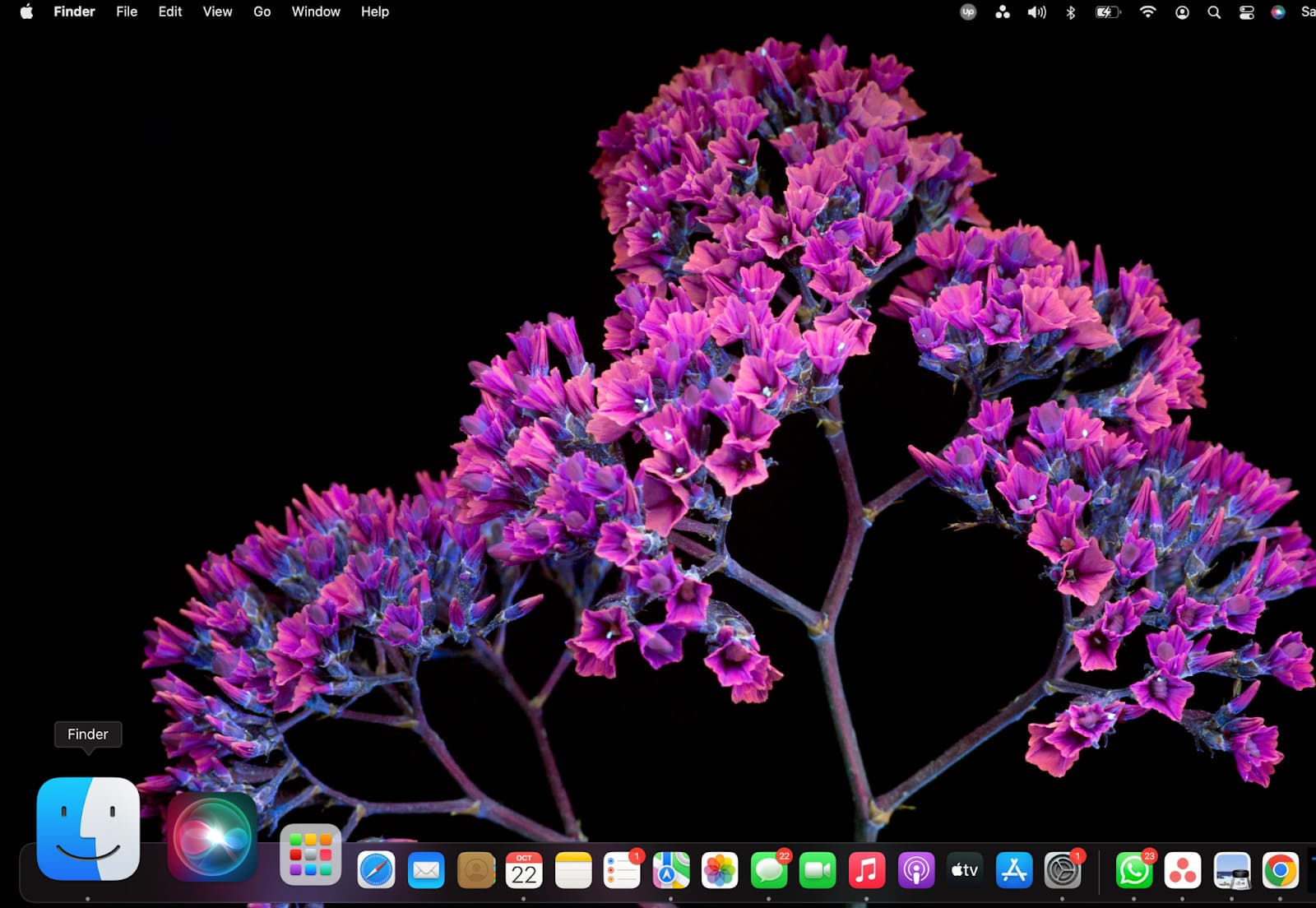
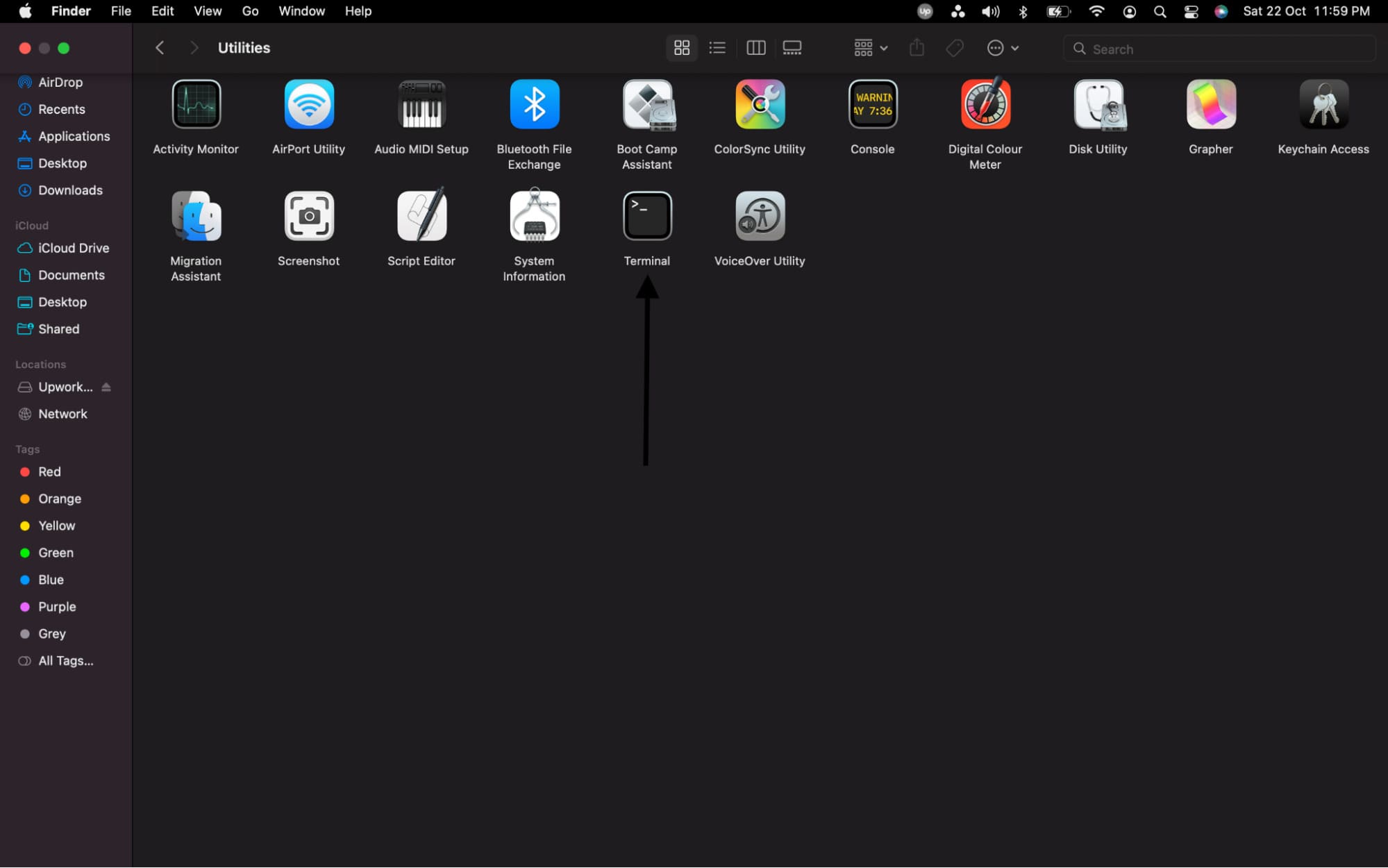
- Launch Finder on your Mac.

- Next, double-click on Utilities and then the Terminal app.

- From the terminal app, type in ping followed by the IP address of your Android or iOS device.
- The results will be displayed similarly to Windows PC.


Enter the Phone Number and Get Information Now
- Phone Lookup
- Number Tracking
Conclusion
Whether Android or Apple, you can ping it from the inbuilt options or third-party apps such as the Scannero, uMobix, and GEOfinder.
As we have seen from our research, the free trackers usually show only the country and mobile carrier. But the paid ones help you track the precise location and also provide other multiple features, like monitoring your kid’s or your spouse’s phone. The price varies, so you can choose the one that gives you the necessary options.
FAQ
You can ping someone’s phone by using its IP address+Command Prompt, by sending location sharing request through any app or SMS with tracking link through Scannero.io or Detectico.com.
No, you cannot ping a phone with the location off. Since phone-finding services use location services and, in most cases, rely on Google Location or Apple Location service, it is impossible to ping the phone with the location turned off.
No, it’s not illegal to ping someone’s phone. However, if done continuously, it can be a nuisance and/or a violation of a person’s privacy. But if it is used with a person’s permission, it is ok.



 Monday-Sunday: 5:00am - 8:00pm (PT)
Leave a Comment